
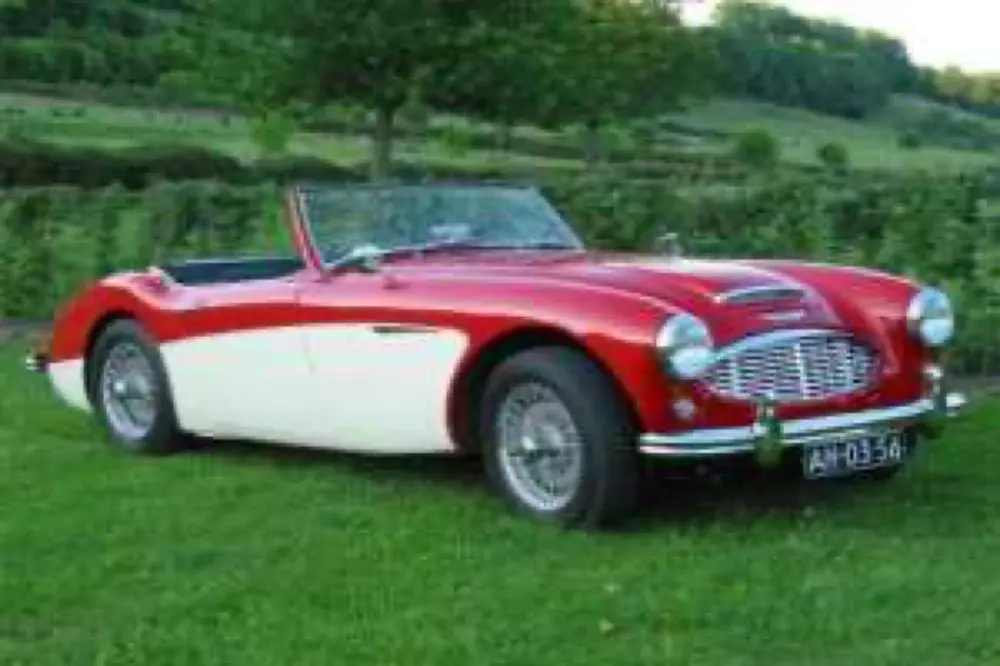
The Austin-Healey 100-6 is a two-seat roadster that was produced by Austin-Healey from 1956 to 1959. A replacement for the Austin-Healey 100, it was followed by the Austin-Healey 3000. Together, the three models have become known as the Big Healeys. The 100-6 featured a 2 in (50.8 mm) longer wheelbase than the 100, a more powerful straight-six engine in place of its slightly larger inline-four, and added two occasional seats (which later became optional). The body lines were slightly streamlined, a smaller, wider radiator grille placed lower, an air scoop was added to the bonnet, and the windscreen fixed. The 100-6 was produced in two model designators, the 2+2 BN4 from 1956 onwards and the 2-seat BN6 in 1958-9.The cars used a tuned version of the BMC C-Series engine previously fitted to the Austin Westminster, initially producing 102 bhp (76 kW) and increased in 1957 to 117 hp (87 kW) by fitting a revised manifold and cylinder head. The previously standard overdrive unit was made optional. In late 1957 production was transferred from Longbridge to the MG plant at Abingdon. 14,436 100-6s were produced before production ended in 1959.
Frequently Asked Questions
How do I change the oil in my Austin 100-6?
Changing the oil in your Austin 100-6 is a fairly simple process. Begin by gathering all necessary tools and supplies, including a jack, oil filter wrench, new oil filter, and the appropriate type and amount of motor oil. Then, locate the oil filter and drain plug, remove them, and allow the oil to drain completely before replacing the filter and adding new oil to the engine. Be sure to dispose of the old oil and filter properly.
How do I check the brake fluid level in my Austin 100-6?
Checking the brake fluid level in your Austin 100-6 is an important part of routine maintenance. Begin by locating the brake fluid reservoir, typically located on the driver’s side of the engine compartment. The fluid level should be between the minimum and maximum marks on the reservoir. If the level is low, add the appropriate type of brake fluid until it reaches the correct level.
How do I check the engine coolant level in my Austin 100-6?
Checking the engine coolant level in your Austin 100-6 is important to prevent overheating and engine damage. Begin by locating the coolant reservoir, typically located on the driver’s side of the engine compartment. The coolant level should be between the minimum and maximum marks on the reservoir. If the level is low, add a mixture of coolant and water until it reaches the correct level.
How do I replace the air filter in my Austin 100-6?
Replacing the air filter in your Austin 100-6 is a simple process that can improve engine performance and fuel efficiency. Begin by locating the air filter housing, typically located near the engine. Remove the housing cover and the old air filter, and replace it with a new filter. Be sure to properly seat the new filter and replace the cover.
How do I replace the alternator in my Austin 100-6?
Replacing the alternator in your Austin 100-6 is another advanced repair that may require specialized tools. Begin by disconnecting the battery and removing the alternator mounting bolts and wiring harness. Then, carefully remove the old alternator and replace it with a new one, being sure to properly seat the mounting bolts and reconnect the wiring harness. Finally, reconnect the battery and test the new alternator before driving.
How do I replace the battery in my Austin 100-6?
Replacing the battery in your Austin 100-6 is a simple process, but it is important to take the necessary safety precautions. Begin by disconnecting the negative battery cable, followed by the positive cable. Then, remove the battery hold-down and carefully lift out the old battery. Finally, replace the old battery with a new one and reconnect the cables, being sure to tighten them securely.
How do I replace the brake pads in my Austin 100-6?
Replacing the brake pads in your Austin 100-6 is an important part of routine maintenance to ensure safe driving conditions. Begin by removing the wheel and brake caliper, being careful not to damage the brake line. Then, remove the old brake pads and replace them with new ones, being sure to properly seat them. Finally, reattach the brake caliper and wheel, and test the brakes before driving.
How do I replace the fuel filter in my Austin 100-6?
Replacing the fuel filter in your Austin 100-6 is an important part of routine maintenance to prevent contaminants from entering the engine. Begin by locating the fuel filter, typically located near the fuel tank or engine. Disconnect the fuel lines and remove the old filter, replacing it with a new filter. Be sure to properly reconnect the fuel lines.
How do I replace the headlights in my Austin 100-6?
Replacing the headlights in your Austin 100-6 is a simple process, but it is important to use the correct type of bulb for your specific vehicle. Begin by locating the headlight assembly and disconnecting the wiring harness. Then, remove the old bulb and replace it with a new one. Finally, reconnect the wiring harness and test the new bulb.
How do I replace the serpentine belt in my Austin 100-6?
The serpentine belt in your Austin 100-6 is responsible for driving several important engine components, and should be replaced if it shows signs of wear or damage. Begin by locating the tensioner pulley and using a wrench to release the tension on the belt. Remove the old belt and replace it with a new one, following the correct belt routing diagram. Finally, use the tensioner pulley to adjust the tension on the new belt.
How do I replace the spark plugs in my Austin 100-6?
Replacing the spark plugs in your Austin 100-6 is a relatively simple process, but it is important to use the correct type and gap for your specific engine. Begin by disconnecting the battery and removing the spark plug wires. Then, use a spark plug socket and ratchet to remove the old spark plugs and replace them with new ones. Finally, reattach the spark plug wires and reconnect the battery.
How do I replace the starter motor in my Austin 100-6?
Replacing the starter motor in your Austin 100-6 is a more advanced repair, and may require the use of specialized tools. Begin by disconnecting the battery and removing the starter motor mounting bolts. Then, carefully remove the old starter motor and replace it with a new one. Finally, reattach the mounting bolts and reconnect the battery, testing the new starter motor before driving.
How do I troubleshoot engine performance issues in my Austin 100-6?
Troubleshooting engine performance issues in your Austin 100-6 can be a complex process, as there are many potential causes for poor performance. Begin by checking the air filter, fuel filter, spark plugs, and other routine maintenance items. If these do not resolve the issue, consult the repair manual or a professional mechanic to diagnose the problem and determine the appropriate repair.
What is the recommended tire pressure for my Austin 100-6?
The recommended tire pressure for your Austin 100-6 can typically be found in the owner’s manual or on a sticker located inside the driver’s side door jamb. It is important to maintain the proper tire pressure to ensure safe driving conditions and maximize the life of your tires. Use a tire pressure gauge to check the pressure regularly and adjust as necessary.
What type of transmission fluid should I use in my Austin 100-6?
The type of transmission fluid recommended for your Austin 100-6 will depend on the specific transmission in your vehicle. Check the owner’s manual or consult a professional mechanic to determine the appropriate type and amount of transmission fluid to use. Be sure to use the correct fluid to ensure proper transmission function and prevent damage.
 Austin 100-6 Related Models