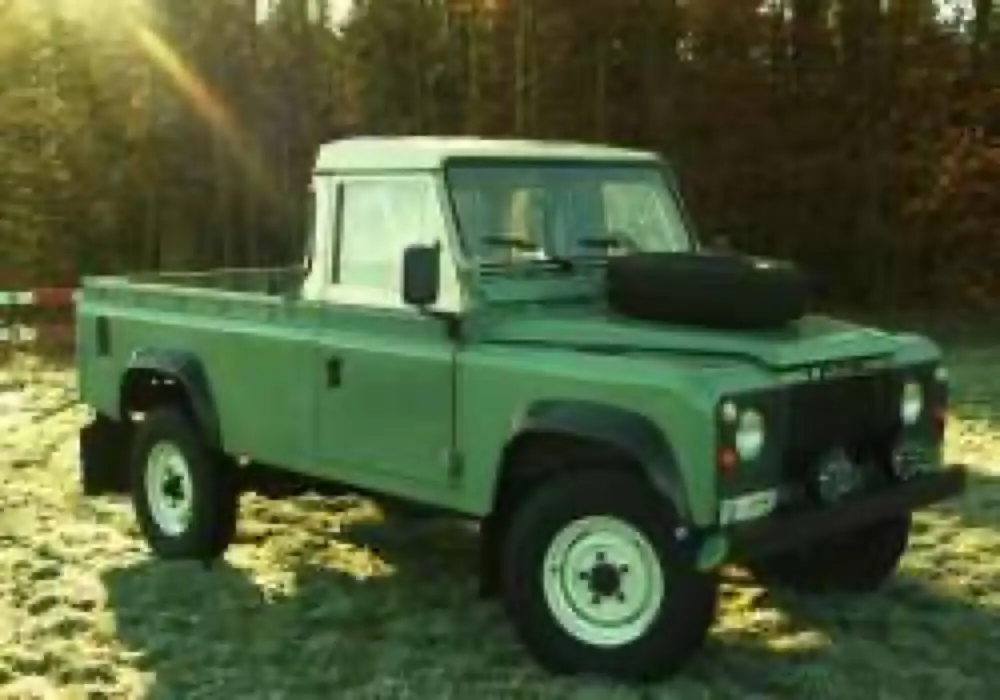
The Land Rover 110 was launched in 1983. This period saw Land Rover market the utility Land Rover as a private recreational vehicle. While the basic pick-up, 4×4 and van versions were still working vehicles, the County 4x4s were sold as multi-purpose family vehicles, featuring improved interior trim and more comfortable seats. This change was reflected in Land Rover starting what had long been common practice in the car industry — detail changes and improvements to the County model from year to year in order to attract new buyers and to encourage existing owners to trade in for a new vehicle. These changes included different exterior styling graphics and colour options, and the introduction of new options, such as radio-cassette players, styled wheels, headlamp wash and wipe systems, as well as accessories such as surfboard carriers and bike racks. The switch from leaf spring to coil spring suspension was a key part of the new model’s success. It offered improved off-road ability, load capacity, handling, and ride comfort.
Frequently Asked Questions
How often should the air filter be replaced on a Land Rover 110?
The air filter on a Land Rover 110 should be replaced every 15,000 to 30,000 miles, depending on driving conditions and air quality. Regularly replacing the air filter ensures that clean air is supplied to the engine, preventing dirt and debris from entering and potentially causing damage. Neglecting to replace a dirty air filter can lead to reduced engine performance and increased fuel consumption.
How often should the brake fluid be flushed on a Land Rover 110?
The brake fluid on a Land Rover 110 should be flushed and replaced every 2 years or every 30,000 miles, whichever comes first. Over time, brake fluid can absorb moisture, which reduces its effectiveness and can lead to brake system failure. Flushing the brake fluid regularly helps maintain proper brake performance and ensures a safe driving experience.
How often should the cabin air filter be replaced on a Land Rover 110?
The cabin air filter on a Land Rover 110 should be replaced every 15,000 to 30,000 miles, depending on driving conditions and air quality. Regularly replacing the cabin air filter ensures clean air is circulated within the vehicle’s cabin, improving air quality and preventing dust, pollen, and other contaminants from entering. Neglecting to replace a dirty cabin air filter can reduce the effectiveness of the HVAC system and lead to unpleasant odors inside the vehicle.
How often should the differential fluid be changed on a Land Rover 110?
The differential fluid on a Land Rover 110 should be changed every 30,000 to 60,000 miles, depending on driving conditions and the specific differential design. Regularly changing the differential fluid helps ensure proper lubrication and cooling of the differential components, extending their lifespan and preventing potential damage or failure. Consult the vehicle’s manual or manufacturer’s guidelines for the recommended maintenance schedule.
How often should the fuel filter be replaced on a Land Rover 110?
The fuel filter on a Land Rover 110 should be replaced every 30,000 to 60,000 miles, depending on driving conditions and the quality of fuel used. A clogged or dirty fuel filter can restrict fuel flow to the engine, leading to reduced performance and potential damage to fuel system components. Regularly replacing the fuel filter helps ensure optimal fuel delivery and prevents contaminants from reaching the engine.
How often should the spark plugs be replaced on a Land Rover 110?
The spark plugs on a Land Rover 110 should be replaced every 60,000 to 100,000 miles, depending on the type of spark plugs used and driving conditions. Worn or faulty spark plugs can lead to misfires, reduced fuel efficiency, and engine performance issues. Regularly replacing the spark plugs ensures proper ignition and combustion, optimizing the vehicle’s performance.
How often should the transmission fluid be changed on a Land Rover 110?
The transmission fluid on a Land Rover 110 should be changed every 30,000 to 60,000 miles, depending on driving conditions and the type of transmission. Regularly changing the transmission fluid helps maintain smooth gear shifting, prolongs the life of the transmission, and prevents potential damage or failure. Consult the vehicle’s manual or manufacturer’s guidelines for the recommended maintenance schedule.
What is the recommended interval for changing the power steering fluid on a Land Rover 110?
The power steering fluid on a Land Rover 110 should be changed every 50,000 to 100,000 miles, depending on driving conditions and the specific power steering system. Regularly changing the power steering fluid helps maintain proper lubrication and performance of the power steering components, preventing potential damage or failure. Consult the vehicle’s manual or manufacturer’s guidelines for the recommended maintenance schedule.
What is the recommended interval for changing the serpentine belt on a Land Rover 110?
The serpentine belt on a Land Rover 110 typically needs to be replaced every 60,000 to 90,000 miles, depending on the specific engine and driving conditions. The serpentine belt drives various engine accessories, such as the alternator, power steering pump, and air conditioning compressor. A worn or damaged serpentine belt can lead to accessory failure, engine overheating, or loss of power steering. It is important to follow the recommended interval for serpentine belt replacement.
What is the recommended interval for changing the timing belt on a Land Rover 110?
The timing belt on a Land Rover 110 typically needs to be replaced every 60,000 to 100,000 miles, depending on the specific engine and driving conditions. The timing belt plays a crucial role in the engine’s operation, controlling the timing of the valves. Neglecting to replace a worn or damaged timing belt can result in serious engine damage, so it is important to follow the recommended interval for replacement.
What is the recommended oil viscosity for a Land Rover 110?
The recommended oil viscosity for a Land Rover 110 is typically 5W-30 or 10W-40. This viscosity range ensures proper lubrication and protection for the engine components. It is important to use the recommended oil viscosity to maintain optimal performance and longevity of the engine.
What is the recommended tire pressure for a Land Rover 110?
The recommended tire pressure for a Land Rover 110 is typically between 30 and 35 PSI (pounds per square inch), depending on the specific model and tire size. Maintaining the correct tire pressure is crucial for optimal handling, fuel efficiency, and tire longevity. It is important to check and adjust the tire pressure regularly, especially before long trips or off-road adventures.
What is the towing capacity of a Land Rover 110?
The towing capacity of a Land Rover 110 varies depending on the specific model and configuration. Generally, a Land Rover 110 can tow between 3,500 and 7,700 lbs, depending on the engine and towing package. It is important to consult the specific vehicle’s manual or manufacturer’s guidelines to determine the exact towing capacity for a particular Land Rover 110.
What type of coolant should be used in a Land Rover 110?
A Land Rover 110 typically requires a specific type of coolant, such as an ethylene glycol-based coolant with a suitable mix of antifreeze and water. It is important to use the correct coolant specified by the manufacturer to ensure proper cooling system performance and protection against freezing and overheating. Consult the vehicle’s manual or manufacturer’s guidelines for the exact coolant specifications.
What type of engine oil filter should be used for a Land Rover 110?
A Land Rover 110 typically requires a specific type of engine oil filter that is designed to meet the manufacturer’s specifications. It is important to use a high-quality oil filter that provides proper filtration and fits correctly to maintain the engine’s performance and protect against contaminants. Consult the vehicle’s manual or manufacturer’s guidelines for the recommended engine oil filter.
