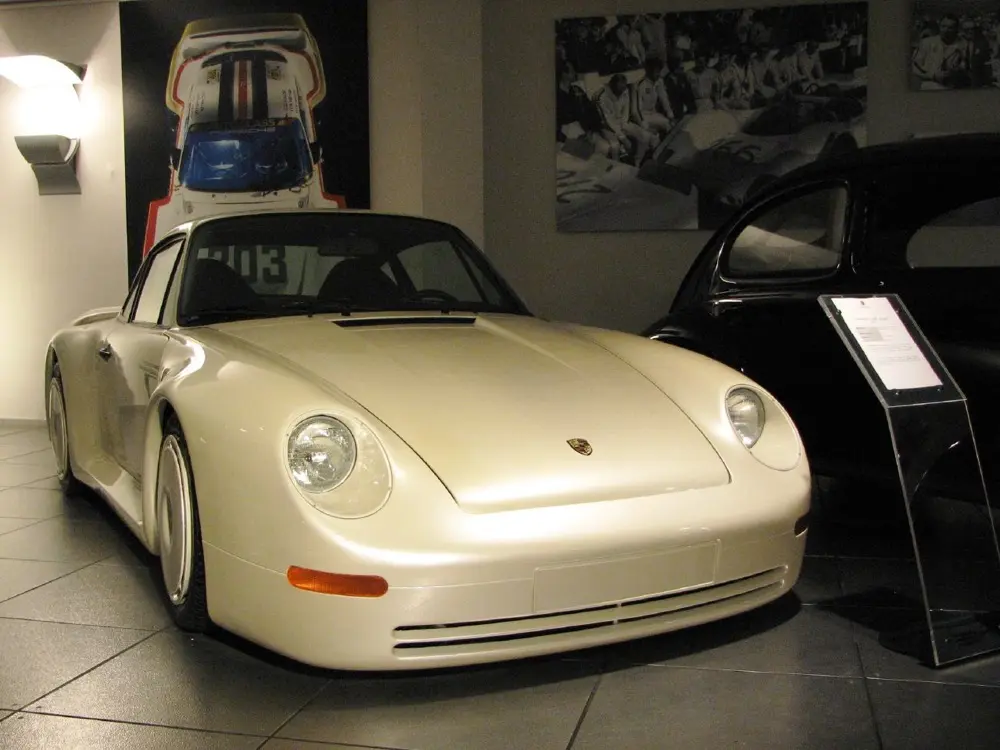
The Porsche 959 is a sports car manufactured by Porsche from 1986 to 1989, first as a Group B rally car and later as a legal production car designed to satisfy FIA homologation regulations requiring at least 200 street legal units be built. When it was introduced, the twin-turbocharged 959 was the world’s fastest street-legal production car, boasting a top speed of 195 miles per hour (314 km/h), with the sport model capable of reaching 197 miles per hour (317 km/h). During its production run it was hailed as the most technologically advanced road-going sports car ever built, and forerunner of all future super cars. It was one of the first high-performance vehicles with all-wheel drive, providing the basis for Porsche’s first all-wheel drive Carrera 4 model. In 2004, Sports Car International named the 959 number one on its list of Top Sports Cars of the 1980s.
Frequently Asked Questions
How do I bleed the brake system in a Porsche 959?
Bleeding the brake system in a Porsche 959 involves starting with the brake caliper that is farthest from the master cylinder and working your way closer. Attach a clear tube to the brake bleeder valve and submerge the other end in a container of brake fluid. With the help of a second person, slowly press the brake pedal while the bleeder valve is opened. Repeat the process until all air bubbles are eliminated and only clean brake fluid is flowing. Properly bleeding the brake system is crucial for maintaining optimal braking performance and safety.
How do I change the brake pads in a Porsche 959?
Changing the brake pads in a Porsche 959 involves removing the wheels to access the brake calipers. Once the caliper is exposed, remove the retaining pins or bolts and carefully extract the old brake pads. Inspect the brake rotors for any signs of damage or excessive wear, and if necessary, resurface or replace them. Install the new brake pads, ensuring they are properly aligned and secure, and then reassemble the caliper before reinstalling the wheels. Proper brake pad maintenance is crucial for optimal braking performance and safety.
How do I change the oil in a Porsche 959?
To change the oil in a Porsche 959, start by removing the oil drain plug located underneath the engine. Allow the old oil to completely drain out, then replace the drain plug and remove the oil filter. Install a new oil filter and add the recommended amount of fresh oil to the engine, ensuring it is the correct viscosity and meets the manufacturer’s specifications. Regular oil changes are essential for proper engine performance and longevity.
How do I check and replace the air filter in a Porsche 959?
To check and replace the air filter in a Porsche 959, locate the air filter housing, usually located near the engine intake. Open the housing and remove the old air filter, ensuring to inspect it for excessive dirt or debris buildup. If the air filter appears dirty or clogged, replace it with a new one that matches the manufacturer’s specifications. Make sure the air filter is properly seated in the housing before closing it. Regularly maintaining a clean air filter helps to ensure optimal engine performance and fuel efficiency.
How do I check and replace the fuel filter in a Porsche 959?
To check and replace the fuel filter in a Porsche 959, locate the fuel filter housing, typically mounted along the fuel lines. Carefully relieve the fuel pressure by following the manufacturer’s recommended procedure. Disconnect the fuel lines from the filter and remove the old filter. Inspect the filter for any signs of debris or clogging, and if necessary, replace it with a new filter that matches the manufacturer’s specifications. Proper fuel filter maintenance helps to ensure optimal fuel delivery and prevent engine performance issues.
How do I diagnose and fix an electrical issue in a Porsche 959?
Diagnosing and fixing an electrical issue in a Porsche 959 requires a systematic approach. Start by checking the fuses and relays related to the affected electrical component. Inspect the wiring harness for any signs of damage or loose connections. Utilize a multimeter to test for continuity, voltage, and resistance as necessary. If the issue persists, it may be necessary to consult the vehicle’s wiring diagrams and seek the assistance of a qualified automotive electrician or Porsche technician.
How do I diagnose and fix an engine misfire in a Porsche 959?
Diagnosing and fixing an engine misfire in a Porsche 959 requires a systematic approach. Start by checking for any visible issues, such as loose or damaged spark plug wires, ignition coils, or vacuum leaks. Inspect the spark plugs for signs of wear or fouling and replace as needed. If the issue persists, it may be necessary to perform a diagnostic scan using specialized equipment to identify any fault codes or underlying issues. Additionally, consulting a qualified Porsche technician is recommended for an accurate diagnosis and proper repair.
How do I reset the service light in a Porsche 959?
To reset the service light in a Porsche 959, start by turning the ignition to the “ON” position without starting the engine. Use the trip odometer reset button to cycle through the display until you reach the service reminder. Press and hold the reset button until the service indicator starts flashing or resets to zero. Release the button, and the service light should be reset. It is important to note that the specific steps may vary slightly depending on the model year and trim level of the Porsche 959.
How do I reset the tire pressure monitoring system in a Porsche 959?
To reset the tire pressure monitoring system (TPMS) in a Porsche 959, start by ensuring that all tires are properly inflated to the recommended pressure. With the ignition turned on, press and hold the TPMS reset button until the TPMS indicator light starts blinking. Release the button, and the system should reset. It is important to note that the specific steps may vary slightly depending on the model year and trim level of the Porsche 959.
How often should the spark plugs be replaced in a Porsche 959?
The spark plugs in a Porsche 959 should typically be replaced every 30,000 miles or as recommended by the manufacturer. However, factors like driving conditions, fuel quality, and overall engine performance can affect the lifespan of the spark plugs. It is important to inspect the spark plugs regularly for signs of wear, such as excessive electrode erosion or carbon buildup, and replace them if necessary to ensure proper ignition and fuel efficiency.
How often should the transmission fluid be changed in a Porsche 959?
The transmission fluid in a Porsche 959 should typically be changed every 50,000 to 60,000 miles or as recommended by the manufacturer. However, it is essential to consult the specific information in the owner’s manual as maintenance schedules can vary. Regularly changing the transmission fluid helps to ensure smooth gear shifting, adequate lubrication, and prolongs the life of the transmission.
What is the recommended engine oil viscosity for a Porsche 959?
The recommended engine oil viscosity for a Porsche 959 can be found in the owner’s manual or on the oil filler cap. It is crucial to use an oil viscosity that matches the manufacturer’s specifications to ensure proper lubrication and protection for the engine components. Generally, Porsche recommends a multi-grade oil with a viscosity rating of SAE 5W-40 or 10W-60 for the 959 model. Always use high-quality oil that meets the required specifications.
What is the recommended interval for replacing the timing belt in a Porsche 959?
The Porsche 959 does not have a timing belt; instead, it utilizes a timing chain. The timing chain is designed to last the lifetime of the engine under normal operating conditions. However, it is essential to inspect the timing chain regularly for signs of excessive wear or damage. If any issues are detected, it is recommended to consult a qualified Porsche technician for further assessment and potential replacement.
What is the recommended tire pressure for a Porsche 959?
The recommended tire pressure for a Porsche 959 can be found in the owner’s manual or on a sticker located on the driver’s door jamb. It is important to follow the manufacturer’s recommended tire pressure for optimal performance, handling, and tire longevity. Ensure to check the tire pressure when the tires are cold and adjust it accordingly using a reliable tire pressure gauge.
What type of coolant should I use in a Porsche 959?
When selecting a coolant for your Porsche 959, it is important to use a high-quality, ethylene glycol-based coolant that meets the Porsche specifications. The coolant should have the proper additives to provide effective corrosion protection and heat transfer properties. Additionally, ensure the coolant is compatible with aluminum components as the Porsche 959 engine utilizes aluminum construction. Regularly check the coolant level and top up as necessary to maintain optimal engine cooling.
