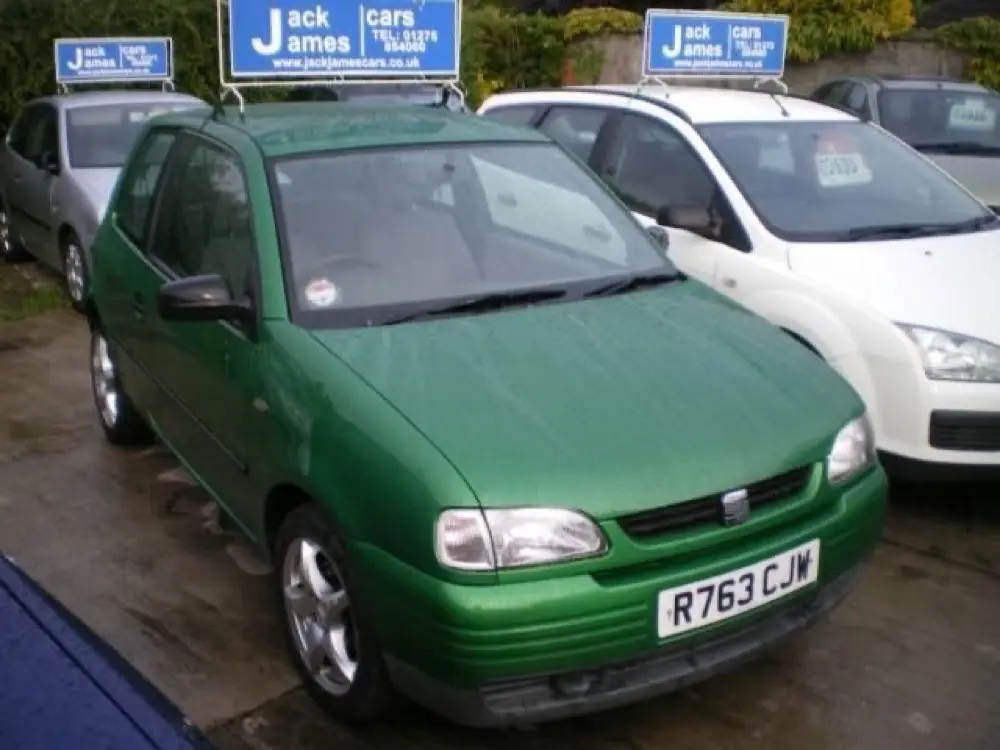
A city car by Spanish automaker Seat, the Seat Arosa was first introduced in Geneva Motor Show in 1997, while its facelifted version was presented at the Paris Motor Show in late 2000. Sold over 179,000 units worldwide and designed by Jozef Kaba , the same man who designed Bugatti Veyron 16.4, it hares the same platform with Volkswagen Lupo. Named after Vilagarc?a de Arousa, a municipality in the province of Pontevedra, Spain the Arosa was initially manufactured at a Volkswagen plant in Wolfsburg, Germany, and only in May 1998, was the production moved to SEAT facilities in Martorell in Spain.
Frequently Asked Questions
How do I change a flat tire on my Seat Arosa?
To change a flat tire on your Seat Arosa, start by parking the vehicle on a flat and stable surface. Apply the parking brake and place wheel chocks on the opposite side of the flat tire. Locate the spare tire, jack, and lug wrench. Loosen the lug nuts slightly, position the jack under the vehicle’s designated jacking point, and raise the vehicle until the flat tire is off the ground. Remove the lug nuts, replace the flat tire with the spare tire, hand-tighten the lug nuts, lower the vehicle, and then use the lug wrench to fully tighten the lug nuts in a star pattern.
How do I check the battery condition in my Seat Arosa?
To check the battery condition in your Seat Arosa, start by turning off all electrical components and the engine. Open the hood and locate the battery. Inspect the battery terminals for corrosion and ensure they are securely tightened. Use a multimeter set to the DC voltage mode and connect the positive (red) lead to the positive terminal and the negative (black) lead to the negative terminal. A healthy battery should read around 12.6 volts or higher. If the reading is significantly lower, it may indicate a weak battery that requires charging or replacement.
How do I check the brake fluid level in my Seat Arosa?
To check the brake fluid level in your Seat Arosa, locate the brake fluid reservoir under the hood. The reservoir is typically translucent, allowing you to see the fluid level. Ensure the vehicle is parked on a level surface and the engine is off. The fluid level should be between the minimum and maximum markings on the reservoir. If the level is below the minimum, it may indicate a leak or low brake pad thickness, and it is advisable to have the system inspected by a professional.
How do I check the tire pressure on my Seat Arosa?
To check the tire pressure on your Seat Arosa, start by ensuring the tires are cold. Remove the valve cap from each tire and use a tire pressure gauge to measure the pressure. Compare the reading to the recommended tire pressure specified in your vehicle’s manual. Add or release air as necessary to match the recommended pressure, and don’t forget to replace the valve caps securely.
How do I properly jump-start my Seat Arosa?
To jump-start your Seat Arosa, park another vehicle with a charged battery close by. Ensure both vehicles are turned off and the parking brakes are engaged. Connect the positive (red) jumper cable to the positive terminal of the dead battery and the other end to the positive terminal of the charged battery. Then, connect the negative (black) cable to the negative terminal of the charged battery and attach the other end to a metal, unpainted part of your vehicle’s engine. Start the engine of the vehicle with the charged battery and let it run for a few minutes before attempting to start your Seat Arosa.
How do I replace a blown fuse in my Seat Arosa?
To replace a blown fuse in your Seat Arosa, locate the fuse box, which is usually found in the engine compartment or beneath the dashboard. Identify the fuse that corresponds to the malfunctioning component or system. Using the fuse puller or a pair of needle-nose pliers, gently remove the blown fuse. Insert a new fuse of the same amperage rating into the appropriate slot, ensuring it fits securely. Close the fuse box and test the component or system to verify if the issue has been resolved.
How do I reset the maintenance light in my Seat Arosa?
To reset the maintenance light in your Seat Arosa, turn the ignition key to the “On” position without starting the engine. Press and hold the trip meter reset button until the maintenance light begins blinking. Release the button and turn off the ignition. When you start the vehicle again, the maintenance light should be reset.
How often should I change the engine oil in my Seat Arosa?
It is recommended to change the engine oil in your Seat Arosa every 5,000 to 7,500 miles or every six months, whichever comes first. Regular oil changes are crucial for maintaining optimal engine performance and prolonging the life of your vehicle. Neglecting to change the oil regularly can lead to increased friction, engine damage, and reduced fuel efficiency.
How often should I replace the air filter in my Seat Arosa?
The air filter in your Seat Arosa should be replaced approximately every 12,000 to 15,000 miles or once a year, depending on driving conditions. A dirty or clogged air filter can restrict airflow to the engine, reducing performance and fuel efficiency. Regularly inspecting and replacing the air filter will help maintain clean air intake and prolong the life of your engine.
How often should I replace the cabin air filter in my Seat Arosa?
The cabin air filter in your Seat Arosa should be replaced approximately every 15,000 to 20,000 miles or once a year, depending on driving conditions. A dirty or clogged cabin air filter can reduce the effectiveness of your vehicle’s ventilation system and result in decreased air quality inside the cabin. Regularly replacing the cabin air filter will help ensure clean and fresh air circulation.
How often should I replace the fuel filter in my Seat Arosa?
The fuel filter in your Seat Arosa should generally be replaced every 30,000 to 40,000 miles or as recommended by the manufacturer. A clogged fuel filter can restrict fuel flow, leading to poor engine performance and potential damage to the fuel injectors or pump. Regularly replacing the fuel filter will help ensure proper fuel delivery and maintain engine efficiency.
How often should I replace the timing belt in my Seat Arosa?
The timing belt in your Seat Arosa typically needs to be replaced every 60,000 to 90,000 miles or as recommended by the manufacturer. A worn or broken timing belt can cause severe engine damage, so it is crucial to adhere to the recommended replacement interval. Regular inspection and timely replacement of the timing belt will help prevent costly repairs and ensure the proper functioning of the engine.
What is the recommended coolant for my Seat Arosa?
The recommended coolant for your Seat Arosa may vary depending on the engine type and model year. Refer to your vehicle’s manual for the specific coolant type and mixture ratio recommended by the manufacturer. Using the proper coolant is essential for maintaining optimal engine temperature and preventing overheating or freezing.
What type of oil should I use in my Seat Arosa?
The recommended oil for your Seat Arosa can vary depending on the engine type and model year. Consult your vehicle’s manual for the specific oil viscosity and classification recommended by the manufacturer. Using the correct oil is essential to ensure proper lubrication, prevent engine wear, and maintain optimal performance.
When should I replace the spark plugs in my Seat Arosa?
The recommended interval for spark plug replacement in your Seat Arosa is typically around 30,000 to 50,000 miles, but this can vary depending on the specific spark plug type and driving conditions. Worn or fouled spark plugs can result in poor fuel economy, misfires, and decreased engine performance. Regularly inspecting and replacing the spark plugs will help maintain smooth engine operation.
