
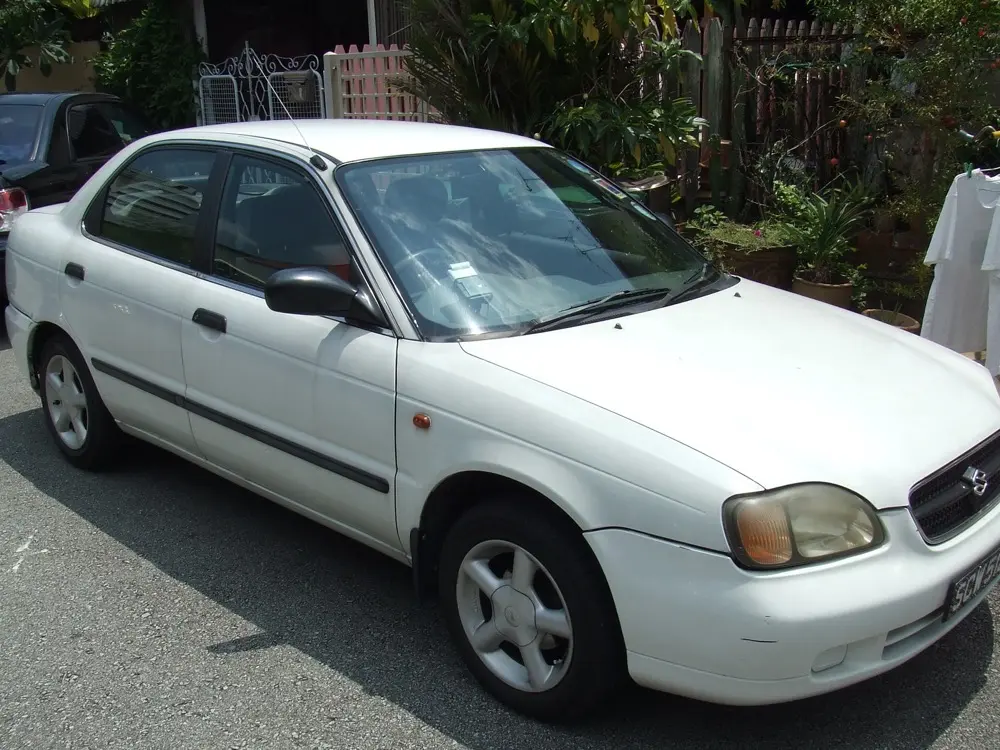
The Suzuki Cultus Crescent is a compact car that was produced by Suzuki in Japan between 1995 and 2002. It was markted as the Suzuki Baleno throughout Asia, Australasia, and Europe. It is built as a three-door hatchback, four-door sedan or five-door station wagon. It is manufactured with front engine, as front-wheel or four-wheel drive. It is offered with various petrol and 1.9L diesel engine. This model is produced with five-speed manual or four-speed automatic transmission style. A US-spec Suzuki Esteem was featured in the 2015 AMC television series Better Call Saul.
Frequently Asked Questions
How do I change a flat tire on my Suzuki Baleno?
To change a flat tire on a Suzuki Baleno, first, locate the spare tire, jack, and lug wrench in the trunk. Park the vehicle on a flat and stable surface, engage the parking brake, and loosen the lug nuts on the flat tire. Position the jack in the appropriate jacking point and raise the vehicle until the flat tire is off the ground. Remove the lug nuts, replace the flat tire with the spare, tighten the lug nuts, lower the vehicle, and finally, fully tighten the lug nuts in a crisscross pattern.
How do I check the brake fluid level in my Suzuki Baleno?
To check the brake fluid level in a Suzuki Baleno, locate the brake fluid reservoir under the hood. The reservoir is typically translucent and has minimum and maximum level markings on its side. Ensure the vehicle is on a level surface, remove the reservoir cap, and visually inspect the fluid level. If the brake fluid level is below the minimum marking, it should be topped up with the recommended brake fluid.
How do I replace a burnt-out headlight bulb on my Suzuki Baleno?
To replace a burnt-out headlight bulb on a Suzuki Baleno, open the hood and locate the headlight assembly at the front of the vehicle. Disconnect the electrical connector from the back of the headlight assembly, then twist and remove the bulb socket. Pull out the old bulb and insert the new one, making sure not to touch the glass portion. Reinstall the bulb socket into the headlight assembly, reattach the electrical connector, and test the new headlight bulb.
How do I reset the maintenance light in my Suzuki Baleno?
To reset the maintenance light in a Suzuki Baleno, turn the ignition key to the “ON” position without starting the engine. Press and hold the trip odometer reset button until the maintenance light starts flashing, then release the button. The maintenance light should now be reset, indicating that the maintenance reminder has been cleared.
How do I reset the tire pressure monitoring system in my Suzuki Baleno?
To reset the tire pressure monitoring system (TPMS) in a Suzuki Baleno, ensure all tires are properly inflated to the recommended pressure. Turn the ignition key to the “ON” position without starting the engine and locate the TPMS reset button, usually located under the steering wheel. Press and hold the TPMS reset button until the TPMS warning light blinks three times, then release the button. The TPMS should now be reset and calibrated to the current tire pressures.
How often should I change the engine oil in my Suzuki Baleno?
The engine oil in a Suzuki Baleno should be changed every 5,000 to 7,500 miles or every 6 months, whichever comes first. Regular oil changes are crucial for maintaining engine performance and preventing potential damage. Neglecting to change the engine oil on time can lead to increased friction, reduced lubrication, and accelerated wear and tear on engine components.
How often should I replace the air filter in my Suzuki Baleno?
The air filter in a Suzuki Baleno should be inspected at every oil change and replaced every 15,000 to 30,000 miles, depending on driving conditions. A clean air filter is essential for maintaining proper air flow to the engine, improving fuel efficiency, and preventing damage to engine components. If the air filter appears dirty or clogged, it should be replaced promptly.
How often should I replace the cabin air filter in my Suzuki Baleno?
The cabin air filter in a Suzuki Baleno should typically be replaced every 15,000 to 25,000 miles, or as specified in the vehicle’s maintenance schedule. A dirty or clogged cabin air filter can reduce the effectiveness of the vehicle’s HVAC system, lead to unpleasant odors, and negatively impact the air quality inside the cabin. Regularly replacing the cabin air filter ensures clean air circulation and enhances passenger comfort.
How often should I replace the fuel filter in my Suzuki Baleno?
The fuel filter in a Suzuki Baleno should typically be replaced every 30,000 to 50,000 miles, or as recommended in the vehicle’s maintenance schedule. A clogged or dirty fuel filter can restrict fuel flow, leading to poor engine performance, reduced fuel efficiency, and potential damage to fuel injectors or other fuel system components. Regularly inspect and replace the fuel filter to ensure proper fuel system operation.
How often should I replace the spark plugs in my Suzuki Baleno?
The spark plugs in a Suzuki Baleno should be replaced every 30,000 to 50,000 miles or as recommended in the vehicle’s maintenance schedule. Worn out or fouled spark plugs can result in reduced engine performance, misfires, and increased fuel consumption. Regularly inspect the spark plugs for signs of wear, such as erosion or deposits, and replace them if necessary.
How often should I replace the timing belt in my Suzuki Baleno?
The timing belt in a Suzuki Baleno should typically be replaced every 60,000 to 100,000 miles, or as specified in the vehicle’s maintenance schedule. A worn or damaged timing belt can result in engine misfires, loss of power, or even engine failure if it breaks. It is crucial to adhere to the recommended replacement intervals to avoid potential costly repairs.
What is the recommended tire pressure for my Suzuki Baleno?
The recommended tire pressure for a Suzuki Baleno is typically mentioned on a sticker located on the driver’s side door jamb or in the owner’s manual. It is important to adhere to the specified tire pressure to ensure proper handling, optimal fuel efficiency, and maximum tire life. Remember to check the tire pressure monthly and adjust it as needed, considering factors like load and driving conditions.
What type of coolant should I use in my Suzuki Baleno?
It is recommended to use a high-quality ethylene glycol-based coolant with a 50:50 mixture of coolant and distilled water in a Suzuki Baleno. This coolant mixture provides optimal protection against freezing and boiling, while also preventing corrosion and cavitation in the cooling system. Be sure to check the coolant level regularly and top it up with the correct mixture as needed.
What type of transmission fluid should I use in my Suzuki Baleno?
The type of transmission fluid recommended for a Suzuki Baleno can vary depending on the model year and transmission type. It is important to refer to the vehicle’s owner’s manual or consult a Suzuki Baleno repair manual to determine the specific transmission fluid specifications. Using the correct type and grade of transmission fluid is crucial for smooth gear shifts, optimal transmission performance, and longevity.
