
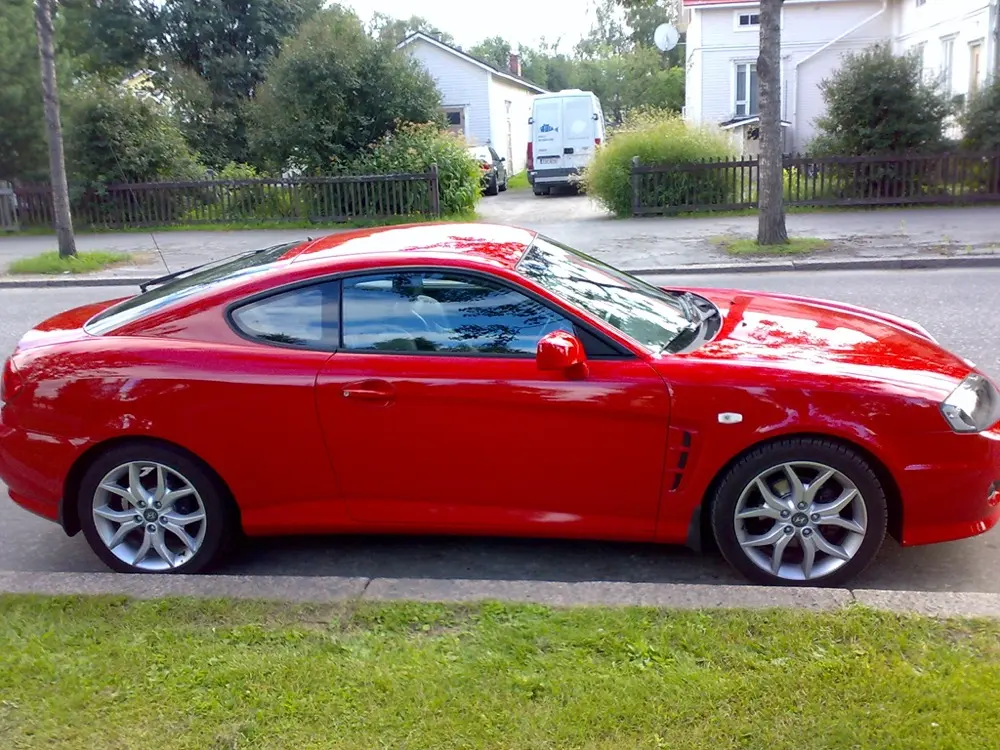
The Hyundai Tiburon, known as the Hyundai Coupe or Tuscani in some markets, was a compact sports coupe that was produced by the South Korean manufacturer Hyundai from 1996 to 2008. In second generation models 2003 and later the Tuscani variation was a complete all upgrades package with every option included. It was the elite version of the car originally only offered in yellow. It was manufactured with both automatic and manual transmission styles. Top speed of this car is 206 km/h.
Frequently Asked Questions
How do I check the brake fluid level in my Hyundai Coupe?
To check the brake fluid level in your Hyundai Coupe, locate the brake fluid reservoir under the hood. The reservoir is typically translucent and has “MAX” and “MIN” markings on the side. Ensure the vehicle is on a level surface, remove the reservoir cap, and visually inspect the fluid level. The brake fluid should be between the “MAX” and “MIN” marks. If the level is below the “MIN” mark, it is advisable to have the brake system inspected for potential leaks or other issues.
How do I check the tire pressure on my Hyundai Coupe?
To check the tire pressure on your Hyundai Coupe, start by locating the recommended tire pressure values, which are usually indicated on a sticker inside the driver-side door jamb or in the owner’s manual. Then, use a tire pressure gauge to measure the pressure of each tire individually, ensuring they are inflated to the recommended levels. Proper tire pressure is crucial for tire longevity, fuel efficiency, and overall safety.
How do I replace a burnt-out headlight bulb in my Hyundai Coupe?
To replace a burnt-out headlight bulb in your Hyundai Coupe, start by accessing the headlight assembly from behind the respective headlight housing. Disconnect the electrical connector, remove the retaining screws or clips, and carefully pull out the old bulb. Insert the new bulb, secure it in place, reconnect the electrical connector, and test the headlight to ensure proper operation. It is important to consult your Hyundai Coupe automotive repair manual or seek professional assistance for detailed instructions and specific bulb types.
How do I replace a fuse in my Hyundai Coupe?
To replace a fuse in your Hyundai Coupe, locate the fuse box, which is usually found in the engine compartment or under the dashboard. Use the fuse diagram on the fuse box cover or in the owner’s manual to identify the specific fuse associated with the component or circuit that is not functioning correctly. Once identified, use a fuse puller or a pair of needle-nose pliers to remove the faulty fuse and replace it with a new fuse of the same rating. It is crucial to use the correct fuse rating to avoid electrical system damage or fire hazards.
How do I replace the windshield wiper blades on my Hyundai Coupe?
To replace the windshield wiper blades on your Hyundai Coupe, lift the wiper arm away from the windshield until it locks in a raised position. Locate the release tab or button on the wiper blade assembly and press it to release the old blade. Slide the old blade off the wiper arm and attach the new blade by sliding it onto the arm until it clicks into place. Lower the wiper arm back onto the windshield and repeat the process for the other wiper blade. It is recommended to consult your Hyundai Coupe automotive repair manual or refer to the specific wiper blade manufacturer’s instructions for detailed guidance.
How do I reset the maintenance light on my Hyundai Coupe?
To reset the maintenance light on your Hyundai Coupe, turn the ignition switch to the “On” position without starting the engine. Press and hold the trip button or odometer reset button until the maintenance light starts flashing or goes out, usually within 10 seconds. Release the button, turn off the ignition, and then start the vehicle to ensure the maintenance light has been successfully reset. However, the exact procedure may vary slightly depending on the specific model and year of your Hyundai Coupe, so it is advisable to consult your automotive repair manual for detailed instructions.
How often should I change the engine oil in my Hyundai Coupe?
It is recommended to change the engine oil in your Hyundai Coupe every 5,000 to 7,500 miles or every six months, whichever comes first. Regular oil changes ensure proper lubrication, prevent engine wear, and maintain optimal performance and fuel efficiency in your vehicle.
How often should I replace the air filter in my Hyundai Coupe?
The air filter in your Hyundai Coupe should be replaced approximately every 15,000 to 30,000 miles, depending on driving conditions. However, it is recommended to inspect the air filter regularly and replace it if it appears dirty or clogged. A clean air filter promotes optimal engine performance, improves fuel efficiency, and helps prevent premature wear on engine components.
What is the recommended coolant type for my Hyundai Coupe?
The recommended coolant type for most Hyundai Coupe models is a long-life ethylene glycol-based coolant with a 50:50 mixture of coolant and distilled water. This mixture provides the necessary antifreeze and anti-corrosion properties to protect the engine against extreme temperatures and prevent rust and corrosion within the cooling system. Always consult your Hyundai Coupe automotive repair manual or a certified technician to confirm the specific coolant requirements for your vehicle.
What is the recommended interval for replacing the timing belt in my Hyundai Coupe?
The recommended interval for replacing the timing belt in most Hyundai Coupe models is approximately every 60,000 to 100,000 miles or every 5 to 7 years, whichever comes first. However, it is crucial to consult your Hyundai Coupe automotive repair manual or a certified technician to confirm the specific timing belt replacement interval for your exact model and year. Replacing the timing belt according to the manufacturer’s recommended schedule is essential to prevent potential engine damage and costly repairs.
What is the recommended tire pressure for my Hyundai Coupe?
The recommended tire pressure for your Hyundai Coupe can usually be found on a sticker inside the driver-side door jamb or in the owner’s manual. The recommended tire pressure may vary depending on the specific model, trim level, and tire size installed on your vehicle. It is crucial to maintain the recommended tire pressure as it ensures proper handling, tire longevity, and fuel efficiency, while also reducing the risk of tire damage or blowouts.
What should I do if my Hyundai Coupe’s battery is dead?
If your Hyundai Coupe’s battery is dead, you can try jump-starting the vehicle using jumper cables and a functioning battery from another vehicle. Connect the positive terminals of both batteries with a red jumper cable, then connect the negative terminal of the functioning battery to a grounded metal surface on the dead vehicle. Start the functioning vehicle and let it run for a few minutes, then attempt to start your Hyundai Coupe. If the battery is still not charging, it is recommended to have it checked and potentially replaced by a professional.
What should I do if my Hyundai Coupe’s check engine light is illuminated?
If the check engine light in your Hyundai Coupe is illuminated, it is advisable to have the vehicle inspected by a certified technician as soon as possible. The check engine light can indicate various issues, ranging from minor faults to more serious engine problems. A technician will use diagnostic tools to retrieve trouble codes stored in the vehicle’s onboard computer, which will help identify the specific issue causing the light to illuminate. Ignoring the check engine light and continuing to drive the vehicle may lead to further damage or decreased performance.
What type of engine oil should I use for my Hyundai Coupe?
For most Hyundai Coupe models, it is recommended to use a high-quality synthetic or semi-synthetic engine oil with the viscosity grade of 5W-30. However, it is always best to consult your Hyundai Coupe automotive repair manual or contact a certified Hyundai technician to confirm the specific oil requirements for your exact model and year.
