
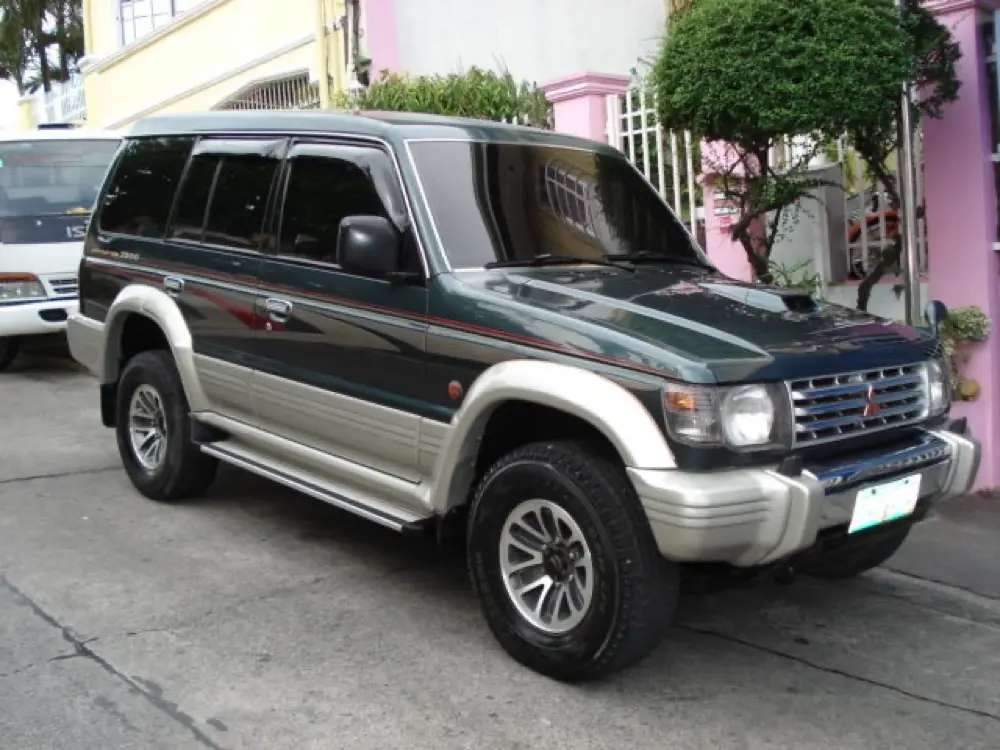
Although introduced to the public in 1982. The Mitsubishi Pajero’s roots trace back to 1934, as a government prototype referred to as the PX33. The first public prototype displayed at the Tokyo Motor Show in 1973 and the second in 1978. In 1981 the first production Pajero arrived on display, and a year later, it was available for sale as a 1982 model year. Known as the Pajero in Japan. The Montero in Spain, South America, and India. And the Shogun in the United Kingdom. Nearly 3.2 million units were made worldwide between 1982 and 2017.
Although plans were in place for a plug-in hybrid variant, production officially ended in August of 2019. There were four generational changes along the way. Let us now look at each in detail.
First Generation – (1982-1991)
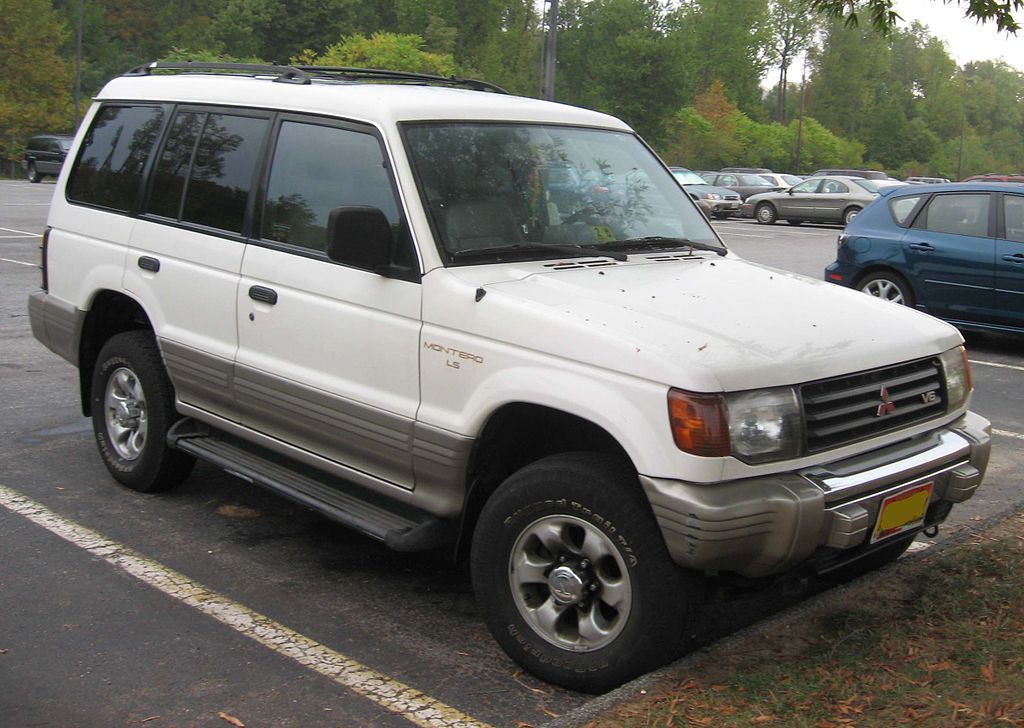
For the first year of its release, the Pajero was only available as a 3-door, short-wheelbase model. Three engines were available, though, the 3.0-liter V6 was the most popular. Other options that made it unique for a vehicle of its type included a turbo diesel engine. Power steering and a front double-wishbone suspension. This union not only made the Pajero capable but comfortable as well.
By 1983 a 5-door model showed up with a longer wheel-base. For this bigger version, two engines were available, a gas-powered 2.0-liter turbo, and a 2.3-liter turbo-diesel. Seating also expanded to up to seven with the optional third-row. 1984 saw upgrades to the diesel engines, which now had more HP and Torque
More than 800,000 units got made by the time the first-gen ended in 1991. The Pajero had firmly secured itself as a capable, comfortable vehicle, loved by the public.
Second Generation – (1991-1999)
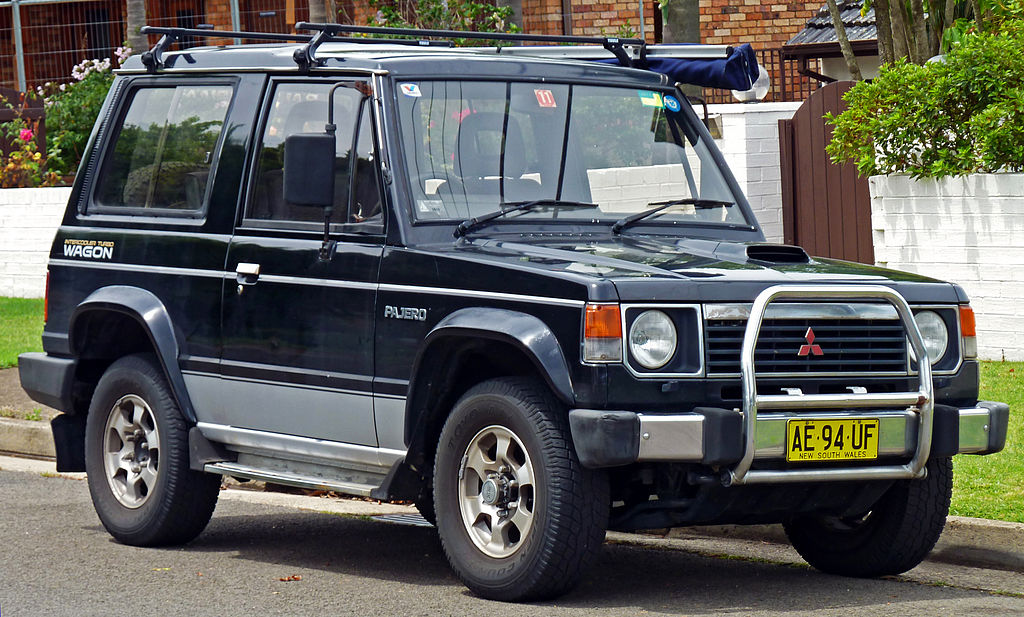
Gen-two of the Pajero focused on improving the creature comforts offered to buyers. While still upholding its 4×4 roots. Achieved through features like a selectable 4WD system (known as Super Select). Electronic shock absorbers. And an ABS-system that worked regardless of which 4WD mode was engaged. Styling was also updated, with softer lines that gave the Pajero a more modern look.
1993 saw the release of two new engines, a 3.5-liter V6, and a 2.8-liter turbo diesel. Also included was an upgraded transfer case and transmission. In 1996, a 2.4-liter 4-cylinder entered the fray, paired only with the short wheel-base model.
Almost 1.1 million units got produced during the second-generation of the Pajero. Small changes were made depending on where they were sold, such as different engine options and small visual changes. By the end of the second-generation, the Pajero was a well-rounded off-road capable daily driver.
Third Generation – (1999-2006)
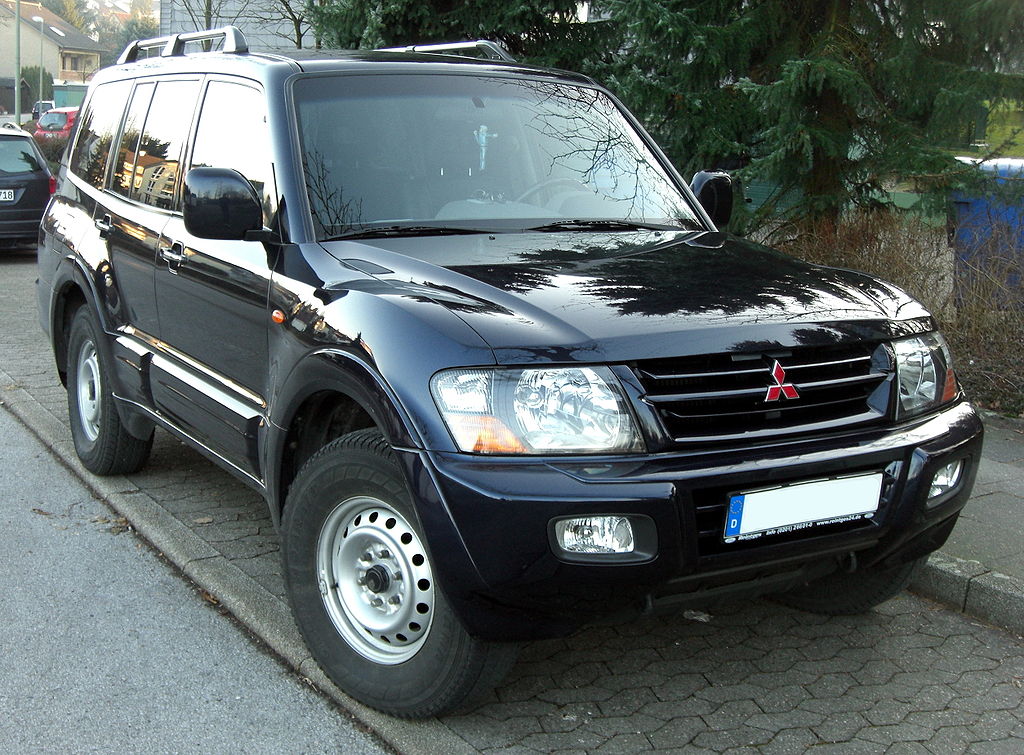
The third-gen Pajero first arrived in Japanese markets in 1999. And as late as 2003 in several developing countries. The new model brought a wider stance, it sat lower, and it featured a unibody frame for added strength. The Pajero was also moved up from a mid-size to a full-size SUV. Popular updates included more convenient seating arrangements. And a more efficient, electric Super Select 4WD system. The fact it was now electric meant the Pajero could change between drive modes without being in gear.
One of the most significant additions for this generation, was a 3.8-liter, SOHC 24-valve V6 engine using an electronic throttle valve. It was refined-enough for daily driving but powerful enough for off-road purposes. The current 3.5-liter V6 in North America got swapped for this new option in 2003.
Also, in 2003, the Pajero saw a minor facelift, and several engines saw performance upgrades. By the time the third-gen had run its course, nearly 750,000 units had been made. 2006 also marked the last year for the Pajero/Montero in the United States.
Fourth Generation – (2006-2019)
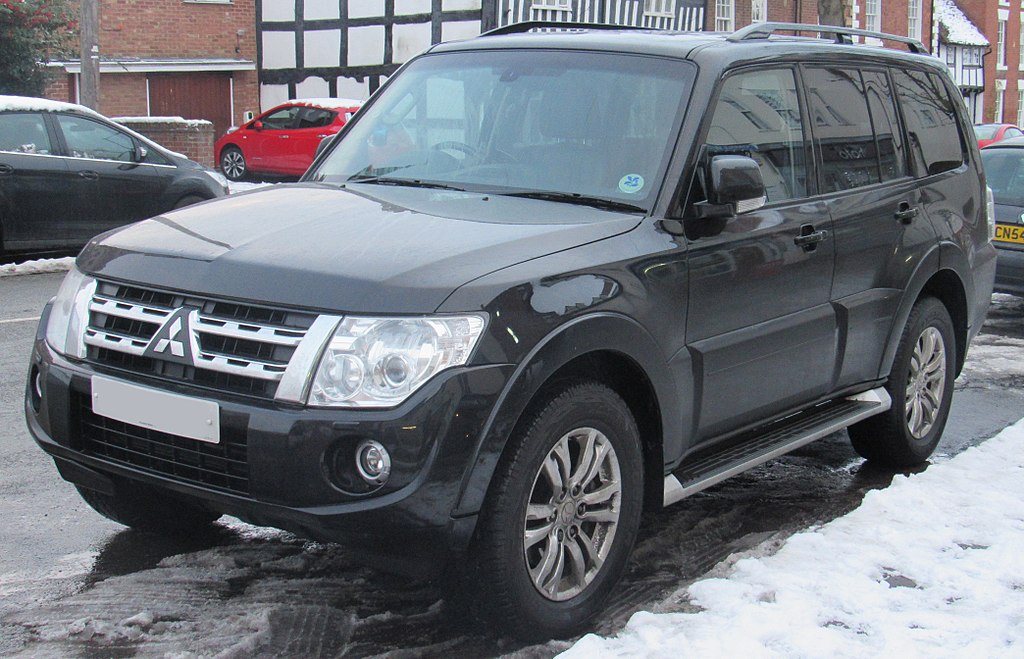
The fourth and final version of the Pajero/Montero debuted at the Paris Motor Show in 2006. It featured new styling inside and out, as well as new safety and performance tech. Dual-stage front airbags and side curtain airbags were now standard. The Super Select 4WD system also saw the addition of the active stability and traction system. Making it more capable than ever, whether on or off-road.
The final facelift occurred in 2015. With the addition of LED daytime running lights and a revised front-fascia and bodyshell. Also upgraded was the interior, which saw new metallic and woodgrain trim, as well as new sound-deadening materials.
By the end of the Pajero’s final run, only four engines remained. The 3.0-liter, 3.5-liter, and 3.8-liter V6s, as well as two diesel engines, the 2.8-liter, and 3.2-liter 4-cylinders. By 2017, the third-gen Pajero saw more than 700,000 units produced. As a farewell to an SUV that enjoyed worldwide acclaim, Mitsubishi released a “Final Edition” package to the Japanese market. This top of the line package featured an optional seven-inch infotainment system, leather seating. And an electric sunroof, to name a few.
Frequently Asked Questions
How do I adjust the headlights on my Mitsubishi Pajero?
To adjust the headlights on your Mitsubishi Pajero, park the vehicle on a level surface facing a wall or garage door approximately 25 feet away. With the headlights turned on, locate the adjustment screws typically found near the headlight housings. Use a screwdriver or a suitable tool to turn the screws and adjust the vertical and horizontal aim of the headlights. Aim the headlights so that the cutoff line is parallel to the ground and aligned properly.
How do I change the brake pads on my Mitsubishi Pajero?
To change the brake pads on your Mitsubishi Pajero, start by safely lifting the vehicle and removing the wheel. Locate the caliper, which is held in place by bolts or pins, and remove them to access the brake pads. Take note of the position and orientation of the old brake pads before removing them. Replace the old pads with new ones, ensuring they are correctly aligned, and then reassemble the caliper, wheel, and lug nuts.
How do I change the oil in my Mitsubishi Pajero?
To change the oil in your Mitsubishi Pajero, start by locating the oil drain plug underneath the vehicle and placing a drain pan beneath it. Remove the drain plug and allow the old oil to fully drain out. Once drained, replace the drain plug and proceed to remove the oil filter. After replacing the filter, refill the engine with the recommended amount and type of oil.
How do I check the coolant level in my Mitsubishi Pajero?
To check the coolant level in your Mitsubishi Pajero, make sure the engine is cool and locate the coolant reservoir, which is typically a translucent container with min/max markings. The coolant level should be between these marks when the engine is cold. If the level is below the minimum mark, add a mixture of coolant and distilled water as recommended in the owner’s manual. Be cautious not to open the radiator cap when the engine is hot to avoid injury.
How do I check the transmission fluid level in my Mitsubishi Pajero?
To check the transmission fluid level in your Mitsubishi Pajero, start the engine and let it idle for a few minutes to warm up. Locate the transmission dipstick, which is usually labeled and found near the back of the engine bay. With the engine running and in park, pull out the dipstick, wipe it clean, reinsert it, and then pull it out again. Check the fluid level against the markings on the dipstick, ensuring it is within the recommended range.
How do I program a new key fob for my Mitsubishi Pajero?
To program a new key fob for your Mitsubishi Pajero, start by sitting in the driver’s seat with all doors closed. Insert the key into the ignition and turn it to the “ON” position without starting the engine. Within 10 seconds, press and release the “LOCK” button on the existing key fob twice. Within 10 seconds, press and release the “LOCK” button on the new key fob. Turn the ignition off, remove the key, and test the new key fob to ensure it is functioning properly.
How do I replace a blown fuse in my Mitsubishi Pajero?
If you have a blown fuse in your Mitsubishi Pajero, first, locate the fuse box, which is usually found in the engine compartment or under the dashboard. Open the fuse box and refer to the diagram on the inside cover or the owner’s manual to identify the specific fuse responsible for the malfunctioning component. Once located, use a fuse puller or a pair of needle-nose pliers to remove the blown fuse and replace it with a new one of the same rating.
How do I replace the battery in my Mitsubishi Pajero key fob?
To replace the battery in your Mitsubishi Pajero key fob, locate the small slot or groove on the side or back of the key fob. Insert a small flathead screwdriver or a coin into the slot and gently pry open the key fob. Once opened, carefully remove the old battery and replace it with a new one, ensuring the correct polarity. Close the key fob by aligning the two halves and pressing them together until they snap into place.
How do I replace the cabin air filter in my Mitsubishi Pajero?
To replace the cabin air filter in your Mitsubishi Pajero, locate the cabin air filter housing, which is usually located behind the glove compartment or under the dashboard. Open the housing by removing the clips or screws that secure it. Take note of the orientation of the old air filter before removing it. Install the new air filter in the correct orientation and reassemble the housing, ensuring it is securely fastened.
How do I replace the spark plugs in my Mitsubishi Pajero?
To replace the spark plugs in your Mitsubishi Pajero, first, ensure the engine is cool. Locate the spark plug wires and follow them to the spark plugs, which are typically found on top of the engine. Remove the wire from each spark plug by firmly grasping the boot and pulling it straight off. Use a spark plug socket and ratchet to remove the old spark plugs and replace them with new ones, ensuring they are properly tightened. Reattach the spark plug wires in the correct order and ensure they are securely connected.
How do I replace the windshield wipers on my Mitsubishi Pajero?
To replace the windshield wipers on your Mitsubishi Pajero, lift the wiper arm away from the windshield and locate the release tab or button on the wiper blade assembly. Depress the tab or button and slide the wiper blade out of the wiper arm. Align the new wiper blade with the arm and slide it in until it clicks into place. Gently lower the wiper arm back onto the windshield, ensuring it is securely attached.
How do I reset the maintenance light on my Mitsubishi Pajero?
To reset the maintenance light on your Mitsubishi Pajero, turn the ignition switch to the “ON” position without starting the engine. Within a few seconds, press and hold the trip meter reset button until the maintenance light starts flashing or turns off. Release the button and start the engine to confirm that the maintenance light has been successfully reset. If the light remains illuminated, repeat the process or refer to the owner’s manual for further instructions.
How do I troubleshoot a malfunctioning power window in my Mitsubishi Pajero?
If you are experiencing issues with a malfunctioning power window in your Mitsubishi Pajero, start by checking the fuse related to the power windows. If the fuse is intact, try operating the window from both the driver’s control panel and the individual door switch to determine if the issue is localized. If neither control works, it could indicate a problem with the window motor or regulator, which may require professional diagnosis and repair.
How often should I replace the air filter in my Mitsubishi Pajero?
The air filter in your Mitsubishi Pajero should be replaced on a regular basis to ensure optimal engine performance. As a general rule of thumb, it is recommended to replace the air filter every 12,000 to 15,000 miles or at least once a year, depending on your driving conditions. However, if you frequently drive in dusty or off-road environments, it may be necessary to replace the air filter more frequently to prevent clogging and maintain engine efficiency.
What is the recommended tire pressure for a Mitsubishi Pajero?
The recommended tire pressure for a Mitsubishi Pajero can vary depending on the specific model and the load carried. However, as a general guideline, the recommended tire pressure is typically around 30-35 psi (pounds per square inch) for both the front and rear tires. It is important to refer to the owner’s manual or the sticker located on the driver’s side door jamb for the exact recommended tire pressure for your specific Pajero model.