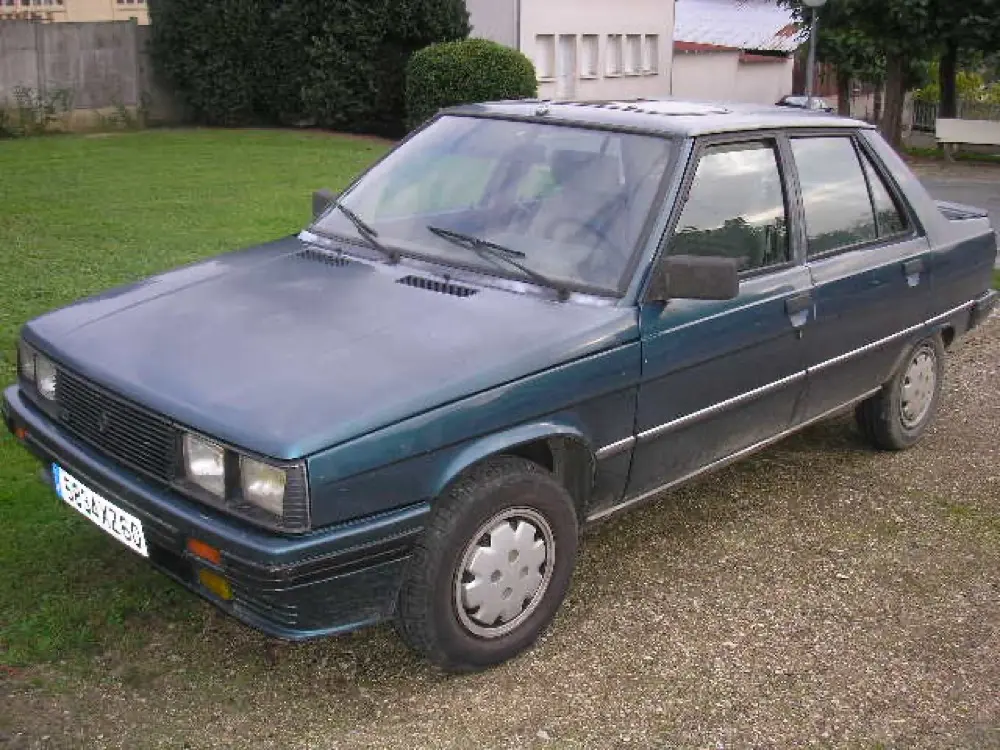
The Renault 9 and Renault 11 are two compact cars produced by the French manufacturer Renault for model years 1981 1988 in saloon (Renault 9) and hatchback (Renault 11) configurations both were styled by the French automobile designer, Robert Opron. The models use a transverse front-wheel drive engine configuration and feature four-wheel independent suspension. They were chosen the European Car of the Year for 1982, as well as the Motor Trend Car of the Year. At launch, both cars used Renault’s ageing Cl?on-Fonte engine overhead valve engines in either 1.1 or 1.4 litre format, and a basic suspension design which won few plaudits for the driving experience. The exceptions were the 9 Turbo and the 11 Turbo hot hatch, which used the turbocharged engine from the Renault 5.
Frequently Asked Questions
How do I change a flat tire on my Renault R 9?
To change a flat tire on your Renault R 9, begin by parking the vehicle on a flat, stable surface and engaging the parking brake. Locate the spare tire, jack, and lug wrench. Loosen the lug nuts on the flat tire, then use the jack to lift the vehicle off the ground. Remove the lug nuts, take off the flat tire, and install the spare tire. Tighten the lug nuts, lower the vehicle, and finally, fully tighten the lug nuts in a crisscross pattern. It is important to consult the owner’s manual for specific instructions and safety precautions.
How do I check and adjust the brake fluid level in my Renault R 9?
To check and adjust the brake fluid level in your Renault R 9, locate the brake fluid reservoir, which is usually located on the driver’s side of the engine compartment. Ensure that the vehicle is parked on a level surface and the engine is off. Remove the cap from the reservoir and check the fluid level. If necessary, add the recommended brake fluid to bring it up to the proper level. It is important to use the correct type of brake fluid specified by the manufacturer.
How do I check and top up the coolant in my Renault R 9?
To check and top up the coolant in your Renault R 9, start by ensuring that the engine is cool. Locate the coolant reservoir and verify that the coolant level is between the minimum and maximum marks. If necessary, add a 50/50 mixture of coolant and distilled water to bring the level up to the required mark. It is important to use the correct type of coolant recommended by the manufacturer.
How do I check the transmission fluid level in my Renault R 9?
To check the transmission fluid level in your Renault R 9, ensure that the vehicle is parked on a level surface with the engine running and the transmission at operating temperature. Locate the transmission dipstick, typically labeled with a yellow or red handle, and remove it. Wipe the dipstick clean, reinsert it, and then remove it again to check the fluid level. If the level is low, add the recommended transmission fluid through the dipstick tube. Refer to the owner’s manual for specific instructions and precautions.
How do I jump-start my Renault R 9?
To jump-start your Renault R 9, you will need a set of jumper cables and another vehicle with a fully charged battery. Position both vehicles close enough for the jumper cables to reach, but ensure they are not touching. Connect the red (positive) jumper cable to the positive terminal of the dead battery, then connect the other end to the positive terminal of the charged battery. Connect the black (negative) jumper cable to the negative terminal of the charged battery and attach the other end to a metal part of the engine block on the dead vehicle. Start the engine of the vehicle with the charged battery and let it run for a few minutes, then attempt to start your Renault R 9. Once the vehicle starts, carefully remove the jumper cables in the reverse order. Consult the owner’s manual for any specific instructions or precautions.
How do I replace a blown fuse in my Renault R 9?
To replace a blown fuse in your Renault R 9, locate the fuse box, which is typically located in the engine compartment or under the dashboard. Identify the fuse that corresponds to the faulty circuit and use a fuse puller or a pair of needle-nose pliers to remove the blown fuse. Replace it with a new fuse of the same amperage rating. It is crucial to consult the owner’s manual or a fuse diagram to ensure you are replacing the correct fuse.
How do I replace a burnt-out headlight bulb on my Renault R 9?
To replace a burnt-out headlight bulb on your Renault R 9, open the hood and locate the back of the headlight assembly. Disconnect the electrical connector from the bulb by gently twisting it counterclockwise. Remove the retaining clip or ring that holds the bulb in place and carefully remove the old bulb. Insert the new bulb into the headlight assembly, ensuring it is properly aligned. Reinstall the retaining clip or ring and reconnect the electrical connector. Test the headlights to verify proper operation. For specific instructions and bulb types, consult the owner’s manual or a vehicle-specific repair guide.
How do I reset the maintenance light on my Renault R 9?
To reset the maintenance light on your Renault R 9, turn the ignition key to the “on” position (without starting the engine). Press and hold the trip reset button on the instrument cluster until the maintenance light begins to flash. Release the button, and then press and hold it again until the light goes out. Turn off the ignition and start the engine to verify that the maintenance light has been reset. It is important to note that the specific procedure may vary slightly depending on the model year and trim level of your Renault R 9.
How often should I change the oil in my Renault R 9?
It is generally recommended to change the oil in your Renault R 9 every 5,000 to 7,500 miles or every 6 to 12 months, whichever comes first. Regular oil changes help to remove contaminants, replenish additives, and maintain proper engine lubrication. However, it is important to consult your vehicle’s manual for the manufacturer’s specific oil change interval.
How often should I replace the air filter in my Renault R 9?
The air filter in your Renault R 9 should be inspected regularly and replaced every 15,000 to 30,000 miles, depending on driving conditions. A dirty or clogged air filter can restrict airflow to the engine, leading to decreased performance and fuel efficiency. It is essential to follow the manufacturer’s recommendations and replace the air filter when necessary.
How often should I replace the spark plugs in my Renault R 9?
The spark plugs in your Renault R 9 should typically be replaced every 30,000 to 50,000 miles, depending on driving conditions and the type of spark plugs used. Worn or dirty spark plugs can result in poor engine performance, misfires, and reduced fuel efficiency. Regularly inspect the spark plugs and replace them as recommended by the manufacturer.
What is the recommended tire pressure for my Renault R 9?
The recommended tire pressure for your Renault R 9 can usually be found on a sticker inside the driver’s side door jamb or in the owner’s manual. It is important to maintain the correct tire pressure to ensure safe handling, optimal fuel efficiency, and even tire wear. Always check the tire pressure when the tires are cold and adjust it according to the manufacturer’s specifications.
What should I do if my Renault R 9 overheats?
If your Renault R 9 starts to overheat, it is crucial to take immediate action. Safely pull over to the side of the road and turn off the engine to allow it to cool down. Check the coolant level and ensure it is at the appropriate level. If the coolant level is low, top it up with a 50/50 mixture of coolant and distilled water. If the problem persists, consult a professional for further diagnosis and repair.
What type of oil should I use for my Renault R 9?
It is recommended to use a high-quality synthetic oil with the correct viscosity, such as 5W-30, for optimal engine performance and protection. Using the right oil will ensure proper lubrication, reduce wear and tear, and help maintain engine efficiency. Always refer to the owner’s manual or consult a professional for specific oil recommendations for your vehicle.