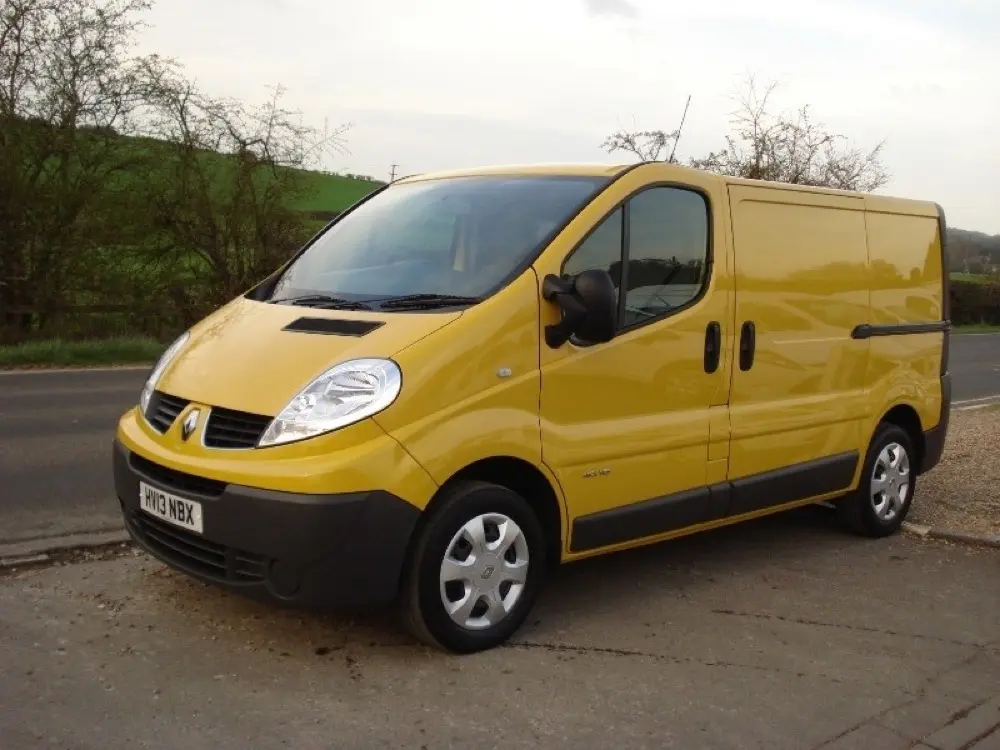
The Renault Trafic, also known as Nissan Primastar and Opel Vivaro, was launched in 1981. All of these are rebadged light commercial vehicles created from a joint venture. The Trafic experienced a major front end facelift with rounder shape and a plastic bumper, the new longer body shape covering all varieties of engine in 1990. The Trafic was the first Renault vehicle to be built in the United Kingdom in more than 30 years. The Mk1 Trafic became popular for professional conversion into budget family motorhomes due to the flexibility of the design and the generous internal space for what was a relatively small van. Popular converters were Auto-Sleepers and Holdsworth (now defunct). Other motorhome builders using the Trafic Mk1 as a base include Elddis, Eriba and Autostar.
Frequently Asked Questions
How do I adjust the headlights on my Renault Trafic?
To adjust the headlights on your Renault Trafic, park the vehicle on a level surface facing a wall or garage door. Measure the height between the ground and the center of the headlight beam. Use a screwdriver to adjust the vertical and horizontal aim of the headlights, aligning them with the reference marks on the wall. Ensure that the headlights are properly aimed to provide adequate visibility without blinding oncoming drivers. Detailed instructions and specifications can be found in your Renault Trafic automotive repair manual.
How do I change a flat tire on my Renault Trafic?
If you encounter a flat tire on your Renault Trafic, first find a safe location away from traffic to park the vehicle. Locate the spare tire, jack, and lug wrench, which are usually stored in the rear cargo area of the vehicle. Follow the step-by-step instructions provided in your Renault Trafic automotive repair manual to safely raise the vehicle, remove the flat tire, and install the spare tire. Remember to have the flat tire repaired or replaced as soon as possible.
How do I change the cabin air filter in my Renault Trafic?
To change the cabin air filter in your Renault Trafic, locate the cabin air filter housing, which is usually located behind the glove compartment or under the dashboard. Remove the access panel or cover to reveal the filter. Take out the old filter and replace it with a new one, ensuring it is positioned correctly. Reinstall the access panel or cover and make sure it is securely fastened. Consult your Renault Trafic automotive repair manual for specific instructions and filter replacement intervals.
How do I check the coolant level in my Renault Trafic?
To check the coolant level in your Renault Trafic, first ensure that the engine is cool. Locate the coolant reservoir, usually a translucent plastic tank with markings indicating minimum and maximum levels. Remove the cap and visually inspect the level, ensuring it is within the designated range. If necessary, add a 50/50 mixture of coolant and distilled water to bring it to the correct level. Always refer to your Renault Trafic automotive repair manual for detailed instructions and safety precautions.
How do I jump-start my Renault Trafic?
If your Renault Trafic’s battery is dead, you can jump-start it using jumper cables and another vehicle with a charged battery. Position the two vehicles close enough for the jumper cables to reach both batteries. Connect the positive (+) terminal of the dead battery to the positive terminal of the charged battery and the negative (-) terminal of the charged battery to a metal ground point on the dead vehicle. Start the engine of the vehicle with the charged battery and let it run for a few minutes before attempting to start the Renault Trafic. Follow the specific instructions and precautions provided in your automotive repair manual.
How do I replace a fuse in my Renault Trafic?
To replace a fuse in your Renault Trafic, locate the fuse box, typically found in the dashboard or engine compartment. Open the fuse box cover and identify the fuse that corresponds to the malfunctioning component. Gently pull out the fuse using a fuse puller or a pair of needle-nose pliers. Inspect the fuse for any signs of damage, such as a broken filament. Replace the fuse with a new one of the same rating, ensuring it is properly seated. Always consult your Renault Trafic automotive repair manual for specific fuse locations and ratings.
How do I replace a headlight bulb in my Renault Trafic?
To replace a headlight bulb in your Renault Trafic, first locate the headlight assembly behind the front grille or in the engine compartment. Remove the rubber cover or access panel to gain access to the bulb. Disconnect the electrical connector and remove the old bulb by twisting it counterclockwise. Install the new bulb, making sure it is securely seated, and reconnect the electrical connector. Refer to your Renault Trafic automotive repair manual for specific instructions and precautions.
How do I replace the battery in my Renault Trafic key fob?
To replace the battery in your Renault Trafic key fob, first locate the small slot or groove on the side of the key fob. Use a small flat-head screwdriver or a coin to gently pry open the key fob case. Carefully remove the old battery and replace it with a new one, ensuring the correct polarity. Close the key fob case by aligning the two halves and pressing them together until they click. Refer to your Renault Trafic automotive repair manual for detailed instructions and battery type.
How do I reset the maintenance light on my Renault Trafic?
To reset the maintenance light on your Renault Trafic, start by turning the ignition to the “ON” position without starting the engine. Press and hold the trip reset button on the dashboard until the maintenance light starts flashing. Release the button and immediately press it again until the light turns off. This procedure may vary depending on the model and year of your Renault Trafic, so it is advisable to consult your automotive repair manual for the correct steps.
How often should I change the engine oil in my Renault Trafic?
It is recommended to change the engine oil in a Renault Trafic every 10,000 miles or every 12 months, whichever comes first. Regularly changing the engine oil helps to maintain proper lubrication, prevent engine wear, and extend the lifespan of the engine. Neglecting to change the oil at the recommended intervals can lead to decreased performance and potential engine damage.
How often should I replace the air filter in my Renault Trafic?
It is generally recommended to replace the air filter in a Renault Trafic every 12,000 to 15,000 miles or once a year, depending on driving conditions. A clogged or dirty air filter can restrict airflow to the engine, leading to decreased performance and reduced fuel efficiency. Regularly inspect and replace the air filter as necessary to ensure optimal engine performance and prolong the life of the engine.
What does it mean if the “Check Engine” light is illuminated in my Renault Trafic?
The “Check Engine” light in your Renault Trafic indicates that there is a potential issue with the engine or its related systems. It could be a minor issue such as a loose gas cap or a more serious problem with the engine’s components. It is recommended to have the vehicle diagnosed by a qualified technician using specialized diagnostic equipment to identify the specific cause of the warning light. Ignoring the “Check Engine” light could lead to further damage or reduced performance.
What is the recommended tire pressure for my Renault Trafic?
The recommended tire pressure for a Renault Trafic can vary depending on the specific model and tire size. Consult your vehicle’s owner’s manual or the sticker located on the driver’s side door jamb, which provides the manufacturer’s recommended tire pressure for both the front and rear tires. Proper tire inflation is crucial for optimal handling, fuel efficiency, and tire longevity. Regularly check and adjust the tire pressure to the recommended levels.
What type of transmission fluid should I use in my Renault Trafic?
For a Renault Trafic, it is important to use the recommended transmission fluid, which is typically a high-quality synthetic automatic transmission fluid. Using the correct fluid ensures smooth shifting, proper lubrication, and optimal transmission performance. Consult your Renault Trafic automotive repair manual for the exact specifications and fluid type recommended for your specific model and year.