
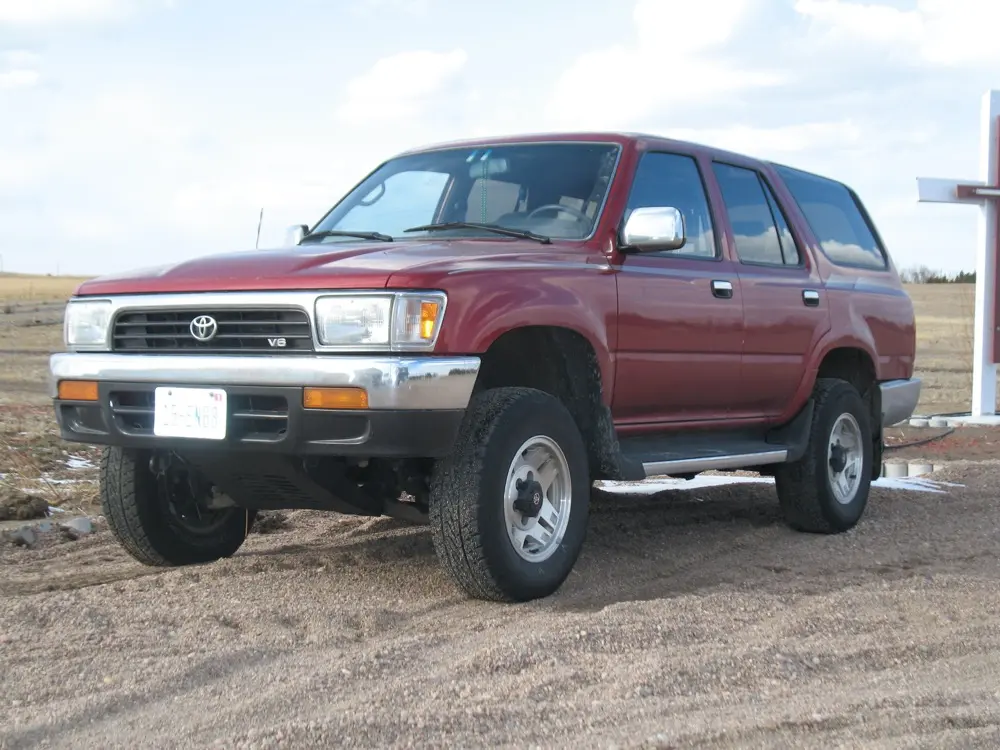
The Toyota 4Runner is a mid-size sport utility vehicle (SUV) produced by the Japanese manufacturer Toyota and sold throughout the world from 1984 to present. It was manufactured with various body styles: two-door pickup, three-door wagon and five-door wagon. It is manufactured with diesel and petrol engines, and available with both, manual and automatic transmission styles. It is now in its fifth generation, which was officially introduced on September 24, 2009. All versions were built with front engine, rear-wheel or four-wheel drive.
Frequently Asked Questions
How do I check the transmission fluid level in my Toyota 4-Runner?
To check the transmission fluid level in your Toyota 4-Runner, park the vehicle on a level surface, start the engine, and let it idle. Locate the transmission dipstick, typically situated near the back of the engine bay, and remove it. Wipe the dipstick clean, reinsert it fully, and then withdraw it again. The fluid level should be within the designated range indicated on the dipstick. Consult your Toyota 4-Runner automotive repair manual for detailed instructions and illustrations specific to your model year.
How do I jump-start my Toyota 4-Runner?
To jump-start your Toyota 4-Runner, park a vehicle with a functioning battery next to your 4-Runner. Connect one end of the positive jumper cable to the positive terminal of the dead battery, then connect the other end to the positive terminal of the charged battery. Connect one end of the negative jumper cable to the negative terminal of the charged battery, and the other end to a solid, unpainted metal surface on your 4-Runner away from the battery. Start the engine of the vehicle with the charged battery, then start your 4-Runner. Once started, remove the jumper cables in reverse order. Always refer to your Toyota 4-Runner automotive repair manual for specific instructions and precautions.
How do I replace a fuse in my Toyota 4-Runner?
To replace a fuse in your Toyota 4-Runner, locate the fuse box, which is typically found in the engine compartment or under the dashboard. Find the fuse that corresponds to the malfunctioning component or circuit and use a fuse puller or needle-nose pliers to remove the fuse. Inspect the fuse for signs of damage or a blown filament, then replace it with a new fuse of the same amperage rating. It is important to refer to your Toyota 4-Runner automotive repair manual for the fuse box location, fuse identification, and specific instructions for your model year.
How do I replace a headlight bulb in my Toyota 4-Runner?
To replace a headlight bulb in your Toyota 4-Runner, open the hood and locate the back of the headlight assembly. Disconnect the electrical connector from the bulb, then twist the bulb socket counterclockwise to remove it. Replace the old bulb with a new one, making sure it is securely in place, and reassemble the components in the reverse order. It is crucial to consult your Toyota 4-Runner automotive repair manual for specific instructions and illustrations for your model year, as bulb replacement procedures may vary.
How do I reset the maintenance light on my Toyota 4-Runner?
To reset the maintenance light on your Toyota 4-Runner, turn the ignition key to the “OFF” position. Press and hold the trip meter reset button, then turn the ignition key to the “ON” position without starting the engine. Continue holding the button until the maintenance light turns off, indicating that the reset procedure is complete. For detailed instructions and additional methods to reset the maintenance light, consult your Toyota 4-Runner automotive repair manual.
How do I troubleshoot a check engine light in my Toyota 4-Runner?
When the check engine light illuminates in your Toyota 4-Runner, it indicates that there is a potential issue with the engine or emission control system. To troubleshoot the check engine light, you can begin by checking if the gas cap is properly tightened. If the light persists, it is recommended to have the vehicle’s onboard diagnostic system scanned for trouble codes, which can provide insights into the underlying problem. Consult your Toyota 4-Runner automotive repair manual for instructions on how to retrieve trouble codes and further diagnostic steps to address the specific issue.
How often should I change the oil in my Toyota 4-Runner?
It is recommended to change the oil in your Toyota 4-Runner every 5,000 to 7,500 miles or every six months, whichever comes first. Regular oil changes help to maintain engine performance, improve fuel efficiency, and prolong the life of your vehicle. Consult your Toyota 4-Runner automotive repair manual for specific instructions and recommendations for your model year.
How often should I replace the air filter in my Toyota 4-Runner?
The air filter in your Toyota 4-Runner should be replaced every 15,000 to 30,000 miles, depending on driving conditions. A clean air filter ensures proper air flow to the engine, improves fuel efficiency, and protects the engine from contaminants. Consult your Toyota 4-Runner automotive repair manual for specific instructions on how to replace the air filter and the recommended replacement interval for your model year.
How often should I replace the brake pads on my Toyota 4-Runner?
The brake pads on your Toyota 4-Runner should be inspected regularly and replaced when the thickness is worn down to 3 millimeters or less. Brake pad wear can vary depending on driving habits, road conditions, and other factors. It is essential to refer to your Toyota 4-Runner automotive repair manual for specific guidelines on brake pad inspection and replacement, as well as the recommended interval for your model year.
How often should I replace the cabin air filter in my Toyota 4-Runner?
The cabin air filter in your Toyota 4-Runner should be replaced every 15,000 to 25,000 miles, or every 12 months. A clean cabin air filter helps to maintain good air quality inside the vehicle by filtering dust, pollen, and other airborne particles. It is important to consult your Toyota 4-Runner automotive repair manual for the correct replacement procedure and interval specific to your model year.
How often should I replace the timing belt in my Toyota 4-Runner?
The timing belt in your Toyota 4-Runner should generally be replaced every 90,000 to 100,000 miles, or as recommended in your Toyota 4-Runner automotive repair manual. A worn or damaged timing belt can lead to engine performance issues or even engine failure. It is crucial to follow the manufacturer’s recommended interval for timing belt replacement to avoid potential costly repairs.
How often should I rotate the tires on my Toyota 4-Runner?
Toyota recommends rotating the tires on your Toyota 4-Runner every 5,000 to 7,500 miles or at every oil change. Regular tire rotations help to ensure even tire wear, extend tire life, and maintain optimal handling and performance of your vehicle. Refer to your Toyota 4-Runner automotive repair manual for detailed instructions on how to properly rotate the tires and the recommended interval for your specific model year.
What is the recommended tire pressure for my Toyota 4-Runner?
The recommended tire pressure for your Toyota 4-Runner can vary depending on the tire size and load capacity. Generally, the recommended tire pressure is between 30 and 35 psi for most Toyota 4-Runner models. However, it’s crucial to refer to your Toyota 4-Runner automotive repair manual or the tire placard located on the driver’s side door jamb for the precise tire pressure specifications for your specific model and trim level.
What type of coolant should I use in my Toyota 4-Runner?
Toyota recommends using a Toyota Long-Life Coolant or a similar high-quality ethylene glycol-based coolant that meets the specifications of your Toyota 4-Runner. It is essential to use the correct coolant type to maintain proper engine cooling and prevent potential damage. Consult your Toyota 4-Runner automotive repair manual for the precise coolant specifications and instructions for your specific model year.
What type of oil should I use in my Toyota 4-Runner?
Toyota recommends using synthetic oil with a viscosity of 0W-20 for most Toyota 4-Runner models. Synthetic oil provides better protection and performance in extreme temperatures and helps to reduce engine wear. However, it’s essential to refer to your Toyota 4-Runner automotive repair manual for the correct oil type and viscosity recommended for your specific model year.
