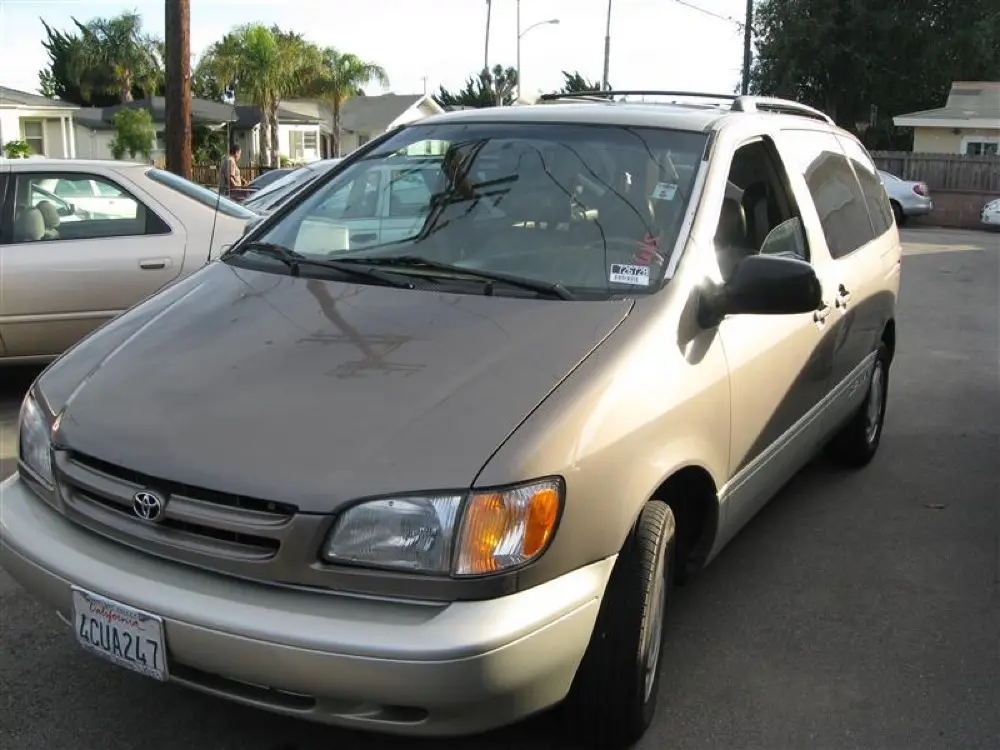
First produced in 1997, the Toyota Sienna is a family minivan. From its first production, Sienna has undergone many changes to its dimensions and designs to be able to compete in the market. Up to date, Sienna is the only minivan in its kind that offers all-wheel-drive. The third generation of Sienna has received a top Safety Pick award.
Frequently Asked Questions
How do I change a flat tire on a Toyota Sienna?
To change a flat tire on a Toyota Sienna, first, find a safe location to park the vehicle away from traffic. Locate the spare tire, jack, and lug wrench in the trunk or under the vehicle. Loosen the lug nuts of the flat tire, position the jack under the vehicle’s designated lifting point, and raise the vehicle just enough to remove the flat tire. Replace it with the spare tire, hand-tighten the lug nuts, lower the vehicle, and then fully tighten the lug nuts in a crisscross pattern. Finally, check the tire pressure and have the flat tire repaired or replaced as soon as possible.
How do I change the oil in a Toyota Sienna?
To change the oil in a Toyota Sienna, begin by draining the old oil by removing the oil drain plug underneath the engine. Once the oil has fully drained, replace the drain plug and remove the oil filter. Install a new oil filter and add the recommended amount of new oil to the engine. Finally, check the oil level and top up if necessary.
How do I program a key fob for a Toyota Sienna?
To program a key fob for a Toyota Sienna, first, sit in the driver’s seat and close all doors. Insert the key into the ignition and remove it twice within five seconds. Close and open the driver’s door twice. Insert the key into the ignition again and close the driver’s door. Turn the key to the “ON” position and then back to the “LOCK” position. Remove the key from the ignition and press any button on the key fob within 40 seconds. Finally, open the driver’s door to complete the programming process.
How do I replace a battery on a Toyota Sienna?
To replace a battery on a Toyota Sienna, first, ensure the vehicle is turned off and the ignition key is removed. Locate the battery in the engine bay and identify the positive (+) and negative (-) terminals. Disconnect the negative terminal first by loosening the clamp nut and sliding it off the terminal. Repeat the same process for the positive terminal. Remove any retaining brackets or clamps holding the battery in place and carefully lift it out. Install the new battery, ensuring correct polarity, and reconnect the terminals, starting with the positive terminal followed by the negative terminal.
How do I replace a cabin air filter on a Toyota Sienna?
To replace a cabin air filter on a Toyota Sienna, locate the cabin air filter housing, usually located behind the glove compartment. Open the glove compartment and remove any contents. Look for a panel or tab that holds the cabin air filter housing in place and release it. Slide out the old cabin air filter and replace it with a new one, ensuring the proper orientation. Finally, reinstall the cabin air filter housing and close the glove compartment.
How do I replace a fuel filter on a Toyota Sienna?
To replace a fuel filter on a Toyota Sienna, first, locate the fuel filter, which is often found along the fuel line underneath the vehicle or inside the fuel tank. If the fuel filter is external, relieve the fuel system pressure by either disconnecting the fuel pump fuse or the fuel pump relay and allowing the engine to run until it stalls. Once the pressure is relieved, use wrenches to disconnect the fuel lines from the filter. Remove the old filter and install the new one, making sure the flow arrow is pointing in the correct direction. Finally, reconnect the fuel lines, restore the fuel system pressure, and check for any fuel leaks.
How do I replace a headlight bulb on a Toyota Sienna?
To replace a headlight bulb on a Toyota Sienna, open the hood and locate the back of the headlight assembly. Twist and remove the bulb socket counterclockwise and carefully pull it out. Next, disconnect the old bulb from the socket and connect the new bulb, ensuring a secure connection. Insert the bulb socket back into the headlight assembly, twist it clockwise to lock it in place, and test the headlights to ensure proper functionality.
How do I replace a serpentine belt on a Toyota Sienna?
To replace a serpentine belt on a Toyota Sienna, locate the belt tensioner pulley and use a wrench or socket to rotate it counterclockwise, relieving tension on the belt. Slide the old belt off the pulleys, taking note of the belt routing diagram if available. Install the new belt following the proper routing, ensuring it is correctly seated on all pulleys. Finally, release the tensioner pulley, allowing it to apply tension to the new belt, and visually inspect the belt for proper alignment and tension.
How do I replace a spark plug on a Toyota Sienna?
To replace a spark plug on a Toyota Sienna, locate the spark plug wires or ignition coil packs on top of the engine. Disconnect the wires or coil packs from the spark plugs by gently pulling them straight up. Use a spark plug socket and ratchet to remove the old spark plug by turning it counterclockwise. Install the new spark plug by threading it clockwise into the cylinder head and tightening it to the specified torque. Finally, reconnect the spark plug wires or coil packs, ensuring they are securely seated.
How do I reset the maintenance required light on a Toyota Sienna?
To reset the maintenance required light on a Toyota Sienna, insert the key into the ignition and turn it to the “ON” position without starting the engine. Locate the trip meter reset button on the instrument panel and press and hold it. While holding the button, turn the key to the “OFF” position and then back to the “ON” position. Continue holding the trip meter reset button until the maintenance light goes off, indicating it has been successfully reset.
How often should I change the transmission fluid in a Toyota Sienna?
The transmission fluid in a Toyota Sienna should generally be changed every 30,000-60,000 miles, depending on the specific model year and driving conditions. However, it is advisable to consult the maintenance schedule outlined in the owner’s manual for accurate intervals. Regular transmission fluid changes help ensure smooth gear shifting, prevent transmission overheating, and extend the lifespan of the transmission.
How often should I replace the brake pads on a Toyota Sienna?
The brake pads on a Toyota Sienna typically need to be replaced every 30,000-70,000 miles, depending on various factors such as driving habits, road conditions, and the type of brake pads used. It is crucial to regularly inspect the brake pads for wear and tear and listen for any unusual noises while braking. If the brake pads appear thin or worn, it is recommended to have them replaced by a qualified technician to ensure safe braking performance.
What is the recommended coolant for a Toyota Sienna?
The recommended coolant for a Toyota Sienna is a long-life ethylene glycol-based coolant with a 50/50 mixture of coolant and distilled water. This coolant is specifically formulated to provide efficient heat transfer, corrosion protection, and freeze protection for the engine. It is important to use the correct coolant type and maintain the proper coolant level to prevent overheating and potential engine damage.
What is the recommended tire pressure for a Toyota Sienna?
The recommended tire pressure for a Toyota Sienna usually ranges between 30-35 psi (pounds per square inch) for all four tires. However, it is always best to consult the specific tire pressure guidelines provided in the owner’s manual of your Toyota Sienna to ensure accuracy. Proper tire pressure is essential for optimal vehicle performance, fuel efficiency, and tire longevity.
What type of engine oil should I use in a Toyota Sienna?
The recommended engine oil for a Toyota Sienna typically falls within the range of 5W-30 or 0W-20, depending on the specific model and engine. It is important to refer to the owner’s manual or consult the oil cap and/or dipstick for the accurate oil viscosity and specifications. Using the correct engine oil ensures proper lubrication, engine protection, and optimal performance.
