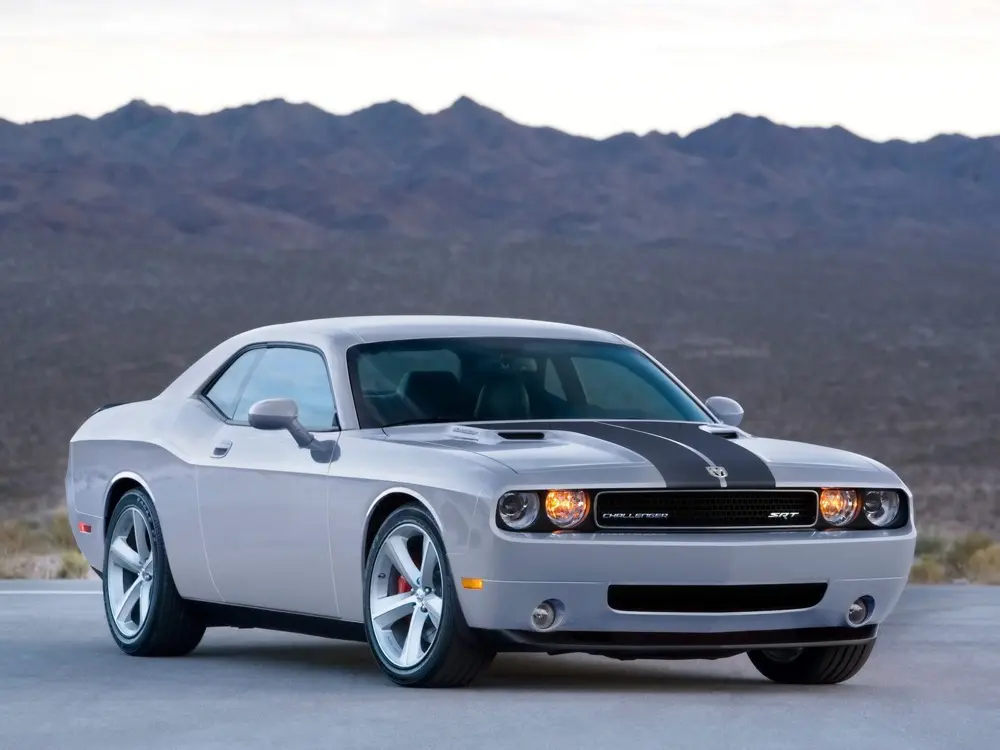
The Dodge brand of Chrysler Corporation first introduced the Dodge Challenger in 1958 and since then three generations of Challenger have been produced. The first generation (1958-1959) was the Dodge Silver Challenger, the second generation (1978-1983), was a badge engineered Mitsubishi Galant Lambda. The third and current generation (2008-) was evolved to compete with the fifth generation Ford Mustang and Fifth generation Chevrolet Camaro.
Frequently Asked Questions
How do I change the air filter in a Dodge Challenger?
To change the air filter in a Dodge Challenger, locate the air filter housing in the engine compartment. Remove the housing cover and take out the old air filter. Replace it with a new air filter and reattach the housing cover. Regular air filter changes can improve engine performance and fuel efficiency.
How do I check the transmission fluid level in a Dodge Challenger?
To check the transmission fluid level in a Dodge Challenger, ensure that the engine is running and the transmission is in park. Locate the transmission dipstick, remove it, wipe it clean, and reinsert it. Remove the dipstick again and check the fluid level. If it is low, add the recommended type of transmission fluid until it reaches the proper level.
How do I replace a burned-out headlight in a Dodge Challenger?
To replace a burned-out headlight in a Dodge Challenger, locate the headlight assembly behind the front bumper. Remove the retaining clips or screws to release the assembly. Disconnect the wiring harness and remove the assembly. Replace the old bulb with a new one and reassemble the headlight assembly.
How do I replace the battery in a Dodge Challenger key fob?
To replace the battery in a Dodge Challenger key fob, use a small flathead screwdriver to pry open the fob. Remove the old battery and replace it with a new one. Reattach the cover by snapping it back into place. Regular battery changes can ensure proper functioning of the key fob.
How do I replace the cabin air filter in a Dodge Challenger?
To replace the cabin air filter in a Dodge Challenger, locate the filter housing behind the glove box. Remove the housing cover and take out the old filter. Replace it with a new filter and reattach the housing cover. Regular cabin air filter changes can improve air quality and HVAC system performance.
How do I replace the spark plugs in a Dodge Challenger?
To replace the spark plugs in a Dodge Challenger, locate the spark plug wires and remove them from the plugs. Use a spark plug socket and ratchet to remove the old plugs. Gap the new plugs to the recommended distance and install them using the socket and ratchet. Reattach the spark plug wires. Regular spark plug changes can improve engine performance and fuel efficiency.
How often should the oil be changed in a Dodge Challenger?
The frequency of oil changes in a Dodge Challenger depends on the model year and engine type. Generally, it is recommended to change the oil every 5,000 to 7,500 miles or every six months, whichever comes first. Regular oil changes are important for maintaining engine health and prolonging the life of the vehicle.
What is the lifespan of a Dodge Challenger battery?
The lifespan of a Dodge Challenger battery depends on several factors, including the model year, usage patterns, and maintenance. Generally, a battery can last 3-5 years. Regular battery maintenance, such as cleaning the terminals and ensuring proper charging, can prolong battery life.
What is the recommended brake fluid for a Dodge Challenger?
The recommended brake fluid for a Dodge Challenger varies based on the specific model and year. Generally, DOT 3 or DOT 4 brake fluid is recommended. Consult the owner’s manual or a certified technician for specific brake fluid recommendations. Proper brake fluid levels and quality are important for safe braking performance.
What is the recommended coolant for a Dodge Challenger?
The recommended coolant for a Dodge Challenger varies based on the specific model and year. Generally, a 50/50 mix of antifreeze and distilled water is recommended. Consult the owner’s manual or a certified technician for specific coolant recommendations. Proper coolant levels and quality are important for engine health and performance.
What is the recommended fuel type for a Dodge Challenger?
The recommended fuel type for a Dodge Challenger depends on the engine type and model year. Generally, a minimum of 87 octane gasoline is recommended. Consult the owner’s manual or a certified technician for specific fuel recommendations. Using the correct fuel type can improve engine performance and fuel efficiency.
What is the recommended tire pressure for a Dodge Challenger?
The recommended tire pressure for a Dodge Challenger varies based on the specific model and year. It can typically be found in the owner’s manual or on a sticker located on the driver’s side door jamb. Proper tire pressure is important for optimal performance, fuel efficiency, and safety.
What is the towing capacity of a Dodge Challenger?
The towing capacity of a Dodge Challenger varies based on the specific model and year. Generally, it ranges from 1,000 to 1,500 pounds. Consult the owner’s manual or a certified technician for specific towing capacity information. Exceeding the recommended towing capacity can damage the vehicle and pose a safety risk.
What should I do if my Dodge Challenger won’t start?
If a Dodge Challenger won’t start, there are several potential causes. Check the battery to ensure it is fully charged and has clean connections. Check the starter and alternator for proper functioning. If none of these are the issue, consult a certified technician for further diagnosis and repair.
What type of oil should be used in a Dodge Challenger?
The type of oil recommended for a Dodge Challenger varies depending on the engine type and model year. Generally, synthetic blend or full synthetic oils are recommended. Consult the owner’s manual or a certified technician for specific oil recommendations. Using the correct type of oil can improve engine performance and prolong engine life.
