
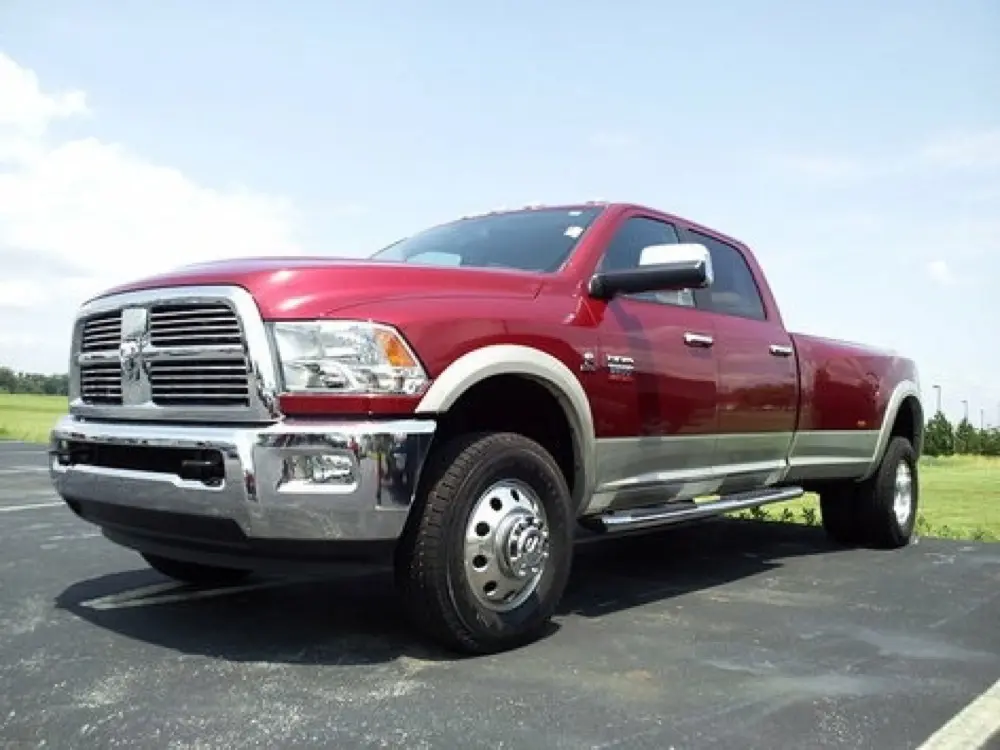
Pickup trucks need to provide unwavering reliability and rugged dependability, since many owners use them for both personal and professional transportation duties. Over the years, The Dodge Ram established itself as a capable compromise between a rugged work truck and a comfortable, civilized personal vehicle.
Through five generations and with almost 40 years of market presence, Ram has evolved from a simple and humble work truck to a king of luxury in the class of full-size pickup trucks. The basic formula used here is similar to ones used by close competitors. No matter which generation, you will always get a sturdy suspension, cab options that can accommodate two to five adults, a large cargo area and either rear wheel or all wheel drive option. Everything else was changing to keep up with current trends and market demands of the time.
First generation (1981 – 1993)
Dodge introduced the first generation of Ram pickup trucks in 1981. Essentially, it was the final iteration of the D series, a truck whose origins dated back in the 60s. And this was its biggest downfall, despite the ruggedness and overall quality. The body was boxy and outdated, the interior equipped was scarce, while engines, both Slant straight six units and LA V8 ones, were almost a decade old. When compared to Ford and GM counterparts, the Ram was outgunned in all aspects. This reflected on sales figures, because the Ram wasn’t a popular option among buyers in the first several years of production.
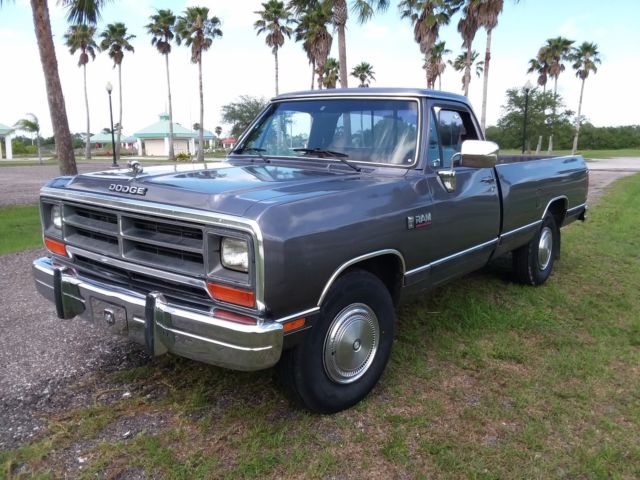
However, by 1989, Dodge’s unfavorable situation was about to change, as they introduced the new diesel engine. Although both Ford and GM offered diesel engines in their full-size pickup trucks for years, the Cummins unit used for Ram trucks was in a different league. With dependable reliability, simple design and plenty of torque, this 5.9 liter straight six was a game changer. Over night, Ram with Cummins engine became the favorite choice among contractors and farmers. This combined with updated comfort and safety features, such as ABS and fuel injection, helped increase sales volumes during final production years. At the turn of the decade, it was clear that Ram had a good market potential. It was up to Dodge to make the best of it.
Second generation (1994 – 2001)
With the second generation, Dodge was determined to tackle the biggest remaining problem, and that was the look and appearance. Moving away from the boring utilitarian look, the new Ram added some interesting visual features. According to Dodge, the inspiration for the new look came from the 50s Power Ram Wagon. The raised hood line, lowered fenders and placement of the headlights all give away the similarity.
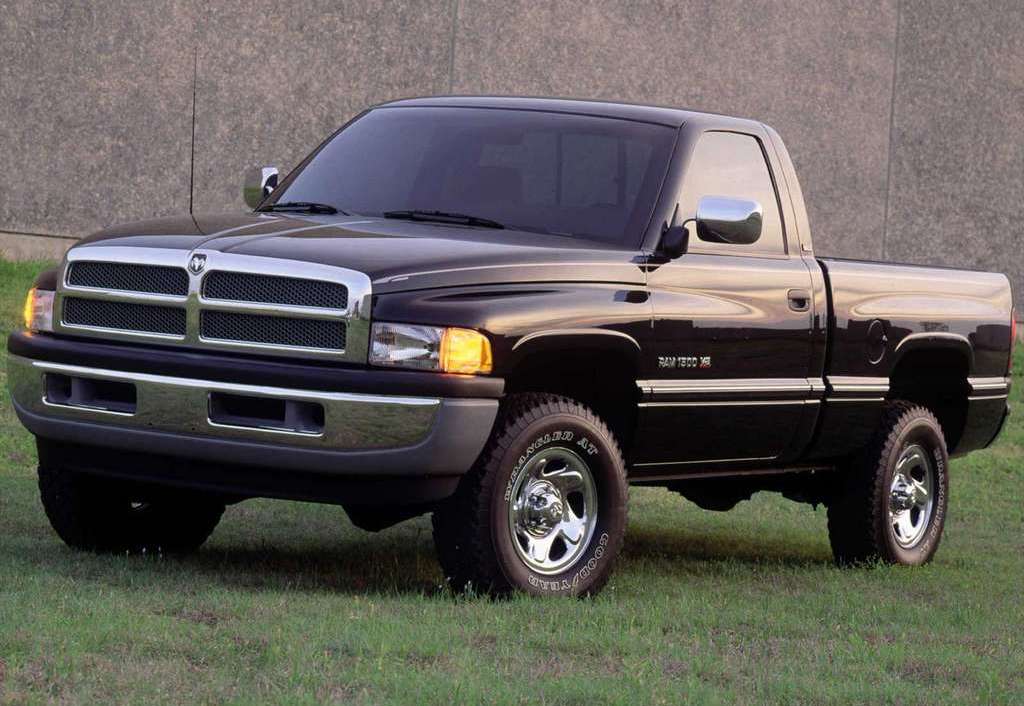
Beneath the stylish hood, there were several engine choices. Standard options were Magnum V6 or bigger V8 engines. With revised cam profile, modified valve train and addition of sequential electronic fuel injection, these engines delivered more power and better low down torque. Being such a hit in the previous generation, the Cummins engine was the only logical choice for a diesel unit. It remained unchanged until 1998, when it got the modern 24 valve head. Rounding up the engine options, there was a massive V10 unit, being the most powerful gasoline engine available at that time. Engines were available either with a four-speed automatic or a five-speed manual transmission,
The suspension used an independent coil spring setup with anti-roll bar up front and leaf springs in the rear, with gas-charged shocks providing a good ride quality. Other features included driver and passenger airbags, rear abs as standard and optional power take-off.
Lastly, the interior was spacious, stylish, and well equipped. Things like comfortable and adjustable front seat, power locks and mirrors, cruise control and air conditioning gave this truck a civilized, car-like manners. It didn’t take long for buyers to recognize these upsides, and sales quadrupled in the first year alone, when 400.000 new Rams left the factory. This production pace continued for the next several years, only to decline around 2001.
Third generation (2002 – 2008)
In its efforts to keep up with strong competition and market demands, Dodge released the new third generation Ram during 2002. Design wise, this truck was an evolution of its predecessor, keeping features such as crosshair grille and truck style front end. The body was bigger and more massive, but thanks to various design tricks, it appeared sleeker and in touch with time.
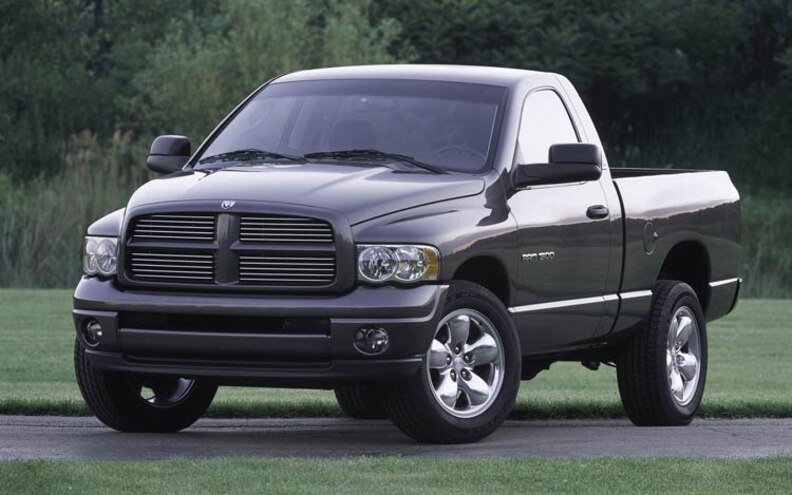
Still, the biggest improvements were inside the cabin and under the hood, boosting both luxury and performance. Features such as leather seats, power adjusting mirrors and automatic air conditioning stated that this was more than an ordinary work truck. And so did the engines. Besides standard V6 and V8 Magnum units, buyers could get a special SRT version equipped with a V10 engine from a Dodge Viper. As for the diesel engine, the trusted Cummins unit received several updates during the production run of the third gen. Most noticeable ones are the introduction of the common rail injection system in 2003, while in 2007 a newly designed 6.7 liter unit replaced the aging 5.9 liter engine.
During 2006, Ram received a major overhaul, covering both interior and exterior. This updated look followed the new design outlines caused by a Chrysler-Daimler merger. However, buyers didn’t seem to like the new appearance. As the sales figures declined, Dodge was forced to take action and speed up the development of the next generation.
Fourth generation (2009 – 2019)
With Ram’s fourth iteration in 2009, people at Dodge’s design department played safe. The basis for the design was the early third gen trucks, and both crosshair grille and sloping wheel arches were still there. However, the new truck had an aggressive appearance and more prominent body lines. And with optional chrome details, it was stylish and flashy.
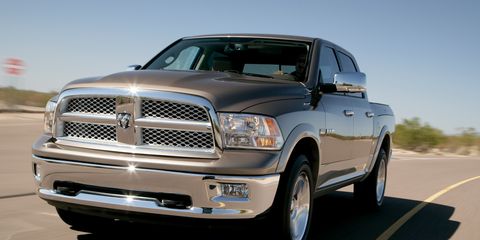
Because the previous generation had great engines, there were no revolutionary changes under the hood. Magnum V6 and V8 engines gave way to more modern PowerTech and Pentastar units, which offered better driving characteristics and fuel economy. And there was, two HEMI V8 engines and a 6.7 liter Cummins diesel, who all received various small updates over the years. The biggest news was the introduction of the smaller V6 diesel engine, called EcoDiesel. This engine aims at customers who wanted a fuel efficient truck but didn’t need the power and towing capabilities of a heavy duty Cummins engines. All engines come with either six or eight speed automatic or six speed manuals.
Unlike with previous generations, this time the biggest improvement was well hidden out of sight. Most full-size pickup trucks use leaf springs in the back. It is simple and durable, but it has a negative impact on the ride quality. Fourth gen Ram uses a multi-link rear suspension with coil springs that absorbs rough pavement rather than deflecting it. With this, the Ram rides more like an SUV than a traditional pickup. This was also the only truck to offer an active leveling air suspension on all four corners, features an access setting that drops ride height by 2 inches.
Inside the cab, there was a range of features intended to lure in more refined buyers.
Depending on the trim level, this Ram came fitted with premium options such as heated and ventilated front seats, Alpine audio system, power adjustable pedals and navigation system with an 8.4in touch display.
Fifth generation (2019 – present)
Introduced in 2019, the all-new Ram is very different compared to previous generations. It brings in a more sophisticated and bold design, while still keeping that traditional tough and aggressive appearance, which is important in this segment. Most noticeably, the signature grille and headlights layout gave way to a sleeker and more elegant arrangement. Also, headlights are now available as standard halogen units and with integrated adaptive LEDs.
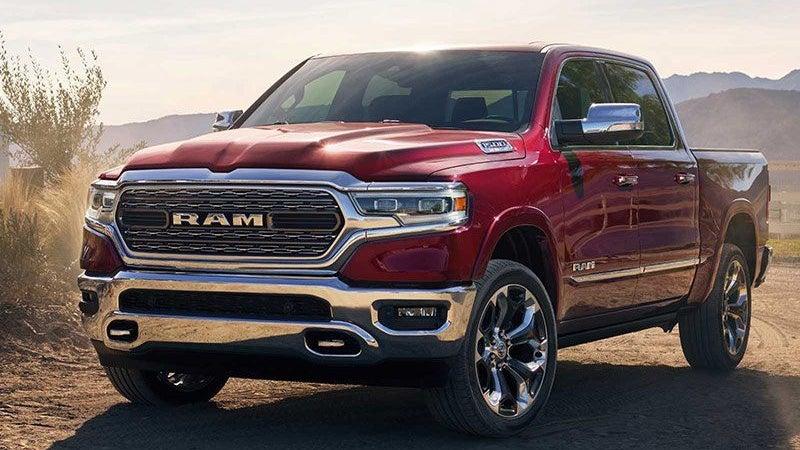
While its predecessors offered many and sometimes confusing engine options, the current Ram has a simple situation under the hood. The base option is a V6 Pentastar engine, followed with two HEMI V8 units and a well known 6.7 liter Cummins diesel. Both V6 and smaller HEM V8 are available in combination with “eTorque”, a mild hybrid system that improves torque and fuel economy. It is worth mentioning that Cummins unit is now delivering 1000 lb-ft of torque, making Ram the first truck to break this barrier. Dodge announced that later during production, a redesigned V6 EcoDiesel will be available.
The interior is bigger and better shaped in terms of comfort, with buttons and knobs placed well within reach. Depending on the trim level, you can expect the finest materials, an audio system made by Alpine or Harman/Kardon with up to 18 speakers and a 12in touch screen display. Abundance of storage compartments helps keep the interior clean.
Other notable upgrades include a redesigned frame made from high strength steel and various aluminum parts. This helped increase structural rigidity and reduce overall weight. With all this, the new Ram keeps up with all current trends in touch while keeping tough workman personality.
Frequently Asked Questions
How do I change the oil on my Dodge RAM?
Changing the oil on your Dodge RAM is a simple process that can be done with basic tools. Start by draining the old oil out of the engine, and then remove the oil filter. Replace the filter and pour in the new oil, making sure to check the dipstick to ensure the correct level is reached.
How do I check the brake fluid level in my Dodge RAM?
Checking the brake fluid level in your Dodge RAM is a simple process that can be done in a few steps. Locate the brake fluid reservoir, remove the cap, and check the fluid level. If it is low, add the recommended brake fluid until it reaches the correct level. Be sure to use the recommended brake fluid type to ensure proper brake system function.
How do I jump start my Dodge RAM?
Jump starting your Dodge RAM is a simple process that can be done with jumper cables and a second vehicle. Connect the positive jumper cable to the positive terminal of the dead battery, and then connect the other end to the positive terminal of the donor vehicle. Connect the negative jumper cable to the negative terminal of the donor vehicle, and then connect the other end to a ground on the dead vehicle. Start the donor vehicle and let it run for a few minutes before attempting to start the dead vehicle.
How do I replace the air filter on my Dodge RAM?
Replacing the air filter on your Dodge RAM is a simple process that can be done with basic tools. Locate the air filter housing, remove the clips or screws securing the housing, and then remove the old air filter. Install the new air filter, making sure it is seated properly, and then reassemble the housing.
How do I replace the battery in my Dodge RAM?
Replacing the battery in your Dodge RAM is a simple process that can be done with basic tools. Disconnect the negative battery cable, then the positive cable, and then remove the old battery. Install the new battery, making sure it is properly seated, and then reconnect the positive cable followed by the negative cable. Be sure to properly dispose of the old battery and avoid touching the battery terminals with bare hands.
How do I replace the brake pads on my Dodge RAM?
Replacing the brake pads on your Dodge RAM is a relatively simple process that can be done with basic tools. Start by removing the wheel and caliper, then remove the old brake pads. Install the new brake pads, and then reassemble the caliper and wheel. Be sure to bed in the new brake pads properly to ensure optimal performance.
How do I replace the serpentine belt on my Dodge RAM?
Replacing the serpentine belt on your Dodge RAM is a relatively simple process that can be done with basic tools. Locate the belt tensioner, use a wrench to relieve the tension, and then remove the old belt. Install the new belt, making sure it is properly routed, and then release the tensioner. Be sure to check the belt tension regularly to ensure proper operation.
How do I replace the spark plugs on my Dodge RAM?
Replacing the spark plugs on your Dodge RAM is a relatively simple process that can be done with basic tools. Locate the spark plug wires and remove them from the spark plugs. Use a spark plug socket to remove the old plugs, and then install the new plugs. Reattach the spark plug wires, ensuring they are properly seated.
What are the recommended tire pressures for my Dodge RAM?
The recommended tire pressures for your Dodge RAM can be found in the owner?s manual or on the tire information label located on the driver?s side door jamb. It is important to check and adjust tire pressures regularly to ensure safe driving, good fuel economy, and maximum tire life. Improper tire pressure can negatively affect handling, braking, and traction.
What is the recommended coolant type for my Dodge RAM?
The recommended coolant type for your Dodge RAM can be found in the owner?s manual. It is important to use the recommended coolant type and mix it with distilled water to ensure proper engine cooling and protection against freezing and boiling. Regular coolant changes are essential to maintaining the longevity of your engine.
What is the recommended interval for changing the engine air filter in my Dodge RAM?
The recommended interval for changing the engine air filter in your Dodge RAM can be found in the owner?s manual. It is important to follow the recommended interval to ensure proper engine performance and fuel economy. A dirty air filter can negatively affect engine performance and lead to increased fuel consumption.
What is the recommended interval for changing the transmission fluid in my Dodge RAM?
The recommended interval for changing the transmission fluid in your Dodge RAM can be found in the owner?s manual. It is important to follow the recommended interval to ensure proper transmission performance and longevity. Failing to change the transmission fluid at the recommended interval can lead to costly repairs and decreased performance.
What is the recommended interval for replacing the timing belt on my Dodge RAM?
The recommended interval for replacing the timing belt on your Dodge RAM can be found in the owner?s manual. It is important to follow the recommended interval to ensure proper engine performance and prevent catastrophic engine damage. Failing to replace the timing belt at the recommended interval can lead to costly repairs and engine failure.
What is the recommended towing capacity for my Dodge RAM?
The recommended towing capacity for your Dodge RAM can be found in the owner?s manual or on the manufacturer?s website. It is important to never exceed the recommended towing capacity to ensure safe driving and to prevent damage to your vehicle.
What type of oil should I use in my Dodge RAM?
The type of oil recommended for your Dodge RAM can be found in the owner?s manual. It is important to use the recommended oil type and weight to ensure proper engine protection, fuel economy, and performance. Regular oil changes with high-quality oil are essential to maintaining the longevity of your engine.
