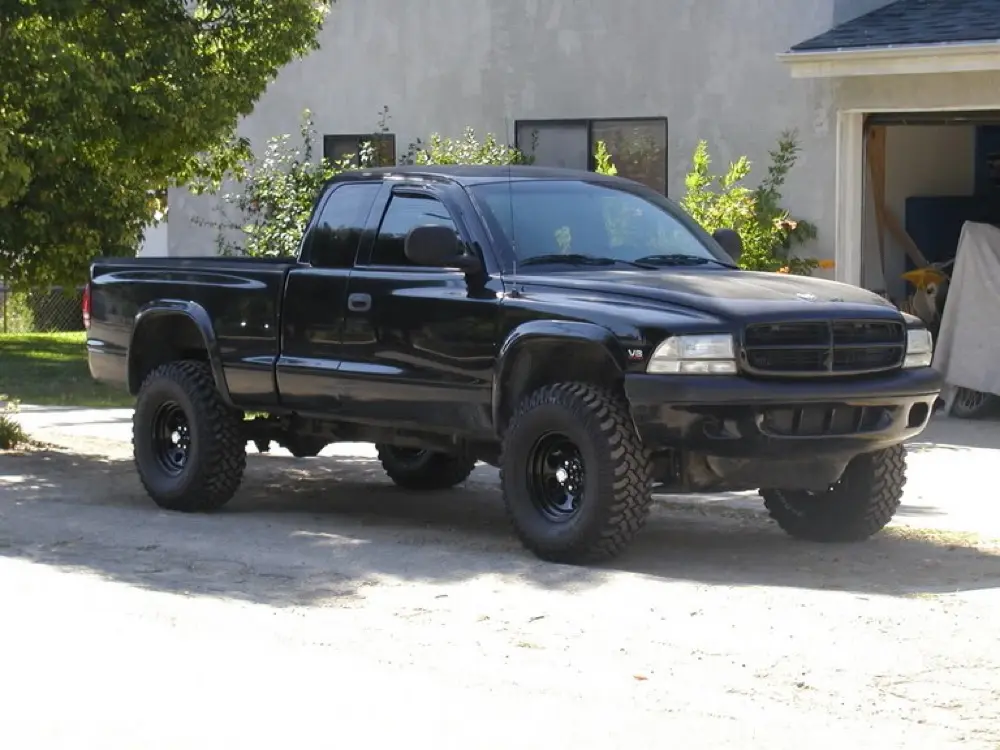
Nominated for the North American Truck of the Year award for 2000, the Dodge Dakota is mid size pickup truck from Chrysler. From its introduction in 1986 to 2009, it was marketed by Dodge division and from 2009 it has been marketed by the newly formed Ram division. It has a conventional design with body on frame construction and a leaf spring/ live axle rear end.
Frequently Asked Questions
How do I change the oil on my Dodge Dakota?
Changing the oil on a Dodge Dakota involves locating the oil drain plug and oil filter. Once located, the drain plug is removed and the old oil is drained out. The oil filter is then removed and replaced with a new one before adding fresh oil to the engine. It is important to check the owner’s manual for the recommended oil type and capacity.
How do I replace the air filter on my Dodge Dakota?
Replacing the air filter on a Dodge Dakota involves locating the air filter housing and removing the old filter. The new filter is then installed, ensuring proper orientation and fit. It is important to replace the air filter on a regular basis to ensure proper engine performance and fuel economy.
How do I replace the alternator on my Dodge Dakota?
Replacing the alternator on a Dodge Dakota involves disconnecting the battery, removing the serpentine belt, and unbolting the old alternator. The new alternator is then installed and the serpentine belt is reinstalled, ensuring proper tension. It is important to check the battery and charging system after replacing the alternator to ensure proper operation.
How do I replace the brake pads on my Dodge Dakota?
Replacing the brake pads on a Dodge Dakota involves removing the wheels, caliper and old brake pads. The brake caliper is then compressed before installing the new brake pads and reassembling the caliper. It is important to check the brake rotors for any signs of damage or wear and replace them if necessary.
How do I replace the radiator on my Dodge Dakota?
Replacing the radiator on a Dodge Dakota involves draining the coolant, removing the upper and lower radiator hoses, and removing the radiator mounting bolts. The old radiator is then removed and the new radiator is installed, ensuring proper fit and connection of all hoses. It is important to properly refill the coolant system after replacing the radiator.
How do I replace the serpentine belt on my Dodge Dakota?
Replacing the serpentine belt on a Dodge Dakota involves locating the belt tensioner and using a breaker bar to release tension on the belt. The old belt is then removed and the new belt is installed, ensuring proper routing and tension. It is important to check the belt tension and condition regularly to prevent failure.
How do I replace the spark plugs on my Dodge Dakota?
Replacing the spark plugs on a Dodge Dakota involves locating them on the engine and removing the old plugs. The new spark plugs are then installed, being careful to properly gap them and torque them to the manufacturer’s specifications. It is important to replace the spark plugs on a regular basis to ensure proper engine performance.
How do I replace the thermostat on my Dodge Dakota?
Replacing the thermostat on a Dodge Dakota involves locating the thermostat housing, removing the old thermostat, and installing the new thermostat and gasket. It is important to properly bleed the coolant system after replacing the thermostat to ensure proper operation. It is also recommended to replace the coolant during this process.
What could be causing my Dodge Dakota to have poor fuel economy?
Several factors could contribute to poor fuel economy in a Dodge Dakota, including dirty air filters, malfunctioning oxygen sensors, low tire pressure, or a clogged fuel injector. It is important to have the vehicle inspected by a professional mechanic to determine the root cause of the issue and make any necessary repairs.
What could be causing my Dodge Dakota to overheat?
The most common causes of overheating in a Dodge Dakota include low coolant levels, a malfunctioning thermostat, a damaged radiator, or a faulty water pump. It is important to check the coolant level and condition, as well as inspecting the radiator and water pump for any signs of damage or leaks. If the thermostat is suspected to be the issue, it should be replaced.
What could be causing my Dodge Dakota to vibrate when driving?
A vibrating Dodge Dakota may be caused by several factors, including unbalanced wheels, worn suspension components, or damaged drivetrain components. It is important to have the vehicle inspected by a professional mechanic to determine the root cause of the issue and make any necessary repairs.
What could be causing my Dodge Dakota’s brakes to feel spongy?
Spongy brakes in a Dodge Dakota may be caused by air in the brake lines, worn brake pads, or a failing brake master cylinder. It is important to have the brake system inspected by a professional mechanic to determine the root cause of the issue and make any necessary repairs.
Why is my Dodge Dakota making a grinding noise when I shift gears?
A grinding noise when shifting gears in a Dodge Dakota may indicate a worn or damaged clutch, a problem with the transmission synchronizer, or low transmission fluid levels. It is important to have the clutch and transmission system inspected by a professional mechanic to determine the root cause of the issue.
Why is my Dodge Dakota’s air conditioning not blowing cold air?
A malfunctioning air conditioning system in a Dodge Dakota may be caused by several factors, including low refrigerant levels, a damaged compressor, or a faulty blower motor. It is important to have the system inspected by a professional mechanic to determine the root cause of the issue and make any necessary repairs.
Why is my Dodge Dakota’s check engine light on?
There are several reasons why the check engine light may be illuminated on a Dodge Dakota, including a loose gas cap, a malfunctioning oxygen sensor, or a damaged catalytic converter. It is important to have the vehicle’s onboard diagnostic system scanned by a professional mechanic to determine the root cause of the issue.
