
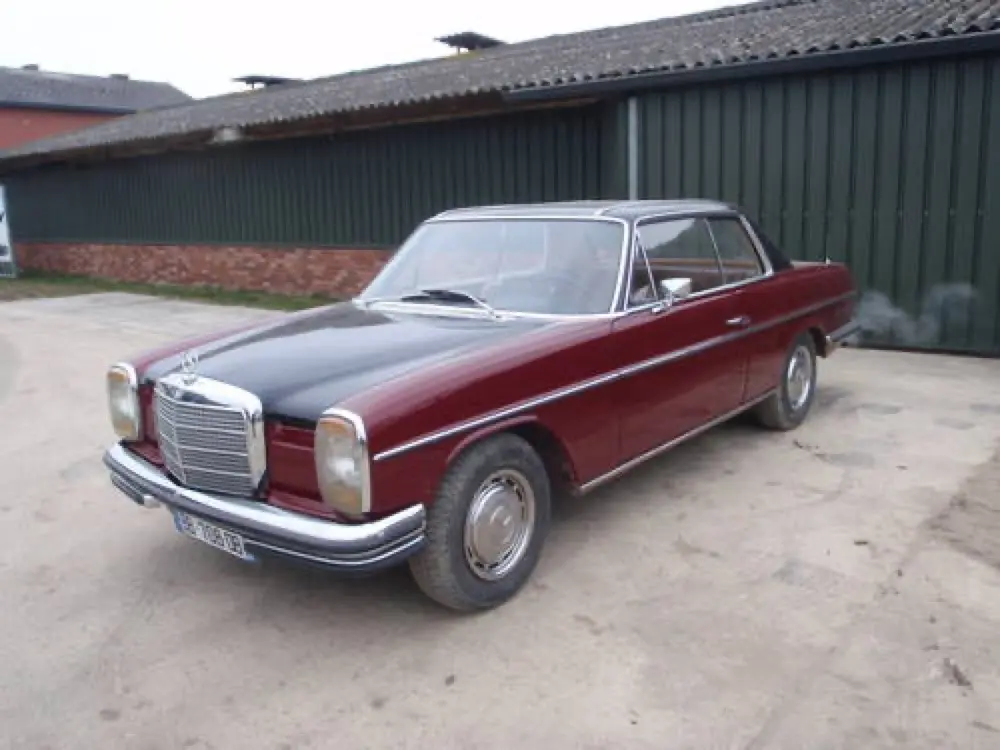
W123 is the internal chassis-designation Mercedes-Benz used for their executive line of cars, manufactured between 1976 and 1985. The W123 models surpassed their predecessor, the W114 and W115 models, as the most successful Mercedes, selling 2.7 million cars before replacement by the W124 after 1985. From August 1977, long-wheelbase versions (3,425 mm (134.8 in)) were produced. These were available as 7/8 seater saloons with works bodies or as a chassis with complete front body clip, the latter serving as the base for ambulance and hearse bodies by external suppliers like Binz or Miesen. These “Lang” versions could be ordered as 240D, 300D and 250 models.
Frequently Asked Questions
Can I jump-start a Mercedes 250 with another vehicle?
Yes, it is possible to jump-start a Mercedes 250 using another vehicle, but it must be done with caution to avoid damaging the vehicle’s electrical system. Connect the positive terminal of the dead battery to the positive terminal of the donor vehicle’s battery using jumper cables. Then, connect the negative terminal of the donor vehicle’s battery to an unpainted metal surface on the Mercedes 250, away from the battery. Start the donor vehicle and then attempt to start the Mercedes 250. Once started, disconnect the jumper cables in reverse order.
How do I change the oil in a Mercedes 250?
To change the oil in a Mercedes 250, start by locating the oil drain plug underneath the vehicle. Use a wrench to loosen the drain plug and let the oil drain into a pan. Once the oil has fully drained, replace the drain plug and remove the old oil filter. Install a new oil filter and pour in the recommended amount of fresh oil, as stated in the Mercedes 250 automotive repair manual.
How do I change the windshield wiper blades on a Mercedes 250?
Start by lifting the wiper arm away from the windshield and locating the release tab on the wiper blade connector. Press the release tab and slide the old wiper blade out of the connector. Align the new wiper blade with the connector and slide it in until it clicks into place. Carefully lower the wiper arm back onto the windshield. Repeat the same process for the other wiper blade.
How do I check the battery voltage in a Mercedes 250?
To check the battery voltage in a Mercedes 250, start by turning off all electrical accessories and the engine. Set the multimeter to DC voltage and connect the positive (red) lead to the battery’s positive terminal and the negative (black) lead to the negative terminal. Read the voltage displayed on the multimeter. A fully charged battery should typically read around 12.6 to 12.8 volts. If the reading is significantly lower, it may indicate a weak or discharged battery that requires charging or replacement.
How do I check the transmission fluid level in a Mercedes 250?
To check the transmission fluid level in a Mercedes 250, start the engine and let it idle for a few minutes to warm up. Locate the transmission dipstick, usually marked with a yellow or red handle. Pull out the dipstick, wipe it clean, and reinsert it fully into the dipstick tube. Remove the dipstick again and check the fluid level indicated on the dipstick. If the level is below the recommended range, add the appropriate transmission fluid as advised in the Mercedes 250 automotive repair manual.
How do I replace a blown fuse in a Mercedes 250?
Begin by locating the fuse box, which is usually found in the engine compartment or under the dashboard. Open the fuse box cover and identify the fuse corresponding to the malfunctioning component. Use the fuse puller tool or a pair of needle-nose pliers to carefully remove the blown fuse. Replace it with a new fuse of the same rating as indicated in the Mercedes 250 automotive repair manual. Close the fuse box cover and test the component to ensure it is functioning properly.
How do I replace a headlight bulb in a Mercedes 250?
Begin by opening the hood and locating the back of the headlight assembly. Remove the electrical connector from the back of the bulb by pressing the tab and pulling it away. Then, twist the bulb counterclockwise to release it from the assembly. Insert the new bulb into the socket and twist it clockwise to secure it. Reconnect the electrical connector and test the headlight to ensure it is working correctly.
How do I replace the cabin air filter in a Mercedes 250?
Locate the cabin air filter housing, usually located behind the glove compartment. Open the housing by removing the retaining clips or screws. Take out the old cabin air filter and replace it with a new one that matches the specifications provided in the Mercedes 250 automotive repair manual. Ensure the filter is properly aligned and the housing is securely closed. Regularly replacing the cabin air filter helps maintain clean air inside the vehicle’s cabin.
How do I reset the service indicator on a Mercedes 250?
To reset the service indicator on a Mercedes 250, turn the ignition key to position 1 (but do not start the engine). Press and hold the reset button located on the instrument cluster until the service message appears. Release the reset button and then press it again until the “Service Indicator Reset” message is displayed. Turn off the ignition and then start the vehicle to confirm that the service indicator has been successfully reset.
How do I troubleshoot a malfunctioning power window in a Mercedes 250?
If a power window in a Mercedes 250 is not functioning, it is recommended to first check the window switch for any signs of damage or debris. Clean or replace the switch if necessary. Next, inspect the window motor and regulator for any visible issues or obstructions. If no visible problems are found, using a multimeter to test the switch and motor for power and continuity can help identify the source of the problem. Consult the Mercedes 250 automotive repair manual for detailed troubleshooting steps and diagrams.
How often should I replace the air filter in a Mercedes 250?
The air filter in a Mercedes 250 should be replaced approximately every 30,000 miles or as indicated in the manufacturer’s recommended maintenance schedule. However, in dusty or polluted environments, it may be necessary to replace the air filter more frequently to maintain proper engine performance and fuel efficiency. Consult the Mercedes 250 automotive repair manual for specific guidelines and instructions on replacing the air filter.
How often should I rotate the tires on a Mercedes 250?
It is recommended to rotate the tires on a Mercedes 250 approximately every 5,000 to 7,500 miles or as stated in the vehicle’s repair manual. Regular tire rotation helps ensure even tread wear, which contributes to longer tire life and better overall performance. Consult the Mercedes 250 automotive repair manual for the specific rotation pattern and instructions.
What is the recommended tire pressure for a Mercedes 250?
The recommended tire pressure for a Mercedes 250 can vary depending on the tire size and load conditions. It is crucial to adhere to the tire pressure guidelines indicated on the placard located on the driver’s side door jamb or in the owner’s manual. This information provides the appropriate tire pressure for optimal handling, safety, and tire longevity. Regularly check and adjust the tire pressure according to these guidelines.
What type of brake fluid is recommended for a Mercedes 250?
For a Mercedes 250, it is advised to use a high-quality DOT 4 brake fluid that meets the specifications provided in the vehicle’s repair manual. This type of brake fluid has the necessary properties to withstand the high temperatures and pressure generated during braking, ensuring optimal brake performance and longevity. Always consult the Mercedes 250 automotive repair manual for the exact brake fluid specifications and any additional recommendations.
What type of coolant should I use for a Mercedes 250?
For a Mercedes 250, it is recommended to use a high-quality ethylene glycol-based coolant that meets the specifications outlined in the vehicle’s repair manual. This coolant should provide the necessary protection against freezing, boiling, and corrosion. It is important to follow the precise coolant-to-water ratio mentioned in the manual to ensure optimal engine performance and longevity.
