
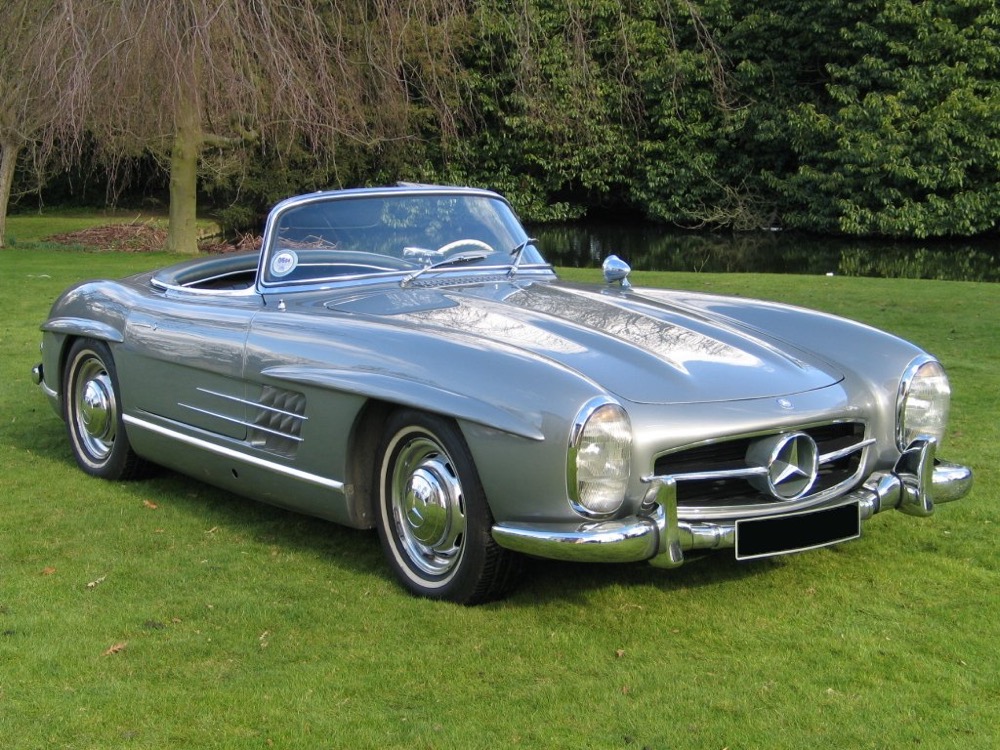
Mercedes-Benz has sold a number of automobiles with the “300” model name: W186, W188, W198, W189, W112, W108, W109, W115, W123, W116, W124, W126, R129, W140 and W210. The Mercedes-Benz Type 300 (chassis codes W186, W188, and W189) were the company’s largest and most-prestigious models throughout most of the 1950s. Analogous to the top of today’s S-Class, the Type 300 cars were elegant, powerful, exclusive, and expensive. Two types were produced, a four-door tourer equal in luxury and price but superior in performance to the rival Rolls-Royce Silver Cloud, and an all but hand-built two-door sports tourer rarefied in elegance, proportion, and cost.
Frequently Asked Questions
How do I change the brake pads on a Mercedes 300?
To change the brake pads on a Mercedes 300, start by lifting the vehicle and removing the wheel on the affected brake. Locate the brake caliper, which houses the brake pads, and remove the caliper bolts or pins. Carefully lift the caliper away from the brake rotor and suspend it using a wire or bungee cord to prevent strain on the brake hose. Remove the old brake pads and replace them with new ones, ensuring proper alignment and fit. Reinstall the caliper, tighten the bolts or pins, and repeat the process for the other brake. Once completed, remember to pump the brake pedal a few times to reestablish proper brake pressure before driving the vehicle.
How do I check the engine oil level in a Mercedes 300?
To check the engine oil level in a Mercedes 300, start by parking the vehicle on a level surface and turning off the engine. Locate the engine oil dipstick, usually located near the engine block, and pull it out. Wipe it clean, reinsert it fully, and then pull it out again to check the oil level. The oil level should be between the minimum and maximum marks on the dipstick.
How do I jump-start a Mercedes 300?
To jump-start a Mercedes 300, you will need a set of jumper cables and a functioning vehicle with a charged battery. Start by parking the two vehicles close to each other, but not touching. Turn off the ignition in both vehicles and connect one end of the positive (red) jumper cable to the positive terminal of the dead battery, then connect the other end to the positive terminal of the charged battery. Connect one end of the negative (black) jumper cable to the negative terminal of the charged battery, and the other end to a metal ground point on the dead vehicle, such as an unpainted bolt or bracket. Start the functioning vehicle and let it run for a few minutes, then attempt to start the Mercedes 300. Once the engine starts, remove the jumper cables in the reverse order of connection.
How do I replace a faulty spark plug in a Mercedes 300?
To replace a faulty spark plug in a Mercedes 300, start by locating the spark plug wires or ignition coil packs, depending on the specific model. Disconnect the wires or coil packs from the spark plug and set them aside. Use a spark plug socket and ratchet to loosen and remove the old spark plug from the cylinder head. Check the new spark plug for proper gap and thread it into the cylinder head by hand, then tighten it using the spark plug socket and ratchet. Reconnect the wires or coil packs to the spark plug, ensuring they are properly seated, and repeat the process for the remaining spark plugs.
How do I replace a headlight bulb in a Mercedes 300?
To replace a headlight bulb in a Mercedes 300, start by opening the hood and locating the back of the headlight assembly. Remove the rubber cover or dust cap, then disconnect the electrical connector from the bulb. Depending on the specific model, you may need to rotate the bulb holder counterclockwise or release it using a latch. Replace the old bulb with a new one, making sure not to touch the glass part, and then reassemble the components in reverse order.
How do I replace the cabin air filter in a Mercedes 300?
To replace the cabin air filter in a Mercedes 300, start by locating the cabin air filter housing, which is typically located behind the glove compartment. Open the glove compartment and remove any items inside. Release the retaining clips or screws that hold the filter housing cover in place and remove the cover. Take out the old filter, making note of its orientation, and replace it with a new filter. Finally, reassemble the components and ensure that the filter is properly secured in the housing.
How do I replace the windshield wiper blades on a Mercedes 300?
To replace the windshield wiper blades on a Mercedes 300, start by lifting the wiper arm away from the windshield until it locks into a raised position. Locate the release tab or button on the wiper blade assembly and press or slide it to release the old blade. Remove the old blade by pulling it downward. Align the new wiper blade with the wiper arm and slide it into place until it clicks or locks securely. Gently lower the wiper arm back onto the windshield and repeat the process for the other wiper blade.
How do I reset the maintenance light on a Mercedes 300?
To reset the maintenance light on a Mercedes 300, start by turning the ignition key to the “on” position without starting the engine. Within 4 seconds, press and hold the reset button, usually located on the instrument cluster, until the reset message appears on the display. Release the button and then turn off the ignition. When you start the vehicle again, the maintenance light should be reset.
How often should I change the air filter in a Mercedes 300?
The air filter in a Mercedes 300 should generally be replaced every 20,000 to 30,000 miles or every 2 to 3 years, depending on driving conditions and the manufacturer’s recommendations. However, it is always a good idea to visually inspect the air filter regularly and replace it if it appears dirty or clogged. A clean air filter promotes better engine performance, fuel efficiency, and helps protect the engine from harmful debris.
What is the recommended tire pressure for a Mercedes 300?
The recommended tire pressure for a Mercedes 300 can vary depending on the model and tire size. It is generally recommended to follow the tire pressure specifications provided by the vehicle manufacturer, which can be found in the owner’s manual or on a sticker located on the driver’s side door jamb. Proper tire pressure is crucial for safety, handling, and optimal tire wear, so it is important to regularly check and maintain the correct tire pressure.
What should I do if the check engine light comes on in my Mercedes 300?
If the check engine light comes on in a Mercedes 300, it is recommended to have the vehicle inspected by a qualified technician as soon as possible. The check engine light can indicate a range of issues, from minor to more serious, and it is important to diagnose and address the underlying problem to prevent potential damage or further complications. Avoid ignoring the check engine light and seek professional assistance to properly diagnose and resolve the issue.
What type of transmission fluid does a Mercedes 300 use?
A Mercedes 300 typically uses a specific type of transmission fluid known as MB 236.14 or MB 236.15, depending on the model year. It is important to use the recommended transmission fluid to ensure optimal performance and longevity of the transmission. Always consult the vehicle’s manual or a trusted automotive professional to confirm the correct type of transmission fluid for your specific Mercedes 300 model.
Why is my Mercedes 300 experiencing rough idling?
Rough idling in a Mercedes 300 can be caused by various factors, including a dirty or clogged fuel injector, a malfunctioning oxygen sensor, a vacuum leak, or a faulty ignition system. It is recommended to have the vehicle inspected by a qualified technician who can diagnose the specific cause of the rough idling and perform the necessary repairs or maintenance to restore smooth engine operation.
Why is my Mercedes 300’s air conditioning not blowing cold air?
A Mercedes 300’s air conditioning system may not be blowing cold air due to a variety of reasons, such as a refrigerant leak, a malfunctioning compressor, a faulty expansion valve, or a clogged condenser. It is recommended to have the air conditioning system inspected by a qualified technician who can diagnose the specific issue and perform the necessary repairs or maintenance to restore proper cooling functionality.
 Mercedes 300 Related Models