
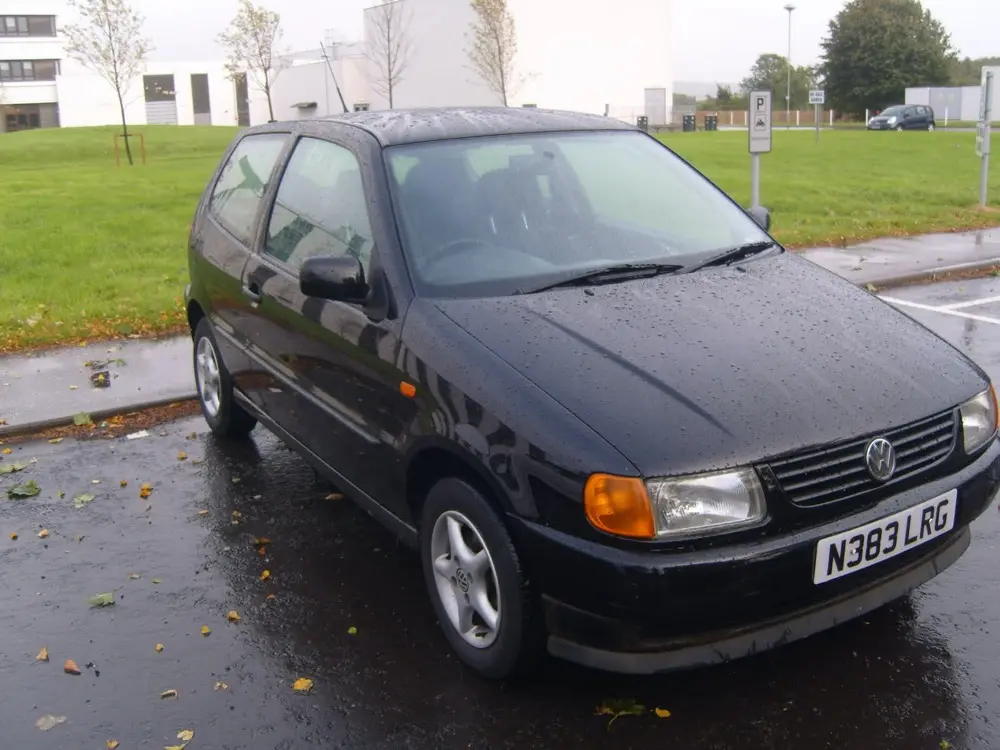
The story of Polo, one of VW’s longest and best-selling models with over 15 million cars made worldwide, dates back to the 70s. Although many sees it as Golf’s smaller brother, this super-mini car started his life from different roots. Unlike Golf, a car built by VW designers as a logical addition to their model lineup, Polo was one of the first examples of badge engineering. Several years back, a german car and bike manufacturer called NSU was developing a small car. With lightweight chassis, clear body design and every-day practicality, this innovative car had the makings of a future hit. However, as financial difficulties pushed this manufacturer under Audi’s command, this project soon became known as Audi 50.
First generation (1975–1981)
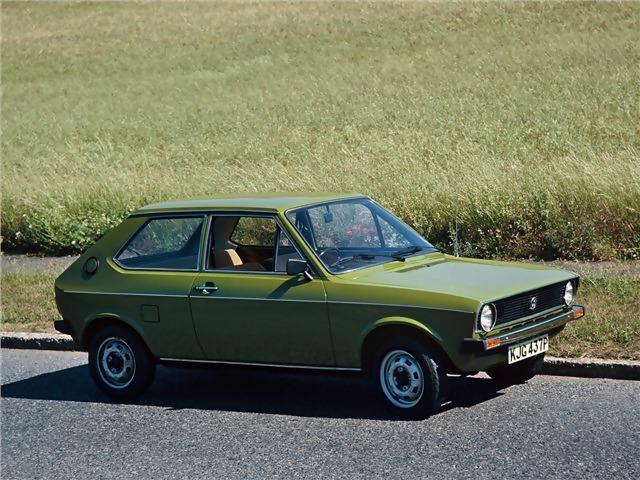
It was only a few weeks after VW revealed Polo, which was their iteration of Audi 50. With a lower price, this stripped version aimed at the budget car market. Initial reactions were positive, as buyers recognized upsides of the newly introduced model. However, it was a different event that coined the faith of this little car. By the end of the 70s, oil crisis reached the shores of Europe. High gasoline prices and overall fuel shortages placed fuel efficiency high up the list of priorities among car buyers. Together with other similar cars, Polo was perfect for such an environment, making it an instant hit.
Second generation (1981–1994)
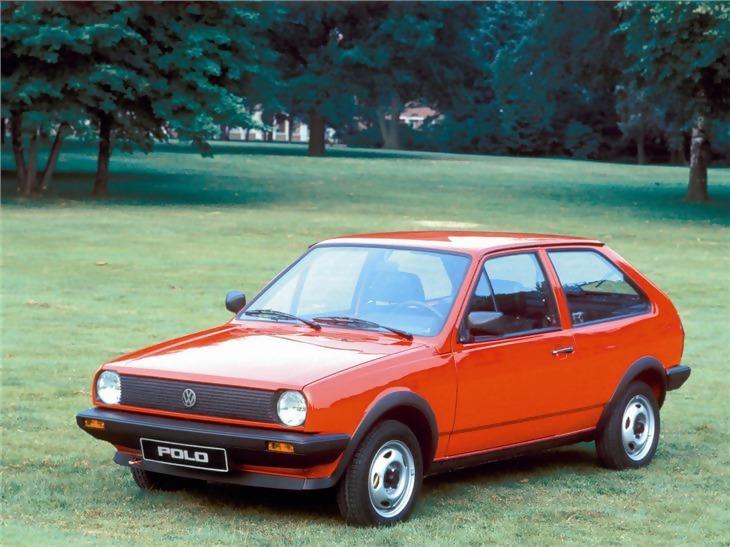
The second generation, introduced in 1981, followed the basic recipe set by the first Polo. With economical engines, spacious interior and simple design, it was the embodiment of form that follows the function. Despite its boxy shape and scarce equipment, it still kept a high seller status among buyers. With a help of a mid-run facelift that gave it a fresh look, the second generation Polo remained in production for stunning 13 years.
Third generation (1994-2002)
Despite selling in great numbers and even postponing the new generation for two years, the old Polo was ready for retirement. Not only was it dated, but it didn’t align with upcoming trends. Unlike the previous decade, the 90s were an age of growth and prosperity in Europe. In such a world, even the small and cheap cars hand to offer more than just being plain and reliable. To keep it on the winning course, the new generation, codenamed Type 6N, offered a wide range of options.
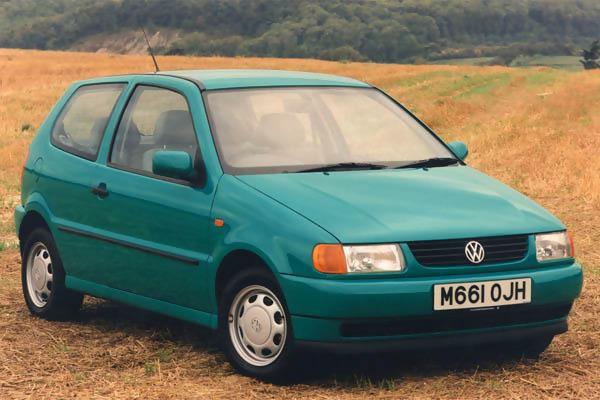
With a platform based on the Golf and rounded body lines, the new Polo offered a generous amount of interior space for its size while keeping balanced outer shape. Body styles options ranging from hatchbacks with three or five doors, a classic sedan or a station wagon meant that buyers could find the one that suits them the best. In addition, the new Polo was much better equipped than the old one. Various equipment choices, such as power-steering, air conditioning and airbags increased both comfort and safety. This was even more noticeable with cars made after the facelift in 2000.
Focused on improved fuel economy, most engines were traditional units with upgraded fuel injection systems. However, there were several variants with sporting intents that used engines with multi-valve technology. Still, the biggest upgrade under the hood was the new TDI engine. By combining low consumption of a diesel engine with superior driving characteristics made possible by a turbocharger, it soon became the favorite choice of many buyers. The transmission choices, limited to a 5-speed manual and 4-speed automatic, were far more conservative.
There were several special versions, whose main purpose was to widen the appeal. One of the most notable was the Polo Harlequin. This limited version had body panels in different colors, combining Tornado Red, Gigster Yellow, Pistachio Green and Chagall Blue.
The other one was the Polo GTI. The older car had two sporty variants, named as GT and G40. Still, VW feared that using the GTI name on a swift but cheaper car would steal away buyers from bigger and more expensive Golf. Thanks to a fast-revving engine, upgraded suspension, exterior tweaks and many equipment choices, the Polo GTI entered the hot-hatch scene with ease.
Fourth generation (2002-2009)
Introduced in 2002 under the Typ 9N codename, the fourth generation Polo shared little with its predecessor. With a stiff body, many airbags and ESP as a standard in many models, the focus was on active and passive safety. Also, it grew in size, making it larger than an original Golf. This allowed the interior to be even more spacious, with class-leading head and legroom.
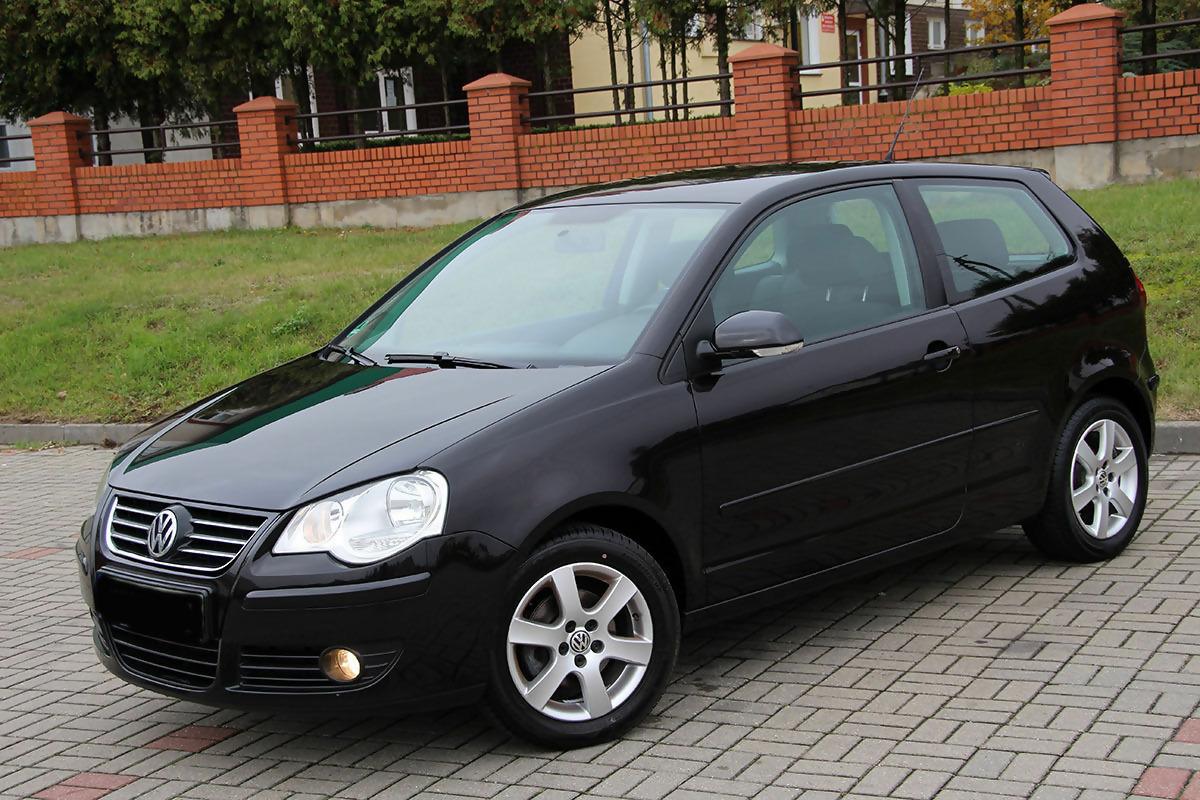
Outside, the new Polo was an unusual mix of design features borrowed from other VW cars. The general shape of the rear end resembled Golf of that time, with tail lights that looked like ones from the Passat. On the front, dual headlights and narrow grille made it unmistakably similar to smaller Lupo. This changed with a facelift in 2005, but only to make the front end more like the Golf.
Under the skin, the new Polo evolved using the old model as a starting point. All gasoline engines, ranging from a small three-cylinder to a sporty 1.8 liter unit, have cylinder heads that use multi-valve technology. Not only this improves driving characteristics, but it also lowers fuel consumption and emissions. For taking fuel savings to the next level, there were several proven TDI engines. Smaller, three-cylinder unit provided excellent fuel economy, while the bigger one throws the superb low-down grunt into the equation.
However, the biggest strongpoints of this car was the overall build quality. Using a sober and clean design combined with excellent materials, the interior looked and felt as if it came out of much more expensive car. And because it was durable, it kept that appearance for years to come, increasing resale value.
Again, the sporty GTI became available only after some initial hesitation. With perky engine mated to a swift 6-speed gearbox, sharp suspension setup and design that resembled the new Golf GTI, this supermini hot hatch was on a trail of success.
Fifth generation (2009-2017)
The fifth generation Polo, introduced in 2009 under Typ 6R designation, took and refined the upsides of the old car while tackling the weak spots. This meant keeping things like good driving balance and upscale feel, but also adding unique visual identity and appeal. Winning the European Car of the Year award only proved its value.
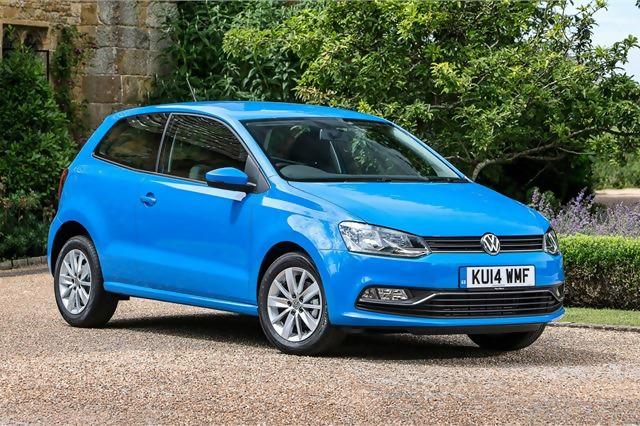
From the outside, the new Polog is a huge step forward. While all design elements are in touch with brand visual identity, sharp and aggressive body lines make it stand out in the crowd. The most interesting aspects of the designs are details such as twin projector headlights with metallic wings. But once again, it is the interior quality that makes it very difficult for rivals to compete. It sets the level of finish to a high standard. While it may look simple, the layout is functional with everything within reach. Tasteful seat fabrics and a soft dash give it an upmarket feel.
The engine range follows a well-established pattern found in previous generations. On one side of the spectrum, there are reliable engines with three or four cylinders that aim at buyers that seek reliability and fuel efficiency. On the other side, more powerful versions come with turbocharged engines that can offer an extra kick for those who want it. Suspension and steering offer a balanced blend of ride comfort and driving stability.
Continuing its presence in the hot-hatch segment, the new Polo GTI uses an award-winning TSI engine and seven-speed DSG gearbox. By combining both supercharger and turbocharger, this engine provides excellent power outputs at all engine speeds. But the real treat was the rare Polo R, made for WRC homologation purposes in a limited quantity of 2,500 cars. With a powerful turbocharged engine, stiff suspension and bigger brakes, this car was a true pocket rocket.
Sixth generation (2018-present)
When looking from a distance, the current Polo seems not that different from the old car. The outer body shape and overall proportions are about the same. It takes a closer look to reveal the subtle differences with the car that has Typ AW codename.
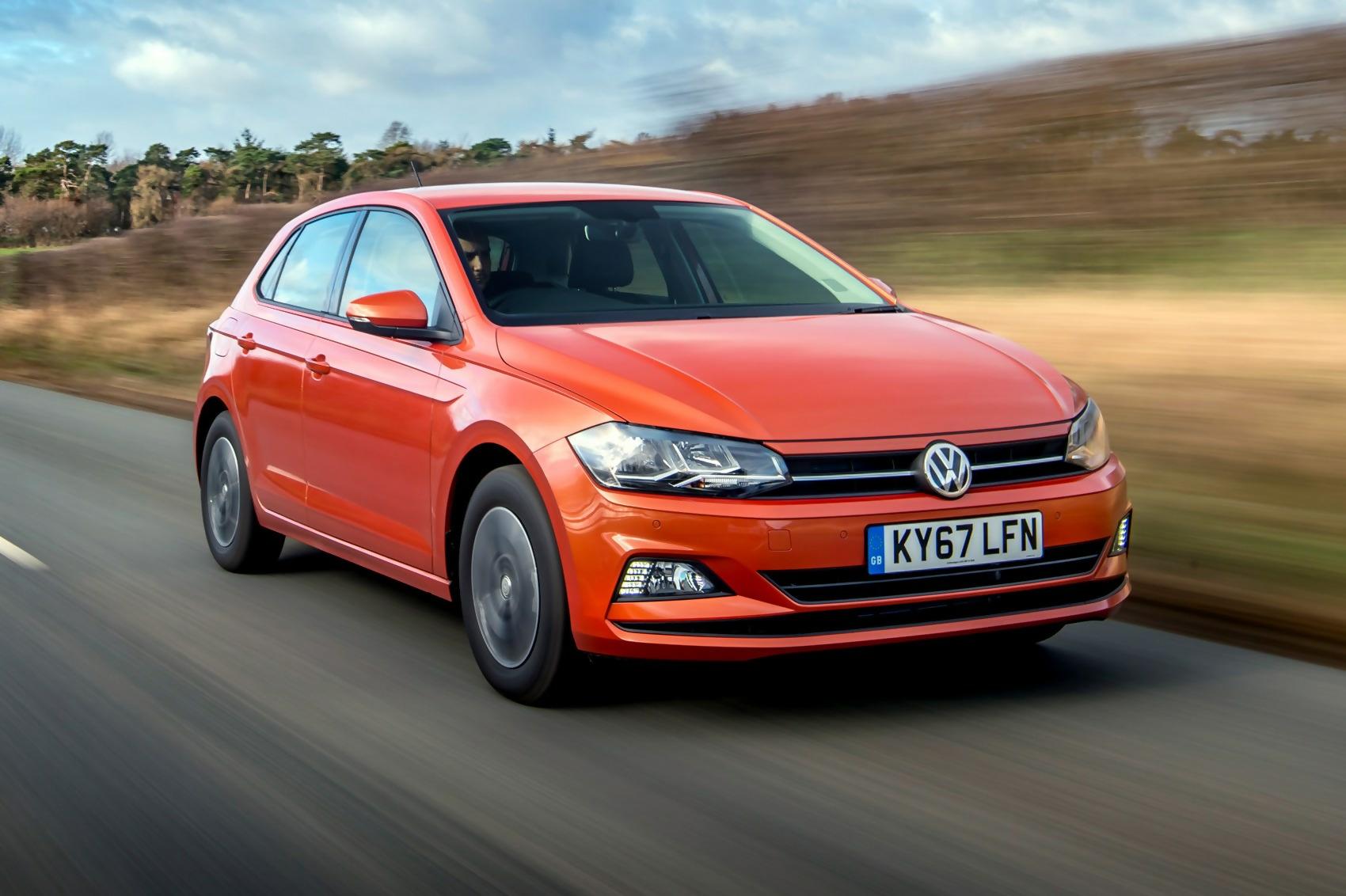
For a start, the new Polo is bigger in all directions than its predecessor, growing almost into the territory of bigger Golf. The styling is more aggressive, with many creases that help accent sharp body lines. Thanks to increased outer dimensions and wise interior design, this car offers unmatched interior and trunk space. Large infotainment touch-screen display combined to an optional digital drivers display dominate the dashboard. As expected, high build quality and superb materials come as a standard.
The engine choices start with several three-cylinder variants, with or without a turbocharger. For more power, there is a pair of turbocharged four-cylinder engines and a TDI diesel unit available in two variants. Optional adaptive suspension, a rare find in this car segment, offers superb handling while not affecting the ride quality.
With 14 exterior colors, optional two-tone paint schemes and 17 dashboard colors, customization is the main theme with Polo’s sixth iteration. Buyers can set their new Polo to be playful and energetic, or they can choose more understated color options. All this widens the appeal and helps fighting the strong competition within this car segment. Another important aspect where this cars stands out is safety, with systems such as front collision detection or emergency stopping being a part of standard equipment.
Frequently Asked Questions
How do I adjust the headlights in my Volkswagen Polo?
To adjust the headlights in your Volkswagen Polo, park the vehicle on a level surface facing a wall or garage door. Turn on the headlights and mark the horizontal and vertical centerlines of each headlight beam on the wall. Use a screwdriver or appropriate tool to adjust the beam height and direction, aligning them with the marked centerlines. Check the beam pattern and adjust as necessary to ensure proper visibility and minimize glare.
How do I change the oil in my Volkswagen Polo?
To change the oil in your Volkswagen Polo, you will need to locate the oil drain plug under the engine and remove it to drain the old oil. Once drained, replace the drain plug and remove the oil filter to replace it with a new one. Finally, refill the engine with the recommended amount and type of oil specified in the owner’s manual.
How do I change the spark plugs in my Volkswagen Polo?
To change the spark plugs in your Volkswagen Polo, start by locating the spark plug wires or ignition coil packs. Disconnect the wires or coils and remove them to access the spark plugs. Use a spark plug socket and ratchet to carefully unscrew the old spark plugs. Install new spark plugs, making sure to torque them to the manufacturer’s specifications. Reconnect the wires or coil packs and repeat the process for the remaining spark plugs.
How do I check the brake fluid level in my Volkswagen Polo?
To check the brake fluid level in your Volkswagen Polo, locate the brake fluid reservoir, typically located near the firewall on the driver’s side. Ensure the vehicle is parked on a level surface and the engine is off. Remove the cap from the reservoir and visually inspect the fluid level. If the level is below the minimum mark, add the recommended brake fluid until it reaches the maximum mark.
How do I check the coolant level in my Volkswagen Polo?
To check the coolant level in your Volkswagen Polo, ensure the engine is cool and the vehicle is parked on a level surface. Locate the coolant reservoir, usually a translucent plastic tank near the radiator. Check the level against the “Full” and “Low” marks on the reservoir. If the level is below the “Low” mark, add a mixture of coolant and water as specified in the owner’s manual until it reaches the “Full” mark.
How do I check the transmission fluid level in my Volkswagen Polo?
To check the transmission fluid level in your Volkswagen Polo, start the engine and allow it to warm up. Locate the transmission dipstick, usually near the back of the engine bay. With the engine running and in park or neutral, remove the dipstick, wipe it clean, and reinsert it. Remove the dipstick again and check the fluid level against the markings. Add the recommended transmission fluid if necessary.
How do I replace a battery in my Volkswagen Polo?
To replace the battery in your Volkswagen Polo, start by disconnecting the negative terminal followed by the positive terminal using a wrench or pliers. Remove any retaining brackets or covers securing the battery in place. Carefully lift out the old battery and replace it with a new one of the same size and specifications. Reinstall the retaining brackets or covers and reconnect the positive terminal followed by the negative terminal.
How do I replace a cabin air filter in my Volkswagen Polo?
To replace the cabin air filter in your Volkswagen Polo, locate the filter housing, which is usually located behind the glove compartment or under the dashboard. Remove the housing cover or clips and take out the old filter. Install a new filter in the correct orientation, making sure it fits snugly. Reattach the housing cover or clips and ensure it is securely fastened.
How do I replace a fuse in my Volkswagen Polo?
To replace a fuse in your Volkswagen Polo, locate the fuse box, which is usually located in the engine bay or under the dashboard. Open the fuse box cover and locate the fuse corresponding to the malfunctioning or blown circuit. Use a fuse puller or a pair of needle-nose pliers to carefully remove the old fuse. Insert a new fuse of the same rating and push it in until it is seated securely. Close the fuse box cover.
How do I replace a headlight bulb in my Volkswagen Polo?
To replace a headlight bulb in your Volkswagen Polo, first, open the hood and locate the back of the headlight assembly. Disconnect the electrical connector and remove the retaining clip or screws holding the bulb in place. Carefully remove the old bulb and replace it with a new one, ensuring it is securely seated. Reconnect the electrical connector and test the headlight before closing the hood.
How do I reset the service reminder light in my Volkswagen Polo?
To reset the service reminder light in your Volkswagen Polo, turn the ignition key to the “On” position without starting the engine. Press and hold the trip reset button or scroll through the menu options until you find the service reminder reset function. Follow the prompts on the screen or press and hold the reset button to clear the reminder and reset the light.
How do I troubleshoot a faulty electrical component in my Volkswagen Polo?
To troubleshoot a faulty electrical component in your Volkswagen Polo, start by checking the corresponding fuse to ensure it is intact. If the fuse is fine, inspect the wiring connections for any loose or damaged wires. Use a multimeter or test light to check for voltage or continuity in the circuit. If necessary, consult the wiring diagrams in the repair manual to trace and diagnose the issue further.
How often should I replace the air filter in my Volkswagen Polo?
The air filter in your Volkswagen Polo should be replaced according to the manufacturer’s recommendations, typically every 15,000 to 30,000 miles or as indicated by the maintenance schedule. A dirty or clogged air filter can restrict airflow, leading to reduced engine performance and fuel efficiency. Regularly inspect the air filter and replace it as necessary.
What is the recommended tire pressure for my Volkswagen Polo?
The recommended tire pressure for your Volkswagen Polo can be found in the owner’s manual or on a sticker located on the driver’s side door jamb. It is important to maintain the correct tire pressure to ensure optimal handling, tire longevity, and fuel efficiency. Check the tire pressure regularly and adjust as needed.
What type of engine oil should I use in my Volkswagen Polo?
The recommended engine oil type for your Volkswagen Polo can be found in the owner’s manual or on a sticker located on the engine oil filler cap. It is important to use the correct oil viscosity and specification to ensure proper lubrication and engine performance. Refer to the owner’s manual for the appropriate oil grade and follow the recommended oil change intervals.
