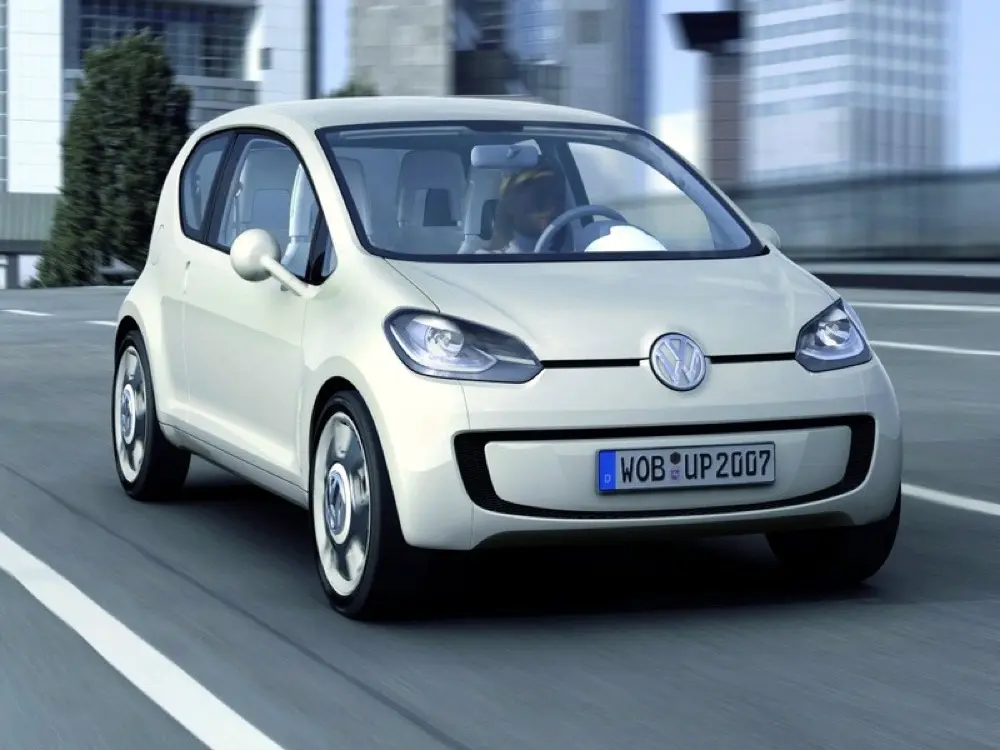
The Volkswagen Up (stylized as Volkswagen up!) is a city car, part of the Volkswagen Group New Small Family (NSF) series of models, unveiled at the 2011 Frankfurt Motor Show (IAA). The original up! concept car used a rear-engine, rear-wheel drive layout, however the 2011 production model has a less efficient front-engine, front-wheel drive layout, using the NSF platform, with a 3-cylinder 1.0 litre petrol engine. A plug-in electric version, called e-up!, was launched in autumn 2013. This model won 2012 World Car of the Year , Compact Car of the Year 2012 City Car of the Year 2013 , Small Car of the Year 2011 .
Frequently Asked Questions
How do I check and adjust the brake fluid level in a Volkswagen up!?
To check and adjust the brake fluid level in a Volkswagen up!, locate the brake fluid reservoir under the hood. The reservoir is usually translucent with a “MIN” and “MAX” indicator. Ensure the vehicle is on a level surface and remove the cap from the reservoir. The fluid level should be between the “MIN” and “MAX” marks. If necessary, add the recommended brake fluid to bring it to the appropriate level.
How do I check the engine oil level in a Volkswagen up!?
To check the engine oil level in a Volkswagen up!, park the vehicle on a level surface and wait for the engine to cool down. Locate the engine oil dipstick, pull it out, and wipe it clean. Reinsert the dipstick fully, then remove it again to observe the oil level. The oil level should be between the minimum and maximum marks on the dipstick.
How do I check the transmission fluid level in a Volkswagen up!?
Checking the transmission fluid level in a Volkswagen up! is a bit more complex and typically requires access to a specialized diagnostic tool. It is recommended to have a qualified technician or a Volkswagen dealership perform this task. They will use the diagnostic tool to access the transmission control module and retrieve the fluid level information. This ensures accurate readings and prevents potential damage to the transmission.
How do I jump-start a Volkswagen up!?
To jump-start a Volkswagen up!, you will need a set of jumper cables and a functioning vehicle with a charged battery. Park the two vehicles close enough for the jumper cables to reach both batteries. Connect one end of the positive (red) cable to the positive terminal of the dead battery and the other end to the positive terminal of the charged battery. Then, connect one end of the negative (black) cable to the negative terminal of the charged battery and the other end to a metal surface on the engine block of the vehicle with the dead battery. Start the functioning vehicle and let it run for a few minutes, then attempt to start the Volkswagen up!.
How do I replace a brake light bulb in a Volkswagen up!?
To replace a brake light bulb in a Volkswagen up!, open the trunk or rear hatch and locate the bulb housing on the inner side of the taillight assembly. Twist the bulb socket counterclockwise to remove it from the housing. Gently pull out the old bulb and replace it with a new one of the same type. Reinsert the bulb socket into the housing and twist it clockwise to secure it. Test the brake light to ensure proper operation before closing the trunk or rear hatch.
How do I replace a burnt-out headlight bulb in a Volkswagen up!?
To replace a burnt-out headlight bulb in a Volkswagen up!, first, open the hood and locate the back of the headlight assembly. Disconnect the electrical connector from the bulb by gently pulling it off. Twist the bulb counterclockwise to remove it from the assembly. Install the new bulb by aligning the tabs with the slots and twisting it clockwise. Finally, reconnect the electrical connector and test the new bulb before closing the hood.
How do I replace a cabin air filter in a Volkswagen up!?
To replace a cabin air filter in a Volkswagen up!, locate the cabin air filter housing, which is usually located behind the glove compartment. Remove the retaining clips or screws that secure the housing cover and carefully lift off the cover. Take out the old cabin air filter and replace it with a new one, making sure it is properly aligned. Reinstall the housing cover and secure it with the retaining clips or screws. Finally, test the air conditioning and heating system to ensure proper airflow.
How do I replace a fuel filter in a Volkswagen up!?
To replace a fuel filter in a Volkswagen up!, start by relieving the fuel system pressure by removing the fuel pump fuse or relay and running the engine until it stalls. Locate the fuel filter, which is usually mounted along the fuel line under the vehicle or inside the fuel tank. Disconnect the fuel lines from the filter using appropriate tools, being cautious of any fuel spillage. Install the new fuel filter by connecting the fuel lines and ensuring proper alignment. Finally, reinstall the fuel pump fuse or relay and start the engine to verify proper fuel flow.
How do I replace a serpentine belt in a Volkswagen up!?
To replace a serpentine belt in a Volkswagen up!, start by locating the belt routing diagram, usually found on a decal under the hood. Use a serpentine belt tool or a breaker bar with an appropriate socket to relieve tension on the belt tensioner. Slide the belt off one of the pulleys, then slowly release the tensioner. Remove the old belt from the remaining pulleys. Install the new belt by following the belt routing diagram, ensuring it is properly seated on each pulley. Finally, double-check the belt alignment and tension before starting the engine.
How do I replace a spark plug in a Volkswagen up!?
To replace a spark plug in a Volkswagen up!, start by ensuring the engine is cool. Locate the spark plugs, which are typically attached to the engine cylinder head and covered by ignition coils or spark plug wires. Disconnect the ignition coil or wire from the spark plug by gently pulling it off. Use a spark plug socket and ratchet to loosen and remove the old spark plug. Install the new spark plug by hand-tightening it, then torque it to the specified value using a torque wrench. Finally, reconnect the ignition coil or wire and repeat the process for the remaining spark plugs.
How do I replace a windshield wiper blade in a Volkswagen up!?
To replace a windshield wiper blade in a Volkswagen up!, lift the wiper arm away from the windshield and locate the small tab or button on the underside of the wiper blade assembly. Press or slide this tab/button to release the old wiper blade. Then, align the new wiper blade with the wiper arm and push it in until it clicks into place. Finally, lower the wiper arm back onto the windshield and test the new blade.
How do I reset the maintenance reminder in a Volkswagen up!?
To reset the maintenance reminder in a Volkswagen up!, turn the ignition on without starting the engine. Use the menu button on the multifunction display to navigate to the “Settings” menu, then select “Service.” From there, select “Reset” or “Reset Service” and confirm the action. The maintenance reminder should now be reset, and the next scheduled service indicator will be displayed based on the vehicle’s maintenance schedule.
How often should I change the engine air filter in a Volkswagen up!?
The engine air filter in a Volkswagen up! should generally be replaced every 15,000-30,000 miles or as recommended in the owner’s manual. However, this interval may vary depending on driving conditions and air quality. Regularly inspecting the air filter for excessive dirt or debris and replacing it when necessary helps ensure optimal engine performance and fuel efficiency.
What is the recommended tire pressure for a Volkswagen up!?
The recommended tire pressure for a Volkswagen up! can vary slightly depending on the specific model and tire size. However, the general recommended tire pressure for the front and rear tires is typically between 30-35 psi (pounds per square inch). It is important to check the tire pressure regularly and adjust it as needed to ensure optimal performance, fuel efficiency, and tire longevity.
What type of coolant should I use in a Volkswagen up!?
The recommended coolant for a Volkswagen up! is typically a mixture of ethylene glycol-based coolant and distilled water in a 50:50 ratio. It is important to use a coolant that meets the specifications outlined in the owner’s manual or consult with a Volkswagen dealership to ensure compatibility. Regularly check the coolant level and top it up as needed to maintain proper engine temperature and prevent overheating.
