
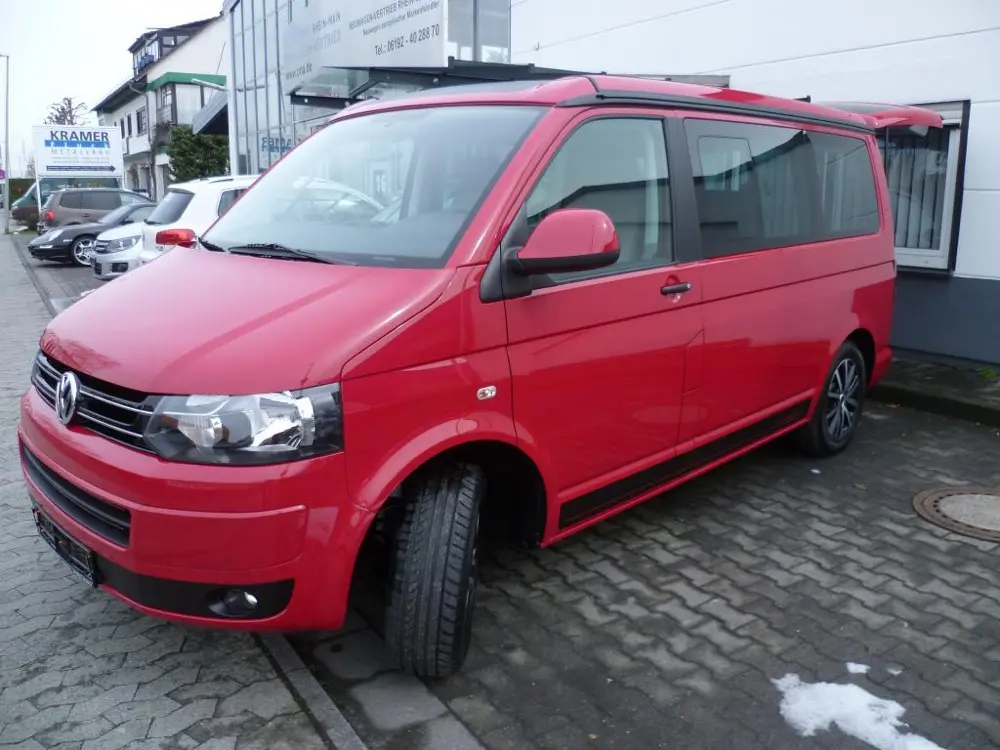
The Volkswagen California is based on the T5 Multivan by Volkswagen Commercial Vehicles (VWCV). It is the first campervan designed and built in-house by VWCV Special Business Unit, a subsidiary of Volkswagen Commercial Vehicles.The California launched in August, 2003. In 2004 two design studies were presented at the Caravan Salon in D?sseldorf: California Beach and California Tramper. California Beach now has the option of the elevating “pop top” aluminium roof, with bed space of 120x200cm in Germany. There is a high demand for this model, but it is not available in the USA.
Frequently Asked Questions
How can I replace a broken side mirror on my Volkswagen T5 California?
To replace a broken side mirror on your Volkswagen T5 California, start by locating the mounting screws or bolts on the inside of the door panel. Remove these screws or bolts to detach the mirror assembly from the door. Disconnect the electrical connector if applicable. Install the new side mirror by reversing the removal steps, ensuring it is securely fastened and aligned properly. Test the functionality of the new mirror before completing the reassembly.
How can I replace the brake pads on my Volkswagen T5 California?
To replace the brake pads on your Volkswagen T5 California, first, ensure the vehicle is safely lifted and supported on jack stands. Remove the wheels to access the brake calipers. Locate the caliper guide pins, remove them, and then slide out the caliper. Take out the old brake pads, clean the caliper guide pins and any contact points, and install the new brake pads. Reassemble the caliper, ensuring it’s properly aligned, and repeat the process for the remaining wheels.
How can I troubleshoot a faulty power window in my Volkswagen T5 California?
If you are experiencing issues with a faulty power window in your Volkswagen T5 California, there are a few steps you can take to troubleshoot the problem. First, check the fuse related to the power windows in the fuse box to ensure it is not blown. If the fuse is intact, test the window switch to see if it is functioning correctly. If the switch is working, it could be a problem with the window motor or regulator, which might require further diagnosis and repair as outlined in the repair manual.
How do I check the engine oil level in my Volkswagen T5 California?
To check the engine oil level in your Volkswagen T5 California, start by parking the vehicle on a level surface and ensuring the engine is off. Open the hood and locate the engine oil dipstick, usually labeled with a bright handle. Pull out the dipstick, wipe it clean, reinsert it fully, and then withdraw it again. The oil level should be between the minimum and maximum marks on the dipstick, and if it’s low, you can add oil accordingly.
How do I replace a burnt-out headlight bulb in my Volkswagen T5 California?
To replace a burnt-out headlight bulb in your Volkswagen T5 California, start by identifying which headlight needs to be replaced. Open the hood and locate the back of the headlight assembly. Disconnect the electrical connector from the bulb, then twist the bulb counterclockwise to remove it. Install the new bulb by aligning it properly and twisting it clockwise until it locks into place. Reconnect the electrical connector and test the new bulb before reassembling everything.
How do I replace a faulty spark plug in my Volkswagen T5 California?
To replace a faulty spark plug in your Volkswagen T5 California, start by locating the spark plug wires or ignition coil on top of the engine. Carefully disconnect the wire or coil from the spark plug, ensuring not to damage any surrounding components. Use a spark plug socket and a ratchet to loosen and remove the old spark plug. Install the new spark plug by hand, then use the spark plug socket and ratchet to tighten it to the specified torque. Reconnect the spark plug wire or ignition coil, ensuring it is secure, and repeat the process for the remaining spark plugs.
How do I reset the maintenance light on my Volkswagen T5 California?
To reset the maintenance light on your Volkswagen T5 California, start by turning the key to the “On” position without starting the engine. Locate the trip meter button on the instrument cluster and press and hold it. While holding the trip meter button, turn the key to the “Off” position. Release the trip meter button, then turn the key back to the “On” position. The maintenance light should be reset, indicating that the maintenance reminder has been cleared.
How often should I change the engine oil in my Volkswagen T5 California?
The recommended oil change interval for your Volkswagen T5 California can vary depending on factors such as driving conditions, engine type, and oil type used. As a general guideline, it is typically recommended to change the engine oil every 5,000 to 7,500 miles or every 6 to 12 months, whichever comes first. However, it’s best to consult the specific recommendations in the repair manual for your vehicle to ensure you are following the manufacturer’s guidelines accurately.
What is the recommended interval for replacing the timing belt on my Volkswagen T5 California?
The recommended interval for replacing the timing belt on your Volkswagen T5 California can vary depending on the engine type and model year. Generally, it is recommended to replace the timing belt between 60,000 and 100,000 miles or every 6 to 10 years, whichever comes first. It is crucial to adhere to the specific recommendations in the repair manual for your vehicle to ensure the timing belt is replaced at the appropriate interval and prevent potential engine damage.
What is the recommended tire pressure for my Volkswagen T5 California?
The recommended tire pressure for your Volkswagen T5 California can usually be found on a sticker located on the driver’s side door jamb or in the owner’s manual. It is important to note that the recommended tire pressure may vary depending on factors such as vehicle load and driving conditions. It is best to check the tire pressure regularly and adjust as needed to maintain optimal handling, fuel efficiency, and tire wear.
What should I do if my Volkswagen T5 California’s battery is dead?
If your Volkswagen T5 California’s battery is dead, you can jump-start it using jumper cables and another vehicle with a working battery. Position both vehicles close enough for the jumper cables to reach the batteries, but ensure they are not touching. Connect the positive (+) terminal of the dead battery to the positive terminal of the working battery, then connect the negative (-) terminal of the working battery to a metal surface on the dead vehicle. Start the working vehicle, let it run for a few minutes, then attempt to start your Volkswagen T5 California.
What should I do if my Volkswagen T5 California’s engine overheats?
If your Volkswagen T5 California’s engine overheats, it is essential to take immediate action to prevent further damage. Safely pull over to the side of the road and turn off the engine. Allow the engine to cool down before attempting to open the hood. Check the coolant level and add coolant if necessary, but only after the engine has cooled down. If the problem persists, it is recommended to consult a professional technician to diagnose and repair the underlying cause of the overheating.
What type of coolant should I use for my Volkswagen T5 California?
For your Volkswagen T5 California, it is recommended to use a coolant that meets the specifications outlined in the owner’s manual or the automaker’s recommendations. Most commonly, a coolant with a mixture of ethylene glycol and water in a 50:50 ratio is suitable for most climates. However, it’s important to refer to the specific instructions in the repair manual to ensure you are using the correct coolant for your vehicle.
Why is my Volkswagen T5 California’s air conditioning not blowing cold air?
If your Volkswagen T5 California’s air conditioning is not blowing cold air, there could be various reasons. It could be due to a refrigerant leak, a malfunctioning compressor, a faulty thermostat, or a clogged air filter. It is recommended to refer to the repair manual to troubleshoot the specific issue and determine the appropriate course of action. Consulting a professional technician with expertise in automotive air conditioning systems may also be beneficial.
