
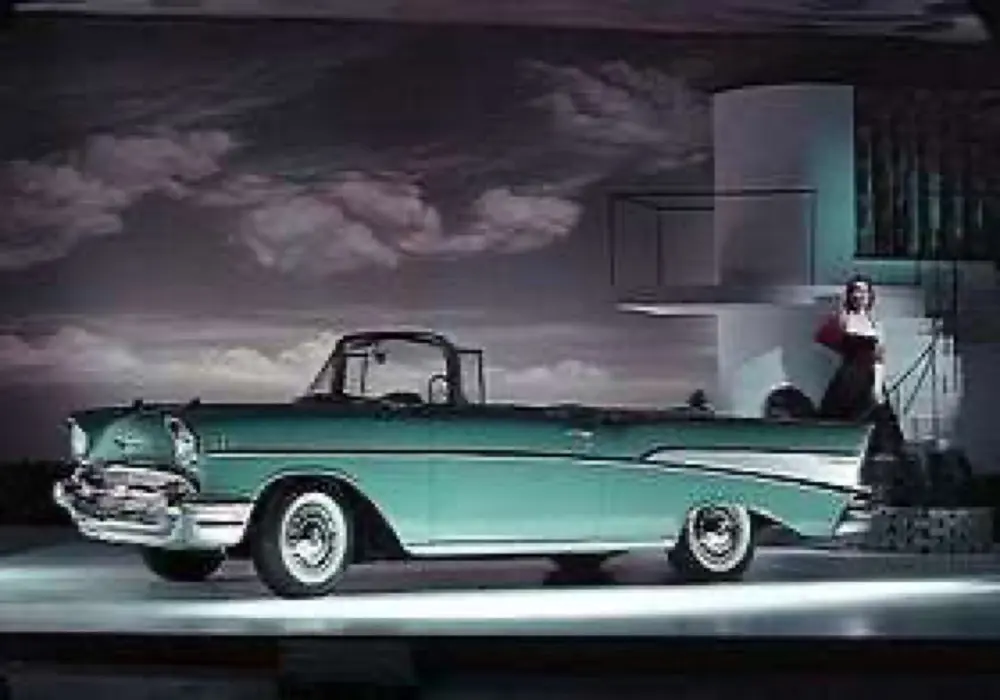
The Chevrolet Bel Air was a full-size automobile that was produced by Chevrolet for the 1950–1981 model years. Initially only the two door Hardtops in the Chevrolet model range were designated with the Bel Air name from 1950 to 1952, as distinct from the Styleline and Fleetline models for the remainder of the range. The Bel Air continued with various other trim level designations until US production ceased in 1975, production continued in Canada for its home market only through the 1981 model year. In 2002, a concept Bel Air convertible was shown at the North American International Auto Show. It features a few styling and design cues from the best remembered tri-five (1955–57) models, such as the chrome windshield frame, traffic light viewfinder, and a gas filler cap behind the tail light, similar to 1956–1957 Chevy’s gas cap behind the chrome trim on the back of the tail fin, but more reminiscent of the 1948–1958 Cadillac gas cap tail light. It also features the same body on frame hydroforming technology (used in the frame rails of the Corvette and GM’s midsize sport-utility vehicles) and a sheet metal body, on a 111 in (2,800 mm) wheelbase, and a 65 in (1,700 mm) track. A virtual “turbo boost” button on the steering wheel activates the powertrain control module to trigger a more aggressive spark and fueling calibration for maximum horsepower. It also led the 13th Annual Stater Brothers Route 66 Rendezvous as the official vehicle in September 2002. General Motors has shown no interest in producing the car.
Frequently Asked Questions
How do I change the brake pads on my Chevrolet Bel Air?
To change the brake pads on a Chevrolet Bel Air, first remove the wheels and caliper assembly. Then, use a C-clamp to compress the piston back into the caliper housing. Next, remove the old brake pads and install the new ones, making sure they are properly aligned. Finally, reassemble the caliper and wheels and test the brakes before driving.
How do I change the transmission fluid on my Chevrolet Bel Air?
To change the transmission fluid on a Chevrolet Bel Air, first locate the transmission fluid pan and drain plug. Place a container below the pan and remove the plug to drain the fluid. Next, replace the drain plug and add new transmission fluid through the dipstick tube. Check the owner’s manual for recommended fluid type and capacity.
How do I replace the air filter on my Chevrolet Bel Air?
To replace the air filter on a Chevrolet Bel Air, first locate the air filter housing, which is typically located near the engine. Open the housing and remove the old filter, making note of its orientation. Insert the new filter, making sure it is properly aligned, and reassemble the housing. Check the owner’s manual for recommended filter type and replacement interval.
How do I replace the battery on my Chevrolet Bel Air?
To replace the battery on a Chevrolet Bel Air, first locate the battery and remove the negative cable. Then, remove the positive cable and any retaining hardware. Remove the old battery and install the new one, making sure it is properly secured. Reattach the cables and test the battery before driving.
How do I replace the fuel filter on my Chevrolet Bel Air?
To replace the fuel filter on a Chevrolet Bel Air, first locate the filter, which is typically located along the fuel line. Use a fuel line disconnect tool to remove the old filter and install the new one, making sure it is properly aligned. Check the owner’s manual for recommended filter type and replacement interval.
How do I replace the serpentine belt on my Chevrolet Bel Air?
To replace the serpentine belt on a Chevrolet Bel Air, first locate the tensioner pulley and use a wrench to release the tension. Remove the old belt and install the new one, making sure it is properly aligned. Release the tensioner and check the belt tension before driving. Check the owner’s manual for recommended belt type and replacement interval.
How do I replace the spark plugs on my Chevrolet Bel Air?
To replace the spark plugs on a Chevrolet Bel Air, first locate the spark plug wires and remove them from the spark plugs. Use a spark plug socket to remove each plug and inspect them for wear or damage. Install the new plugs, making sure they are properly gapped, and reattach the wires. Check the owner’s manual for recommended plug type and replacement interval.
How often should I replace the timing belt on my Chevrolet Bel Air?
The timing belt on a Chevrolet Bel Air should be replaced every 60,000 to 100,000 miles, depending on the model year and engine type. A worn timing belt can cause engine misfires, reduced performance, and even engine damage. Always consult the owner’s manual or a certified mechanic for timing belt replacement recommendations.
What is causing my Chevrolet Bel Air to make a knocking noise?
A knocking noise in a Chevrolet Bel Air can indicate several problems, including worn engine bearings, worn piston rings, or a faulty fuel injector. It is important to address any unusual engine noises promptly to avoid further damage. Consult a certified mechanic for diagnosis and repair.
What is causing my Chevrolet Bel Air to overheat?
Several factors can cause a Chevrolet Bel Air to overheat, including a malfunctioning thermostat, low coolant level, clogged radiator, or a faulty water pump. It is important to address any overheating issues promptly to avoid engine damage. Consult a certified mechanic for diagnosis and repair.
What is causing my Chevrolet Bel Air to pull to one side while driving?
Several factors can cause a Chevrolet Bel Air to pull to one side while driving, including misaligned wheels, uneven tire wear, or a faulty steering or suspension component. It is important to address any handling issues promptly to avoid unsafe driving conditions. Consult a certified mechanic for diagnosis and repair.
What is causing my Chevrolet Bel Air’s air conditioning to blow warm air?
Several factors can cause a Chevrolet Bel Air’s air conditioning to blow warm air, including low refrigerant level, a faulty compressor, or a clogged orifice tube. It is important to address any air conditioning issues promptly to avoid uncomfortable driving conditions. Consult a certified mechanic for diagnosis and repair.
What is causing my Chevrolet Bel Air’s suspension to make a clunking noise?
A clunking noise in a Chevrolet Bel Air’s suspension can indicate several problems, including worn shock absorbers, loose or worn ball joints, or damaged control arm bushings. It is important to address any suspension issues promptly to avoid further damage or unsafe driving conditions. Consult a certified mechanic for diagnosis and repair.
What is the recommended engine oil for a Chevrolet Bel Air?
The recommended engine oil for a Chevrolet Bel Air is SAE 10W-30. It is important to use the correct viscosity oil to ensure proper lubrication and engine performance. Always check the owner’s manual or consult a certified mechanic for oil recommendations.
Why is my Chevrolet Bel Air’s check engine light on?
The check engine light in a Chevrolet Bel Air can be triggered by a variety of issues, including a faulty oxygen sensor, loose gas cap, or malfunctioning catalytic converter. A certified mechanic can diagnose the problem using a diagnostic scanner and perform any necessary repairs.
